Sunscreen Ingredient Checker: Top 4 Options Reviewed
Sunscreen ingredient checkers can help you make cleaner choices for you and your family. Compare top options and learn how to identify reliable platforms.
Sign up for Olive Written by Alexander KleinPublished on October 1, 2026
Choosing a sunscreen is more complex than selecting the highest SPF and a water-resistant formula. While the level of protection a sunscreen provides is an essential part of this decision, the potential risks associated with its ingredients are equally important.
Even if a product shields your skin from sunburn and long-term damage, certain components may have a broader effect on your health. Sunscreen ingredient-checker apps can help you navigate the overwhelming options without having to study the label ingredient by ingredient.
This guide explores some of the highest-rated sunscreen scanner options, highlights their core features and limitations, and helps you select the one that best matches your standards and needs.
- How a sunscreen checker helps build a healthier sun protection routine
- What the top four sunscreen ingredient checkers offer and where they fall short
- How these apps compare across key aspects
Know what's really in your personal care and home products.
Sign up for OliveWhy Do You Need a Sunscreen Checker?
To reach its full protective potential, sunscreen should ideally be applied generously and reapplied at approximately two-hour intervals. After excessive sweating or swimming, the reapplication cycle may be even shorter. Consequently, the amount of product you come into direct contact with while maintaining consistent sun protection is huge.
The amount of sunscreen applied throughout the day may feel less concerning when you’re confident that the product is free of toxins, endocrine disruptors, and contaminants. However, many sunscreen brands, including those advertised as “organic” or “non-toxic”, may still contain ingredients that pose potential health risks.
A comprehensive review covering research published from 2014 to 2024 highlighted that, while organic UV filters are necessary for photoprotection, certain filters can also have significant health-compromising and ecological implications. Research associates exposure to systemically absorbed UV filters such as BP-3 and BP-2 with endocrine-disrupting effects, including alterations in thyroid hormone and testosterone levels and reproductive health concerns.
What’s more, a randomized clinical trial funded by the FDA confirmed that certain active ingredients are systemically absorbed, reaching plasma concentrations surpassing the FDA threshold, requiring additional safety studies.
Therefore, the need for a reliable sunscreen checker stems from scientifically backed concerns about the health effects of the products you apply repeatedly, especially given their potential penetration into the bloodstream.
4 Best Sunscreen Harmful Ingredients Checkers
We’ve reviewed four popular sunscreen scanners to help you find the best tool:
- Olive
- Yuka
- Think Dirty
- EWG
Scan Skincare & Cleaners
Scores Brands Can't Buy
Backed by Lab Testing
Cleaner Swaps for Your Skin
1. Olive
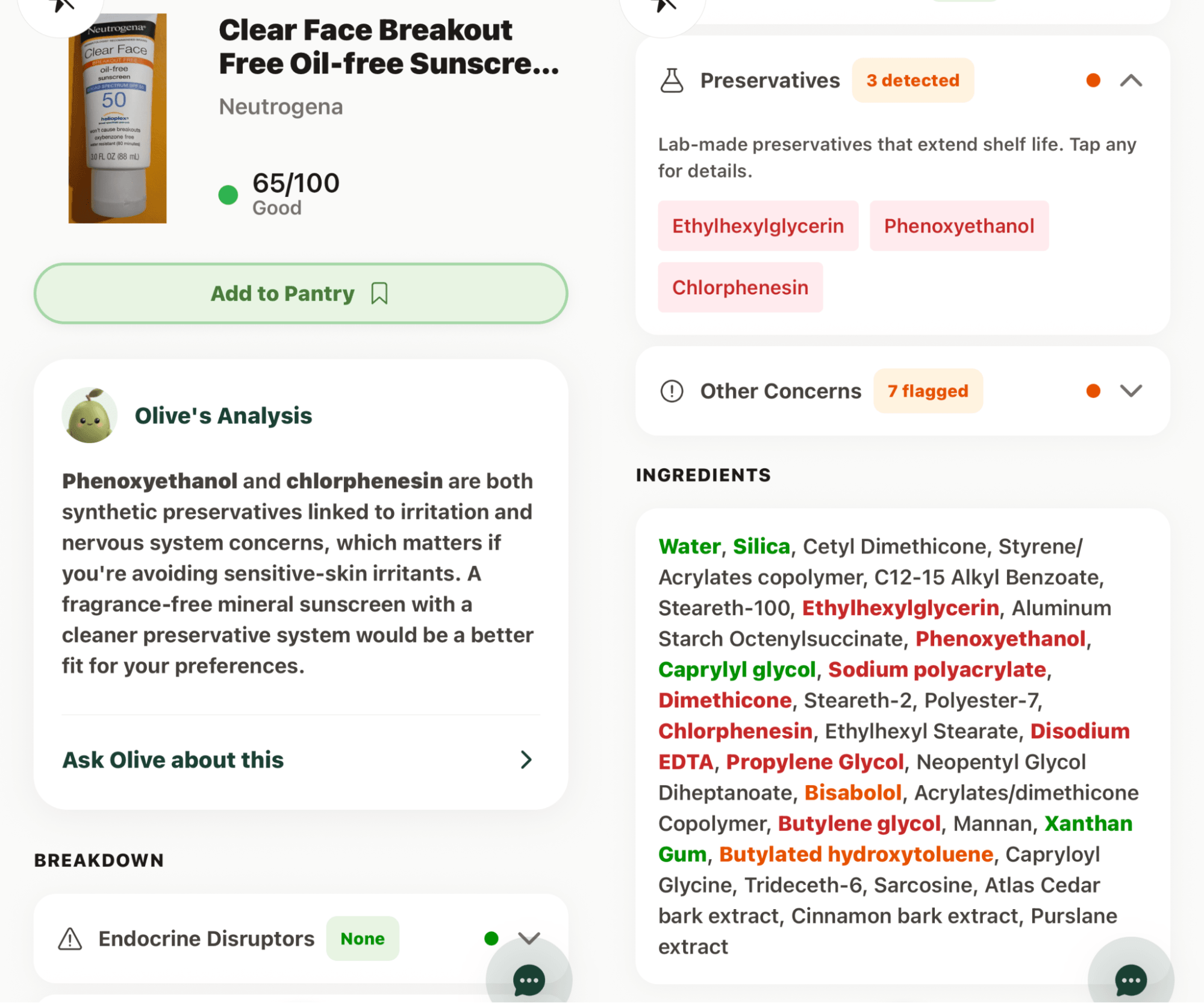
Olive is a comprehensive health companion rather than a simple barcode scanning tool. It doesn’t blindly rely on labels but uses proprietary product testing to detect harmful ingredients that may not be disclosed. Beyond basic checks, it also examines sunscreen and other products for hidden contaminants such as lead, cadmium, mercury, and arsenic.
The foundation of its scores is Olive’s own cosmetic ingredient ranking system, developed in collaboration with the head of a chemical toxin working group. Here’s how you can use Olive to scan a sunscreen product for flagged components:
- Scan the product’s barcode using your phone’s camera
- Access a score from 0, the worst, to 100, the best, and unlock a straightforward explanation of the score, clearly outlining potential health risks
- Review the color-coded ingredient-level symbols to understand each component’s risk level:
- 🟢Green for safe
- 🟡Yellow for moderate risk
- 🔴Red for harmful
- Find cleaner substitutes for poorly rated products
Olive is an excellent solution if you value unbiased, validated research that doesn’t favor products based on outside influence. It’s also a convenient choice if you need an all-in-one platform that helps you remove the toxic load across your entire home, not just skincare products.
You can try Olive for free on iOS or Android.
2. Yuka
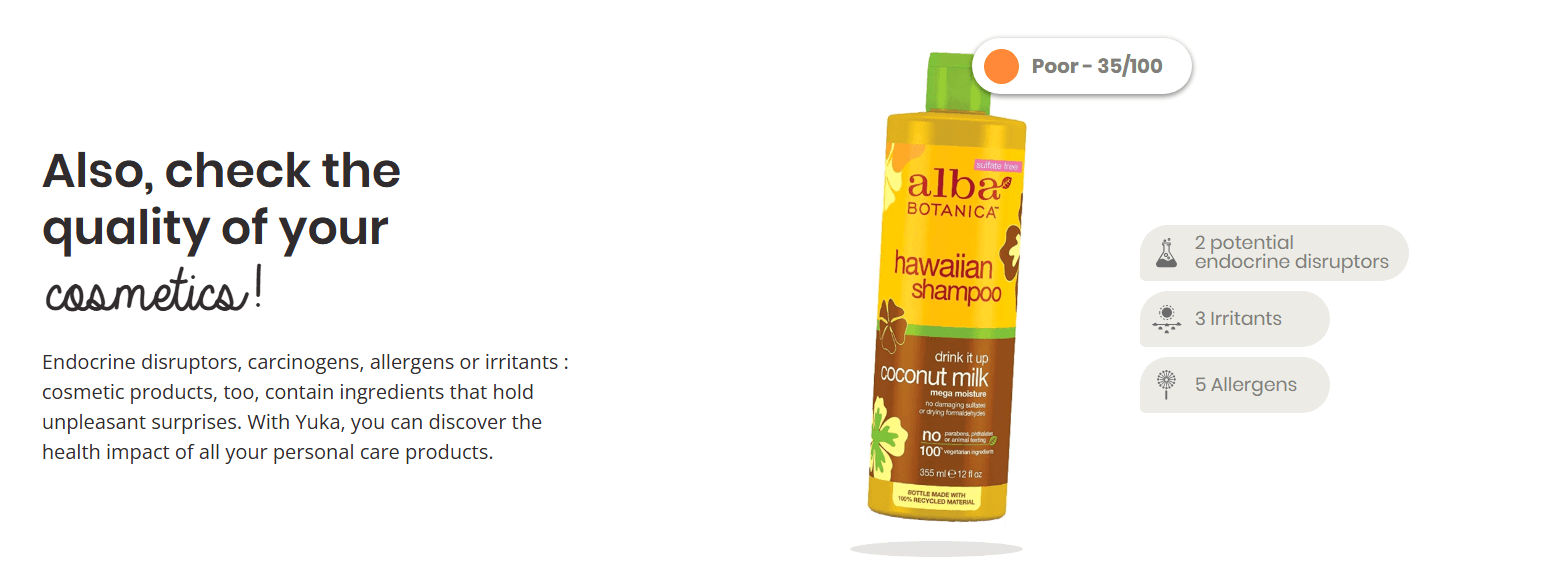
Yuka is a free barcode-scanning app focused on cosmetics and food products. Founded in France as a fully independent project, it is one of the most widely trusted apps of this kind. Many users trust Yuka mainly because the scoring system doesn’t depend on paid endorsements or brand deals, and the company doesn’t accept paid advertising that could compromise its cleaner-swap recommendations.
The app works like most barcode scanners: you scan a sunscreen’s barcode, receive an ingredient-based analysis, and browse cleaner alternatives to find products free of flagged ingredients. All cosmetic items, including sunscreen products, are evaluated according to ingredient risk categories:
- Red dot for high risk
- Orange dot for moderate risk
- Yellow dot for low risk
- Green dot for no risk
Ingredients are categorized based on their potential health and environmental effects, including endocrine disruption, allergenicity, irritation, carcinogenic potential, and pollution. The presence of a single high-risk ingredient places the sunscreen in the red category and limits its overall score to below 25/100.
While Yuka is a highly rated sunscreen ingredient checker, like many similar alternatives, it offers label-based analysis and doesn’t dig below the packaging level.
See how Yuka stacks up against other barcode-scanning apps in our comparisons:
3. Think Dirty
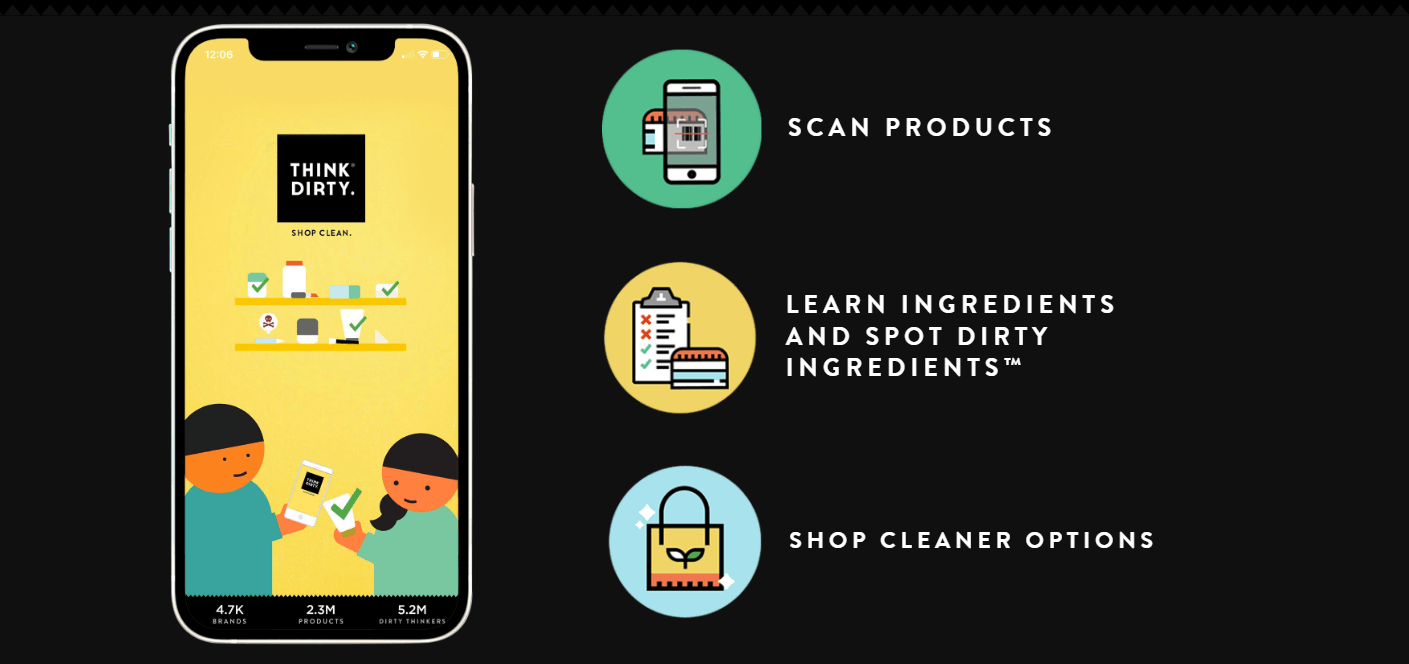
Think Dirty positions itself as a skincare scanner and cosmetic ingredient analyzer, as well as for household, pet, and baby products. Similar to Yuka, the company claims to have no third-party affiliations that influence its product ratings. It accepts no outside contributions, with scores based solely on each product’s chemical composition.
The analysis focuses on three key factor sets: carcinogenicity, developmental and reproductive toxicity, and allergenicity and immunotoxicity. It doesn’t factor in social or environmental considerations to prevent greenwashing.
Items are rated according to the app’s Dirty Meter, with the following scoring system:
- 8–10: Potential serious negative long-term health effects
- 4–7: Potential moderate long-term health effects
- 0–3: No ingredients with potential adverse health effects
- N/R: Ingredients haven’t been rated yet
While the app is advertised as free, access to its baseline features, including barcode scans, manual product searches, and ingredient-based risk explanations, is limited. Even with paid subscriptions, the availability of certain products and features depends on the selected tier.
Think Dirty largely grounds its methodology in publicly available data from U.S. nonprofit organizations and government agencies. While this data is subject to internal evaluation by Think Dirty’s Chemistry Team and Advisory Board, the company doesn’t appear to conduct independent laboratory testing.
4. EWG
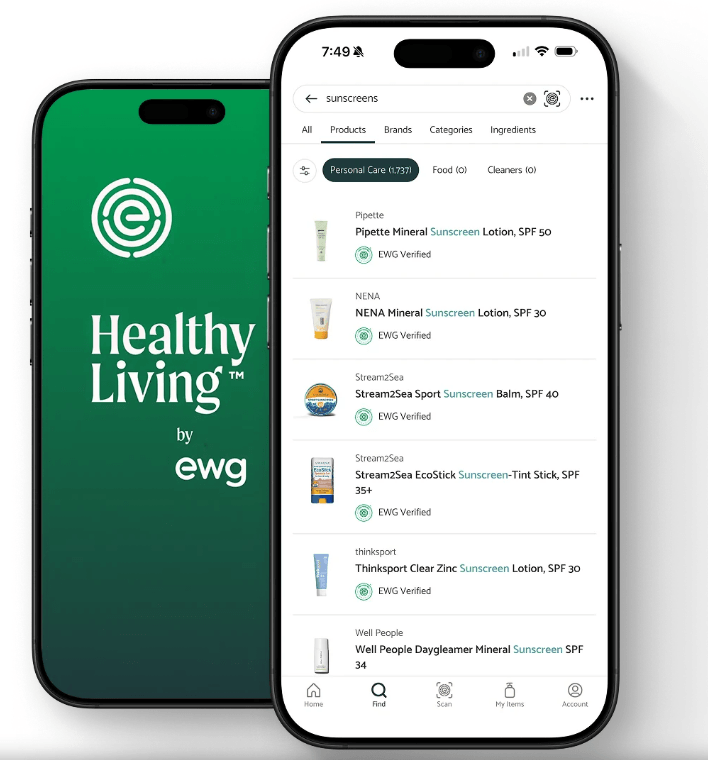
EWG (Environmental Working Group) is a U.S.-based nonprofit environmental advocacy organization that has been involved in chemical research and product safety for over three decades. The group developed Healthy Living, a barcode-scanning app covering food, skincare, and household cleaning products.
Its rating hierarchy slightly differs from those of other scanners. Personal-care products receive a score from 1 (best) to 10 (worst) based on potential safety concerns. You can either scan a product’s barcode or use the search bar to manually browse products, brands, and specific ingredients.
When it comes to personal-care products, including sunscreen, items are categorized based on two key criteria:
- Hazard score, based on documented and potential hazards associated with ingredients, including allergies and immunotoxicity, endocrine disruption, neurotoxicity, and ecotoxicity
- Data availability, reflecting the amount of scientific data available for the specific product or ingredient
The app incorporates EWG’s proprietary resources, including Skin Deep, Food Scores, the Guide to Healthy Living, and the Guide to Sunscreens. These guides, including the one covering top-rated sunscreens, are also available on EWG’s official website.
While EWG claims to base its analysis on its own research encompassing approximately 200,000 products, its recommendations often feature products carrying the EWG Verified mark. Brands can apply for this certification, and products that meet EWG’s requirements are typically prioritized or highlighted within results.
Final Verdict: Which Sunscreen Scanner App Prevails?
Beyond shared features such as barcode scanning, the reviewed sunscreen ingredient checkers differ significantly across key comparison areas, as shown in the table below:
App | Product Scope | Rating Methodology | Recommendation Model |
|---|---|---|---|
Olive |
| Proprietary cosmetic ingredient ranking system developed with the head of a chemical toxin working group, supported by independent laboratory testing for contaminants across ~400 products | Not influenced by third parties or paid advertisements |
Yuka |
| Scientific studies and assessments from established health and regulatory organizations | Not influenced by third parties or paid advertisements |
Think Dirty |
| Data compiled from regulatory and scientific bodies, then verified by an internal team | Product scores not influenced by outside contributions, though registered users may access discounts from brand partners |
EWG |
| Category-specific EWG methodology based on scientific research and existing public and regulatory frameworks | Recommendations highlight EWG Verified products, for which brands can apply if they meet EWG’s requirements |
A prominent differentiator for Olive: rather than relying solely on publicly available data and scientific studies, it maintains its own expert-led rating system and independent laboratory-testing database. That not only reinforces Olive’s independence and reliability, but also allows you to inspect tested products beyond publicly stated claims and listed ingredients.
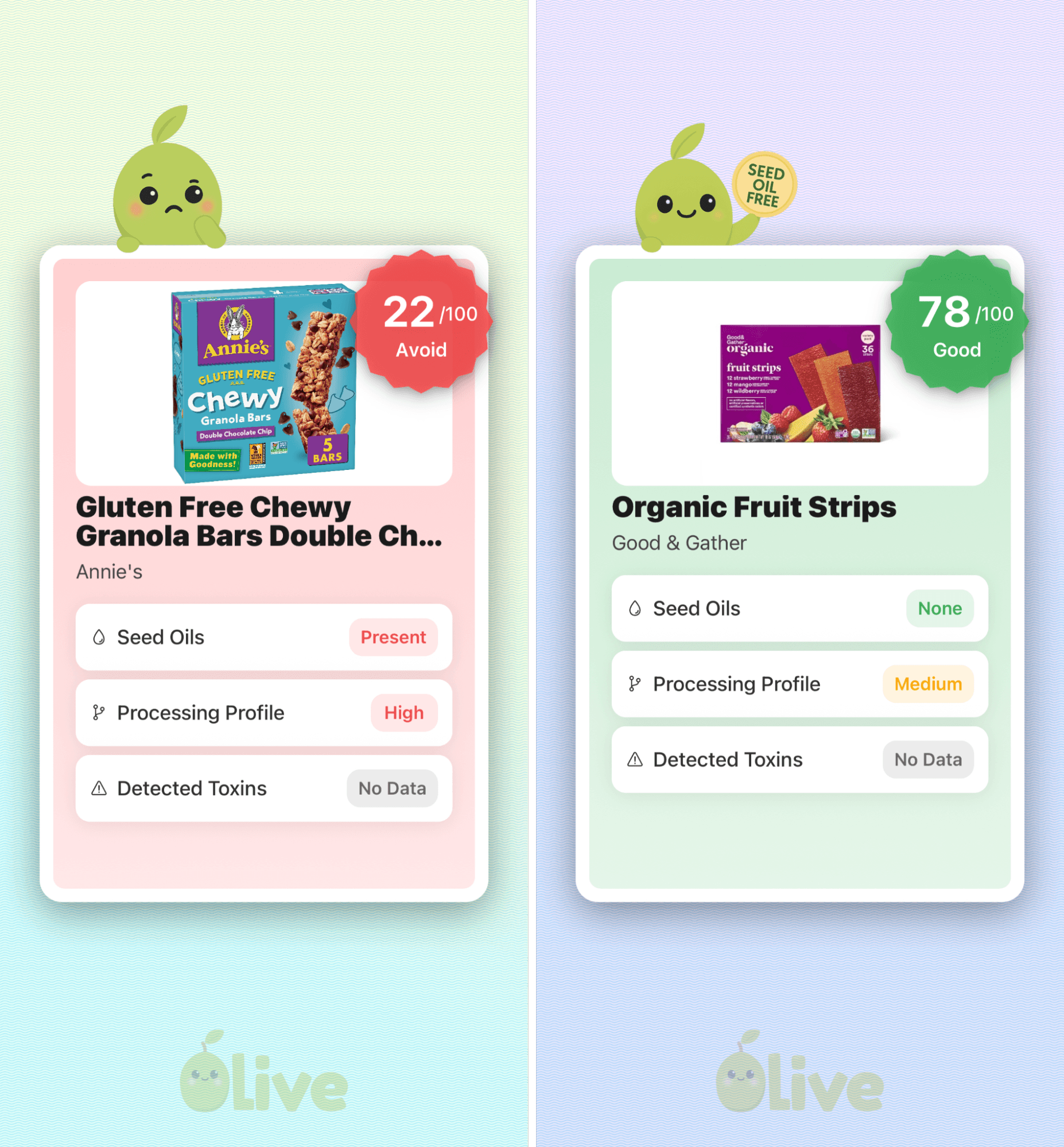
Look Beyond the Label and Make Cleaner Choices With Olive
Olive not only highlights harmful ingredients and points you toward cleaner swaps. It detects the toxic load that may be hiding throughout your home and helps you turn healthier choices into long-lasting changes across your entire household.
Here’s a snapshot of Olive’s key features:
Olive Feature | What It Entails |
|---|---|
Cosmetics, personal care, and household-product scanning | Access an ingredient-based, color-coded analysis of products, with green indicating no risk, yellow moderate risk, and red high risk, along with a straightforward explanation of the rating |
Food and beverage scanning | View a score from 0 (worst) to 100 (best), with a breakdown of toxins, additives, processing, seed oils, and sugar content |
Water checks | Check bottled water for contaminants such as fluoride, heavy metals, and microplastics |
28-Day Kitchen Detox Challenge | Kick-start your clean-living journey with a guided kitchen reset to remove the load, then rebuild (or receive a full refund if you notice no improvement) |
FDA alerts | Receive FDA recall alerts to stay informed about important product-safety updates |
Your personal Olive profile | Create a social profile to track your Olive score and past scans, while connecting with other Olive users on a similar path |
Pair doctor-supervised, lab-tested peptides and expert-led protocols with healthy living course pack, Cellular Health assessment, a 1:1 health coaching consult, and unlimited doctor messaging |
Take a five-minute assessment quiz and receive a tailored Olive plan to get started.
I absolutely love this app! I've used a few different food/product scanner apps and I've been so pleased with how Olive rates based on seed oils, additives, processing and chemicals. I highly recommend this app over any of the others I've used. As someone who prioritizes her health and eats clean, Olive takes the guesswork out of it so I can feel confident in my selections and what I put in my body.

Take the guesswork out of shopping
- Scan food, personal care and home products
- Independent scores backed by real lab testing
- Cleaner swaps for you, and everyone you shop for
FAQs
What sunscreen ingredients to avoid?
The FDA categorizes products, including sunscreen active ingredients, as Generally Recognized As Safe and Effective (GRASE) when they’re scientifically proven as safe and effective. According to their categorization, non-GRASE ingredients are divided into two groups:
- Not GRASE due to documented safety risks: Aminobenzoic acid (PABA) and trolamine salicylate
- Not GRASE due to a lack of data: Cinoxate, dioxybenzone, ensulizole, homosalate, meradimate, octinoxate, octisalate, octocrylene, padimate O, sulisobenzone, oxybenzone, and avobenzone
Besides these FDA-flagged ingredients, holistic health companions such as Olive can detect a broader list of potentially harmful components with a simple barcode scan.
Can a sunscreen ingredient checker evaluate a product’s UV protection?
Not necessarily. A sunscreen ingredient checker primarily focuses on a product’s ingredients and potential health and/or environmental risks, not its sun-protection effectiveness.
Can sunscreen products contain contaminants not visible on the label?
Yes. Oftentimes, products can contain hidden contaminants not listed on the packaging or the manufacturer’s website. That’s why it’s vital to choose comprehensive apps such as Olive, which evaluates products beyond the label and conducts independent contaminant testing.
Featured image credit: AtlasStudio via Shutterstock
Scan Skincare & Cleaners
Scores Brands Can't Buy
Backed by Lab Testing
Cleaner Swaps for Your Skin
Recommended for you
 Alexander Klein
Pore-Clogging Ingredients Checker: Strongest Options & Key Considerations
Learn how pore-clogging ingredient checkers function and how the leading platforms compare across scanning and search capability, methodology, and reliability.
 Alexander Klein
Happy Baby Pouches: Safe and Nutritious? | Parent's Guide
Discover everything you need to know about Happy Baby Pouches: A Parent's Guide to ensuring safe and nutritious choices amidst heavy metals concerns.
100% Independent.
Always.
We never monetize through brand deals, affiliate links, or ads — so you can trust our recommendations are always aligned with our users.
Frequently Asked Questions
What is the Olive app and how does it work?
Olive is a holistic health companion built to help you live cleaner and feel better. Scan a barcode and Olive shows you exactly what is in your food, your personal care products, and the things you bring into your home, then points you to a clean swap that actually makes a difference.
Inside the app you also get:
- Health coaching
- FDA recall alerts
- Prop 65-aligned baby food product lookups
- Proprietary lab testing data on your favorite products
- Video-assisted kitchen detox walkthroughs
- Maps of healthy restaurants and farmers’ markets near you
- Symptom tracking and logging
- Peptide and supplement dosage tracking
How does the Olive food and cosmetic ingredient scanner work?
You scan a product. Olive scores it from 0 to 100 (higher is cleaner), explains in plain language why it scored that way, flags the harmful stuff like seed oils, additives, hidden sugars, contaminants, and endocrine disruptors, and points you to a cleaner swap.
From there, Olive helps you actually change: a 28-day kitchen detox to start, habit building, coaching, and doctor-supervised peptide protocols.
What starts with one scan can end in more energy, a clear head, and a shopping cart you finally trust.
Which products can I scan: food, cosmetics, or bottled water?
All three. Scan food and drinks for the 0 to 100 score, with a breakdown of toxins, additives, processing, seed oils, and sugar.
Scan skincare, makeup, sunscreen, shampoo, and other personal care products and Olive rates every ingredient green, yellow, or red with a plain-language reason for the rating.
Scan bottled water and Olive checks it for contaminants such as fluoride, heavy metals, and microplastics.
How does Olive ensure the accuracy of its scan results?
We do our own independent lab testing for heavy metals (lead, cadmium, mercury, and arsenic) across roughly 400 products so far. That is more testing than most companies do, including Consumer Reports.
Our cosmetic ingredient rating system was built with the head of a chemical toxin working group, so every ingredient carries a documented reason behind its rating.
And Olive is independent. No ads, no affiliates, and we do not take money to change scores. Your subscription is what funds the testing, so Olive answers to you. All of it runs on a database of 10M+ products.
Can Olive be customized to my dietary needs?
Yes. Set your goals, your diet, and your allergies, and every score and swap adjusts to you. Keto, paleo, heart-healthy, Mediterranean, halal, kosher, gluten-free, and dairy-free are all covered.
If you react to gluten, dairy, nuts, soy, or anything else, Olive flags it before it reaches your cart.
Is Olive available for both Android and iOS?
Yes. Olive is live on both. Download Olive on the Apple App Store or get it on Google Play.
Is my data secure when I use Olive?
Yes. Your privacy comes first. Olive protects your personal information with strong security protocols, and your scans, your pantry, and your health details stay yours. You can read the details in our privacy policy.
How do I get started with Olive?
Start with the free quiz. It takes about five minutes, asks about your goals, your symptoms, and what is already in your kitchen, then hands you a personalized plan. Try Olive free.
Start with one scan.
Scan your food, personal care and home products
Independent scores backed by real lab testing
Cleaner swaps for you, and everyone you shop for