Macro calculator for weight loss

Get your daily protein, carbs and fat to lose weight, or to lose fat and build muscle.

Your numbers

Example

Change any box. Your answer updates as you type.

My goal
Pace, a week

Faster than a safe pace for your weight

Diet style

Have a goal date? Use the weight loss calculator by date

Your activity
About you
I am
ft
lb
Units
MoreOptional
lb

Your daily macros: 125 g protein, 140 g carbs, 50 g fat.

About 1,510 calories a day, to lose about 1 lb a week, a safe pace.

At this pace you reach 155 lb around Mar 26, 2027.

What 1,510 calories a day looks like

Your plan

Eat about 1,510 calories a day: 125 g protein, 140 g carbs and 50 g fat.

  • 1,510

    calories a day, 500 under your daily burn of 2,010.

  • 31 to 44g

    protein at each main meal.

  • 33 / 37 / 30%

    your protein, carbs and fat split.

Your macros, meal by meal

One easy way to split your day: 25% at breakfast, 30% at lunch, 35% at dinner and 10% in a snack.

Protein, carbs and fat for each meal, in grams
MealProteinCarbsFatCalories
Breakfast31 g35 g13 g380
Lunch38 g42 g15 g450
Dinner44 g49 g18 g530
Snack13 g14 g5 g150
  • Breakfast380 kcal

    31 g protein35 g carbs13 g fat

  • Lunch450 kcal

    38 g protein42 g carbs15 g fat

  • Dinner530 kcal

    44 g protein49 g carbs18 g fat

  • Snack150 kcal

    13 g protein14 g carbs5 g fat

Compare diet styles

Each style at your 1,510 calories a day. Protein stays high in all of them.

Grams of protein, carbs and fat for each diet style
StyleProteinCarbsFat
BalancedYours125 g140 g50 g
High protein155 g110 g50 g
Lower carb125 g105 g65 g
  • BalancedYours

    125 g protein140 g carbs50 g fat

  • High protein

    155 g protein110 g carbs50 g fat

  • Lower carb

    125 g protein105 g carbs65 g fat

Your plan passes all eight safety checksSee why

The checks

  • PacePassed

    About 1 lb a week, within the safe limit of 1.7 lb a week for your weight.

  • CaloriesPassed

    1,510 a day is at or above the 1,200 a day minimum for women.

  • Resting burnPassed

    1,510 a day is at or above your resting burn of 1,460.

  • Daily cutPassed

    500 under your daily burn, within the 1,000 a day limit.

  • ProteinPassed

    125 g is 1.6 g per kg of your body weight, at or above 1.2 g per kg.

  • FatPassed

    50 g is 30% of calories, at or above 20% and 0.5 g per kg.

  • CarbsPassed

    140 g a day, at or above 100 g.

  • Healthy goalPassed

    155 lb is at or above a healthy weight for your height (BMI 18.5).

We never save or share this answer.

Save your plan

Free. Made on your device. Nothing is sent.

See your protein target in more detail, with food examples and meal-by-meal grams.

Protein calculator

Add your body fat % for a more precise plan. Find it with the body fat calculator.

Body fat calculator
How we worked this outMethod, formula, assumptions and sources
Resting burn
Mifflin-St Jeor: BMR = 10 × weight (kg) + 6.25 × height (cm) − 5 × age − 16110 × 78 + 6.25 × 165.1 − 5 × 38 − 161 = 1,460 kcal
Activity factor
Daily movement 1.3 + 2 sessions a week × 0.0375 = 1.375Activity factor 1.375, so your daily burn is 1,460 × 1.375 = 2,010 kcal
Calorie target
1 lb a week × 3,500 kcal per lb ÷ 7 = 500 kcal a day under your daily burn2,010 − 500 = 1,510 kcal a day (rounded to 10)
Protein weight
Protein uses your weight today: 172 lb (78 kg).
Macros
Protein: 1.6 g × 78 kg = 125 g (4 kcal per g)Fat: 30% of 1,510 kcal ÷ 9 = 50 g (9 kcal per g)Carbs: (1,510 − 125 × 4 − 50 × 9) ÷ 4 = 140 g (4 kcal per g)Grams rounded to 5.
Safety checks
Pace at most 2 lb or 1% of your weight a week, at least 1,200 calories a day for women and 1,500 for men, a cut of at most 1,000 calories a day, protein at least 1.2 g per kg, fat at least 20% of calories and 0.5 g per kg, carbs at least 100 g, and a surplus of at most 250 calories to build muscle.
Sources
Mifflin et al., Am J Clin Nutr, 1990. Katch and McArdle, 1996. Dietary Guidelines for Americans, 2020 to 2025. ISSN position stand on protein and exercise (Jäger et al., 2017). CDC healthy weight guidance. AHA/ACC/TOS obesity guideline, 2013. NHLBI clinical guidelines, 1998. Physical Activity Guidelines for Americans, 2nd edition.

Your details

Goal
Lose weight
Pace
1 lb a week
Diet style
Balanced
Sex
Woman
Age
38
Height
5 ft 5 in
Weight
172 lb
Activity
Lightly active (factor 1.375)
Goal weight
155 lb

Your plan

  • Eat about 1,510 calories a day.
  • Protein 125 g, carbs 140 g, fat 50 g (33 / 37 / 30%).
  • Breakfast: 31 g protein, 35 g carbs, 13 g fat.
  • Lunch: 38 g protein, 42 g carbs, 15 g fat.
  • Dinner: 44 g protein, 49 g carbs, 18 g fat.
  • Snack: 13 g protein, 14 g carbs, 5 g fat.
  • At this pace you reach 155 lb around Mar 26, 2027.

This calculator is for information and education only. It is not medical advice and does not diagnose or treat any condition. Talk to your doctor before you change how you eat or exercise, especially if you are pregnant, breastfeeding, under 18, or have a medical condition.

www.oliveapp.com/tools/macro-calculator-for-weight-loss

Guide

How the macro calculator works

Four steps, worked through for the example: a 38-year-old woman, 5 ft 5 in and 172 lb, who exercises 1 to 3 days a week at a moderate pace and wants to lose 1 lb a week.

1. Your resting burn

We start with the calories your body burns at rest, using the Mifflin-St Jeor equation. It is the same engine as the weight loss calculator by date, so you get the same calories in both. If you add your body fat %, we switch to Katch-McArdle, which works from your lean mass. Find it with the body fat calculator.

Women10 × kg + 6.25 × cm − 5 × age − 161

Example1,460 calories a day at rest

2. Your activity factor

Your daily movement sets the base: 1.2 if you rarely move, up to 1.5 if you move all day. Each exercise session adds a little on top, more for harder sessions. Walking more is the easiest way to raise your base; the walking weight loss calculator shows how many steps it takes.

Factordaily movement + sessions a week × value per session

Example1.3 + 2 × 0.0375 = 1.375, so a daily burn of 2,010 calories

3. Your calorie target

To lose weight, we take 500 calories a day off your daily burn for each pound a week. To lose fat and build muscle, we take 250. To build muscle, we add 250. Your target never goes under 1,200 calories for women or 1,500 for men.

Lose weightdaily burn − 500 × lb a week

Example2,010 − 500 = 1,510 calories a day

4. Protein first, then fat, then carbs

Protein is set in grams per kg of body weight, not as a share of calories. A fixed share gives a smaller person too little protein and a larger person too much. Fat takes 30% of calories, and carbs fill the rest. At a BMI of 30 or more, protein uses your weight at a BMI of 25, so the target stays realistic.

Protein1.6 g × kg (4 calories a gram)

Fat30% of calories ÷ 9

Carbswhat is left ÷ 4

Example125 g protein, 50 g fat, 140 g carbs

These numbers are estimates. Track your weight for 2 to 3 weeks, and recalculate after every 5% you lose.

Protein, carb and fat ratios for weight loss

The Dietary Guidelines for Americans give healthy ranges for adults: protein 10 to 35% of calories, carbs 45 to 65% and fat 20 to 35%. In a calorie deficit we put protein near the top of its range on purpose, because it helps you keep muscle and stay full. That is how much protein you need to lose fat rather than muscle.

Diet styles for the example, at 1,510 calories a day
StyleProteinCarbsFatBest for
Balanced Default125 g140 g50 gMost people
High protein155 g110 g50 gKeeping muscle, staying full
Lower carb125 g105 g65 gPeople who feel better with fewer carbs

Lower carb is not better for fat loss when calories and protein match. Pick the style you can keep. Custom lets you set your own split, and its sliders stop at the safe floors.

Lose fat and build muscle at the same time

Losing fat while you gain muscle works best for beginners, people coming back to training, and people with more body fat. It takes three levers:

  1. A small deficit. About 250 calories a day under your daily burn, so you still have energy to train.

  2. Protein around 2.0 g per kg. For the example, that is 155 g a day. The protein calculator breaks it down meal by meal.

  3. Strength training 2 or more days a week. The Physical Activity Guidelines for Americans advise it for every adult.

The scale can stall while fat falls and muscle grows, so track your body fat, not just your weight.

When your macros need adjusting

  • No change after 2 to 3 weeks

    Check how accurately you log first. Then lower calories by 100 to 200, never below the floor.

  • Always hungry

    Move calories toward protein and fibre. Both keep you full for longer.

  • Low energy in training

    Move calories toward carbs, and eat them around your workouts.

  • The target looks too low

    Pick a slower pace. Half a pound a week still adds up.

When hunger beats the plan
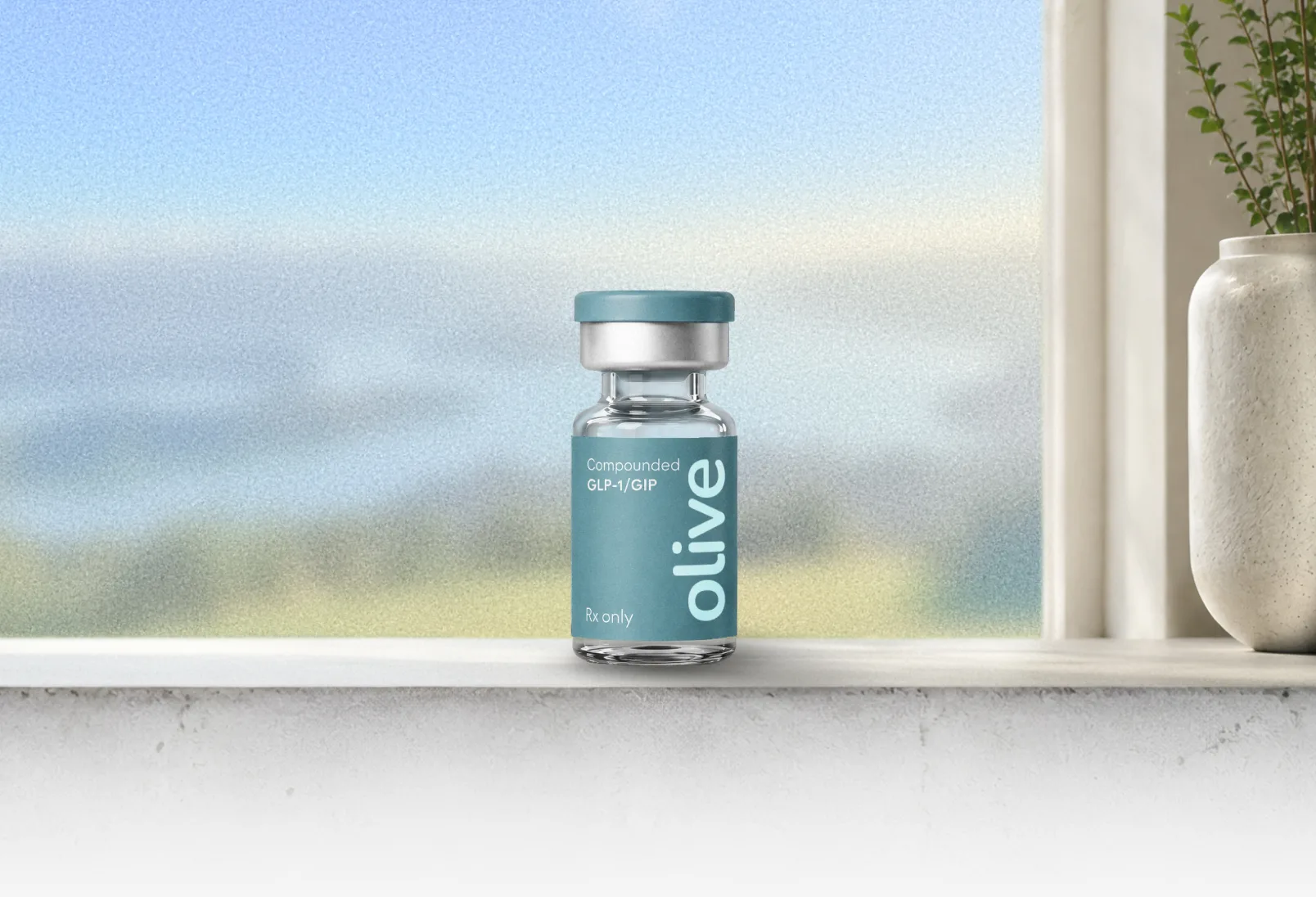
A medication vial on a sunlit windowsill

Macros only work if you can eat to them. When hunger and cravings keep pushing you past your targets, GLP-1 treatment works on appetite itself.

GLP-1 medicines slow how fast your stomach empties and act on appetite centers in the brain, so you feel full sooner and think about food less.

14.9%
Average weight loss at 68 weeks on semaglutide 2.4 mg. STEP 1, Wilding et al., NEJM 2021.
20.9%
Average weight loss at 72 weeks on tirzepatide 15 mg. SURMOUNT-1, Jastreboff et al., NEJM 2022.

Both trials paired the medicine with diet and activity changes. Results vary.

Habits first. A clinical push when your body needs it. A licensed clinician decides if treatment is right for you.

Compounded medications are tailored to a patient's needs and are not reviewed or approved by the FDA for safety or effectiveness. Prescription required. Eligibility, prescribing, and dosing are determined individually by a licensed clinician based on your medical history. Treatment is not appropriate for everyone. Results vary.

Questions about macros for weight loss

Should I count net carbs or total carbs?

Count total carbs. The calculator sets carbs from total carbohydrate, the number on every US nutrition label. Net carbs take fibre out, and labels and apps work them out in different ways, so totals keep your numbers consistent from day to day.

Do women need different macros than men?

The method is the same. Your sex changes your resting burn and the calorie floor, so the grams differ: the example woman gets 125 g protein, 140 g carbs and 50 g fat at 1,510 calories. A man of the same height, weight and activity burns more, so he gets more carbs and fat, and his calories never go under 1,500.

Do I need to hit my macros exactly every day?

No. Aim to land within about 10 g of protein and within your calories on most days. Your weekly average matters more than any one day. Protein is the one to be most steady with, because it protects your muscle.

Should I eat the same macros on rest days?

You can. The calculator already spreads your exercise over the week, so the same calories every day is the simplest plan. If you prefer, move 100 to 200 calories of carbs from rest days to training days, and keep protein the same.

How much fibre should I eat while counting macros?

Aim for about 14 g of fibre for every 1,000 calories, the Dietary Guidelines for Americans target. At 1,510 calories a day that is about 21 g. Fibre comes inside your carbs, from vegetables, fruit, beans and whole grains, and it helps you feel full.

Are macros or calories more important for weight loss?

Calories decide whether you lose weight. Macros decide what you lose and how full you feel. At the same calories, more protein keeps more muscle and curbs hunger, so set your calories first, then your macros.

Can I use this as a bodybuilding macro calculator?

Yes, for most people who lift. Pick Build muscle for a 250 calorie surplus and 1.8 g of protein per kg, or High protein for 2.0 g per kg. Competitive bodybuilders who cut to stage-level body fat usually need a coach and closer tracking than any calculator gives.