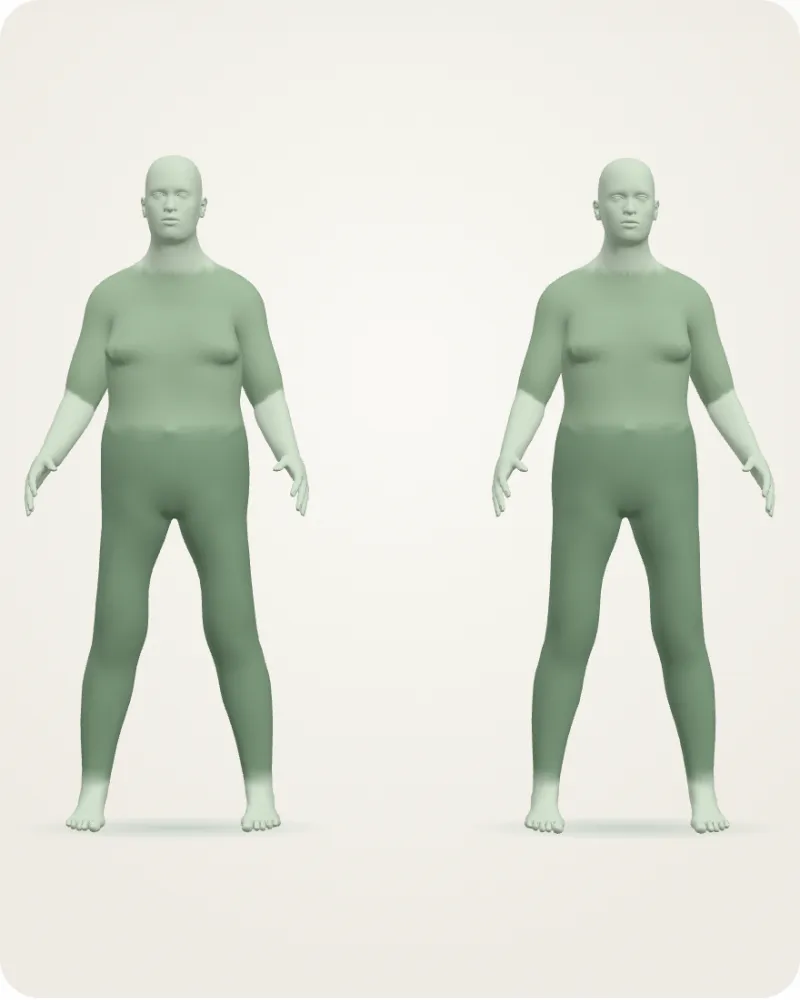
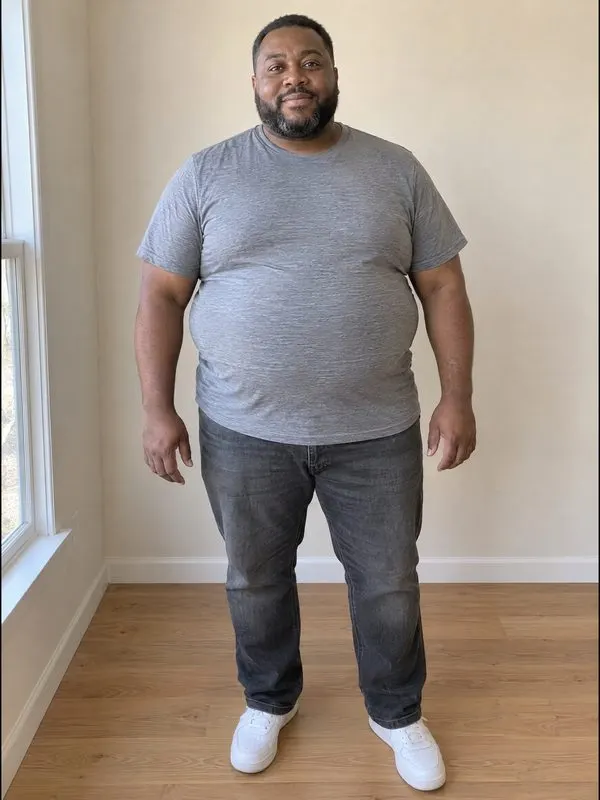
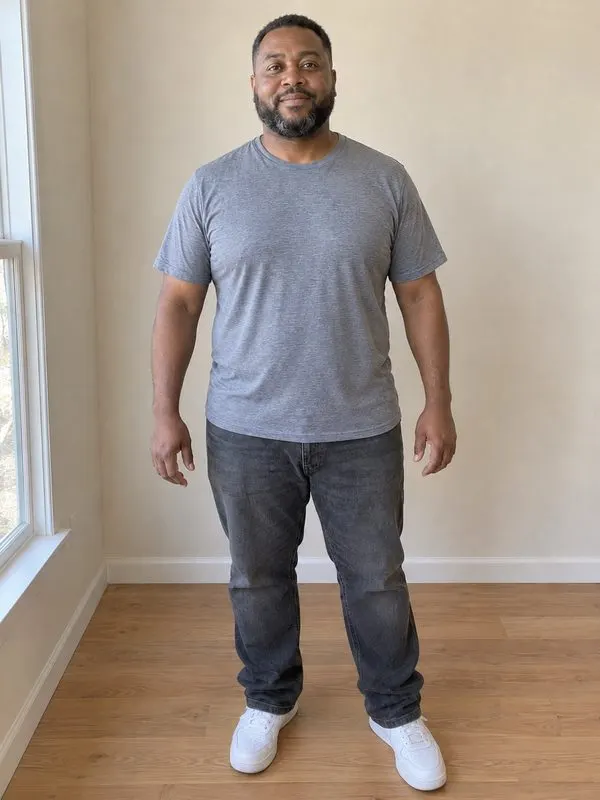
To reach 155 lb by March 16, 2027, lose about 0.86 lb a week.
Today
172 lb
BMI 28.6
Jan 28, 2027 · 3 months
160 lb
BMI 26.7
Waist about 1.8 in smaller
Mar 16, 2027 · your goal
155 lb
BMI 25.8
Waist about 2.6 in smaller
Your face at 155 lb
At your height, people start to notice a change in a face after about 8 lb. At 155 lb, your cheeks and neck look slimmer and your jawline more defined. Your features stay your own.
Source: Re and Rule, 2016. Midface volume falls about 7% per 10 kg (Sharma et al., 2025).
Estimated changes, 172 lb to 155 lb
Waist
About 2.6 in smaller
Hips
About 1.7 to 2.0 in smaller
Upper arms
About 0.9 in smaller
Waist: about 0.85 cm per kg lost (STEP 1, SURMOUNT-1). Hips: 0.55 to 0.65 cm per kg. Upper arms: CDC NHANES 2021 to 2023 body measures.
Turn this on to see if GLP-1 care could help you get there. We never save or share this answer.
How we worked this outMethod, formula, assumptions and sources
Date and calories
The weight loss calculator by date (Mifflin-St Jeor, light activity), at 0.5% of today's weight a week, never more than 2 lb.
3D body
Anny (NAVER LABS, Apache 2.0) on MakeHuman shapes, scaled to your height, sized to your weight, with the waist, hips and arms of US adults like you (CDC NHANES 2021 to 2023), or your own tape measure.
The change
Waist about 0.85 cm per kg lost (STEP 1, SURMOUNT-1, SURMOUNT-5). Hips 0.55 to 0.65 cm per kg. The face from 1.33 BMI units lost (Re and Rule, 2016).
Limits
No goal under a BMI of 18.5 or under 70% of today's weight. No simulation under a BMI of 20.
What would I look like if I lost weight? See it in 3 steps
The simulator shows your body at your goal and the date you could get there. It takes under a minute, and it runs on your device.
1
Enter your numbers. Your height, your weight today and your goal. Add your waist and hips if you have a tape measure.
2
See your body at your goal. A 3D body shaped by your numbers stands next to you today. Turn it, look from the side, and move through time from today to your goal.
3
Get your date and your plan. The simulator gives you the date you could reach your goal at a safe pace, the calories a day it takes, and a day-by-day plan in the Olive app.
The change follows clinical data, not a slimming filter. Your waist gets about 0.85 cm smaller for each kilogram you lose, as in the STEP 1 and SURMOUNT-1 trials. Your hips change by 0.55 to 0.65 cm per kilogram. Your arms follow CDC body survey data (NHANES 2021 to 2023). Your face changes only once you lose about 1.3 BMI units. The pace is 0.5% of your weight a week, never more than 2 lb, and the simulator never shows a goal under a healthy weight.
Sources: STEP 1 (Wilding et al., NEJM 2021); SURMOUNT-1 (Jastreboff et al., NEJM 2022); CDC NHANES 2021 to 2023 body measures; Re and Rule, 2016; Hall, 2011.
What would my face look like if I lost weight?
Your face changes after your waist, and only once you lose about 1.3 BMI units. That is the smallest change other people notice in a face. Your cheeks and neck slim first, and the area under your chin follows. In one MRI trial, a loss of 5.4 kg took 13% of the fat from the neck and 5% from the chin. Over 40, a loss of more than 10 kg can also hollow your temples a little. Your features stay your own.
Pounds to lose before your face looks different, by height
Height
A visible change in your face
5 ft 0 in
About 7 lb
5 ft 5 inExample
About 8 lb
5 ft 10 in
About 9 lb
6 ft 0 in
About 10 lb
6 ft 3 in
About 11 lb
1.33 BMI units at each height (Re and Rule, 2016). Midface volume falls about 7% per 10 kg (Sharma et al., 2025). Neck and chin fat: the CENTRAL MRI trial.
Where you lose weight first: men vs women
Men lose the belly first and fastest. For the same loss, men lose more off the waist than women do.
Women lose from the waist first too. With a pear shape, the hips and thighs hold on longer and slim later. The lead the belly has fades as the loss grows (Chaston and Dixon, 2008; Kuk and Ross, 2009).
3D body visualizer: a free virtual weight loss simulator with measurements
The 3D body takes your height, weight and sex, plus your waist and hips if you add them. Turn it, compare it with you today, and move through time to your goal. It runs in your browser, so your numbers never leave your phone or computer.
Estimated changes for the example, 172 to 155 lb
Measurement
Smaller by
Waist
About 2.6 in
Hips
About 1.7 to 2.0 in
Upper arms
About 0.9 in
The example is a woman, 38, 5 ft 5 in, from 172 to 155 lb. Chest and thigh changes are not shown: the CDC survey we use does not measure them.
Searching for My Virtual Model or Model My Diet? This 3D body does the same job for free, shaped by your own numbers, with the date you could reach your goal.
Before and after at 10, 20, 30, 50 and 100 lb
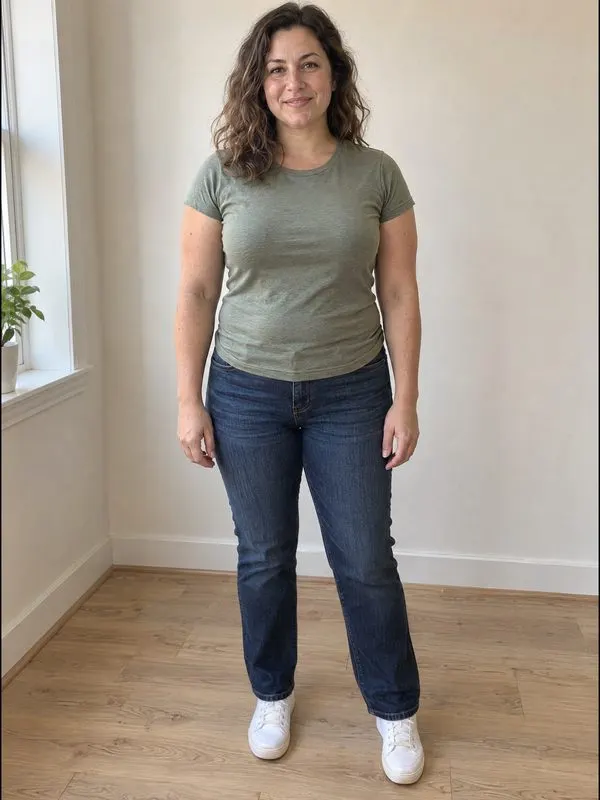
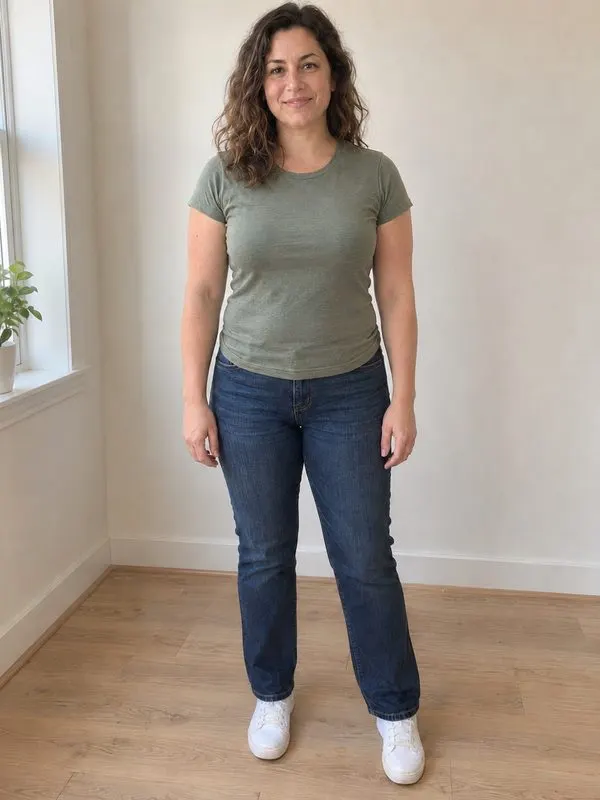
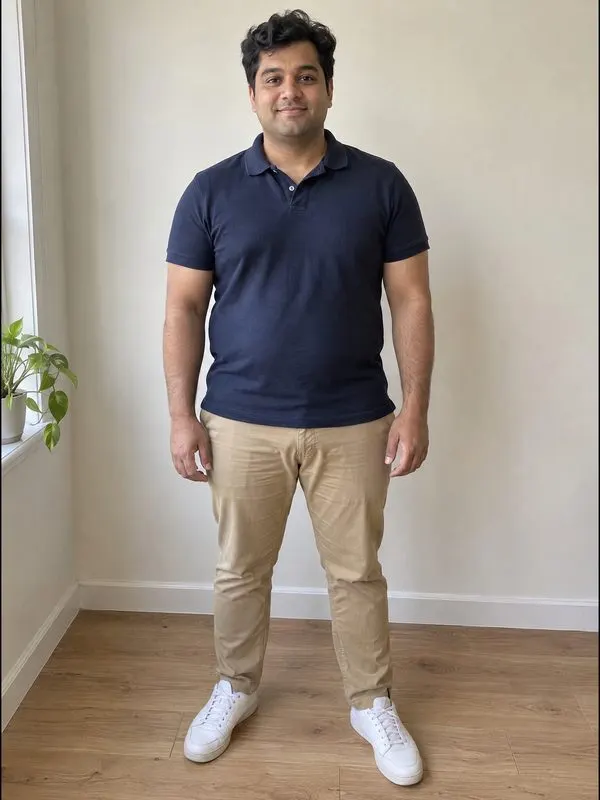
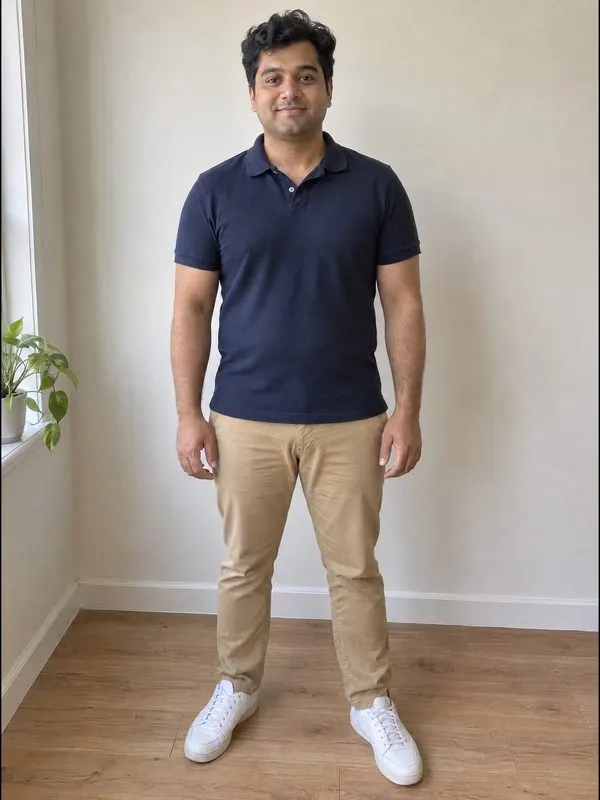
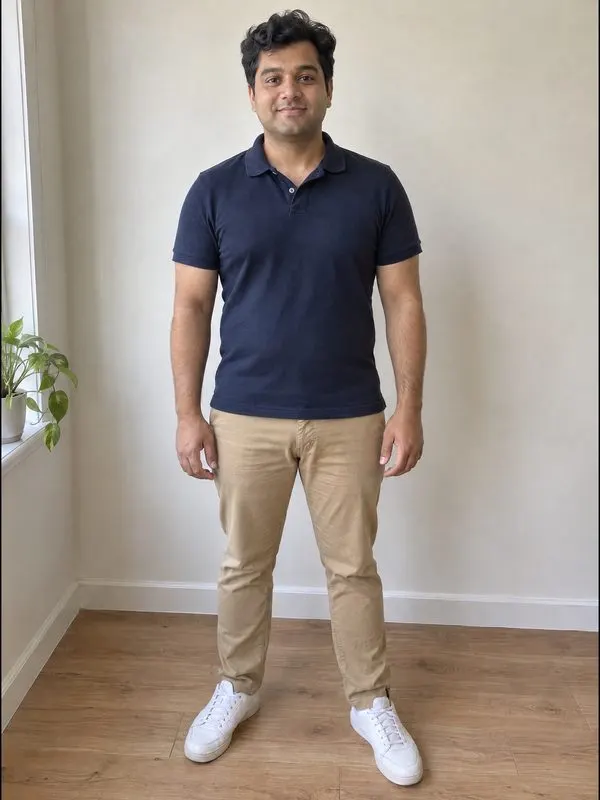
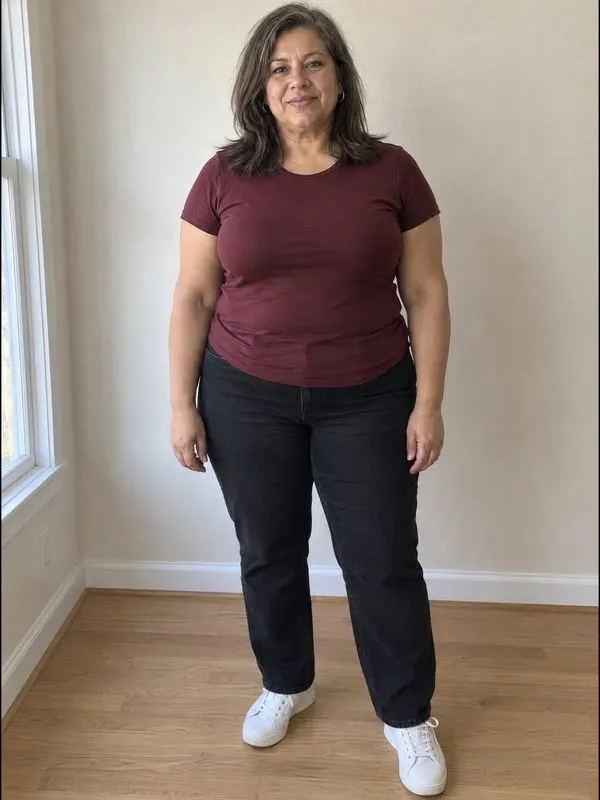
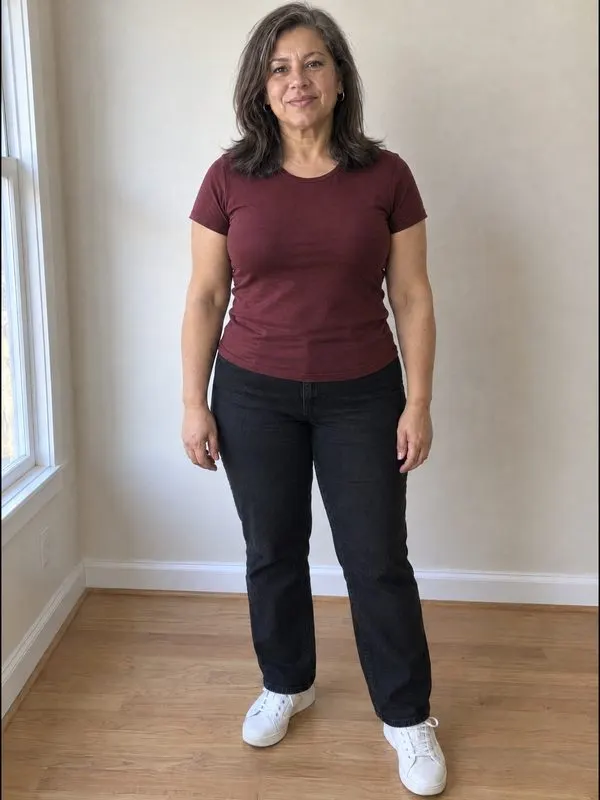
Four AI-generated example people at five goals. None of them is a real person. Each change stays inside the simulator's limit of 30% of today's weight.
BeforeAfter
10 lb lostWoman, 172 to 162 lbAI-generated example, not a real person
BeforeAfter
20 lb lostMan, 220 to 200 lbAI-generated example, not a real person
BeforeAfter
30 lb lostMan, 220 to 190 lbAI-generated example, not a real person
BeforeAfter
50 lb lostWoman, 240 to 190 lbAI-generated example, not a real person
BeforeAfter
100 lb lostMan, 340 to 240 lbAI-generated example, not a real person
Your before and after starts with a plan.
Olive builds your day-by-day plan around your goal and your date.
It shows a likely shape, not a promise. Your genes decide where your body keeps fat, so your real result can differ. The simulator keeps your muscle as it is and never adds abs. It does not show loose skin, which is likely only after a loss of more than 20 kg (44 lb). Use it to picture your goal, and use your plan to reach it.
Ways to get there
On your own, with a plan
A steady pace you can keep, with meals and habits planned for each day.
In clinical trials, people lost 15% to 21% of their weight in about 16 months, against 2% to 3% on placebo. A licensed provider decides if it's right for you.
Results vary, and a licensed clinician decides if treatment is right for you.
Compounded medications are tailored to a patient's needs and are not reviewed or approved by the FDA for safety or effectiveness. Prescription required. Eligibility, prescribing, and dosing are determined individually by a licensed clinician based on your medical history. Treatment is not appropriate for everyone. Results vary.
Types of weight loss simulators
There are three kinds. Each answers a different question.
The 3D body and your plan are made on your device.
Your weight, goal, height and measurements are never sent to Olive or anyone else.
Nothing is stored. Close the page, and your numbers are gone.
There is no account and no email.
Questions about the weight loss simulator
How would I look if I lost weight?
Your waist changes first, by about 0.85 cm for each kilogram you lose. Your hips follow more slowly, and your face changes once you lose about 1.3 BMI units, which is about 8 lb for someone who is 5 ft 5 in. Men lose more off the belly; many women keep more on the hips and thighs. The simulator shows all of this on a 3D body built from your own height, weight and sex.
Can I see what I'd look like if I lost a specific amount, like 30 pounds?
Yes. Type any goal, or tap one of the quick goals: 10, 20, 30, 50 or 100 lb. The simulator shows the goals that stay at a healthy weight for you. It also shows you at 3 and 6 months on the way, with the date you could reach your goal at a safe pace.
What would my face look like if I lost weight?
Your cheeks and neck slim first, then the area under your chin, and your jawline looks more defined. Your features stay the same. Over 40, a loss of more than 10 kg (22 lb) can also hollow your temples and the area under your eyes a little.
How much weight do you need to lose to see a difference in your face?
About 1.3 BMI units. In pounds that is about 7 lb at 5 ft 0 in, 8 lb at 5 ft 5 in, 9 lb at 5 ft 10 in, 10 lb at 6 ft 0 in and 11 lb at 6 ft 3 in. This is the smallest change other people notice in a face (Re and Rule, 2016).
Is the weight loss simulator free?
Yes. It is free, with no account, no email and no payment, before or after your result. Your numbers stay on your device.
How accurate is a weight loss simulator?
It shows a likely shape, not a promise. The 3D body follows clinical trial data for the waist and hips and CDC body survey data for the arms, but your genes decide where your body keeps fat, so your real result can differ. It never adds muscle or abs, and it does not show loose skin.
How is this different from other 3D body visualizers?
Most 3D body visualizers show a body at a weight. This one also gives you the date you could get there at a safe pace, the calories a day it takes, and how your waist, hips and face change on the way. It runs in your browser, with no sign-up.
Does it work for men and for women?
Yes. Choose woman or man. Each has its own 3D body and its own waist, hip and arm data, because men and women lose weight in different places.
Where do men lose weight first?
Men usually lose weight from the belly first. For the same loss, men lose more off the waist than women do, and the belly leads most in the first part of a loss.
Is there an app that shows what you would look like if you lost weight?
You don't need an app. This simulator runs in your phone's browser, and you can add it to your home screen. To get a day-by-day plan to your goal, the Olive app builds one from your numbers.
Can AI show me what I would look like if I lost weight?
AI photo tools edit a photo of you to a lower weight. A good one keeps your face, clothes and background, and changes your body only as much as weight loss would. This simulator starts with a 3D body built from your numbers, which needs no photo, and shows the date you could reach your goal.
Are my numbers private?
Yes. The 3D body and the plan are made on your device. Your weight, goal, height and measurements are never sent to Olive or anyone else, and they are not stored.
Can a weight loss simulator replace professional health advice?
No. A simulator helps you picture a goal and a pace. It does not know your health history. Talk to your doctor before you change how you eat or exercise, especially if you are pregnant, have a medical condition, or take medication.
Written by the Olive health team. Updated October 28, 2026.