Gluten-Free Scanner: How Leading Apps Compare & Which One To Choose
Compare leading gluten-free scanner apps and online checkers, explore their key features and potential limitations, and find the best option for safer shopping.
Sign up for Olive Written by Alexander KleinPublished on October 1, 2026
It’s a common misconception that detecting gluten takes only a glance at the product label. In reality, gluten can appear under less obvious ingredient names or enter products through cross-contact without transparent disclosure.
Gluten-free scanners can streamline your quest for suitable products. More advanced tools detect gluten-containing ingredients even when the word “gluten” itself doesn’t appear on the label. This guide reviews some of the leading gluten scanners on the market and covers the pros and cons of each platform.
- How a gluten-free checker can simplify your grocery shopping
- What some of the leading options offer and how they stack up against one another
- How a more comprehensive ingredient checker can support a sustainable lifestyle change
Know what's really in your cart.
Sign up for OliveGluten-Free Ingredient Checker: Key Considerations
The table below outlines crucial considerations for gluten-free food scanners and why they matter when choosing an adequate companion for a healthy lifestyle:
| Key Question | Why It Matters |
|---|---|
| Is the platform focused only on gluten? | While you may be drawn to gluten-focused apps, those don't necessarily guarantee higher credibility. If your needs extend beyond gluten, you may require an ingredient checker with more coverage. |
| Is the database crowdsourced or based on scientific research and independent product testing? | Community-driven platforms may display inconsistencies and biases in product information and recommendations. Independent product testing provides reliability. |
| Is the company transparent in its scientific background and expert credentials? | Claims of science-backed methodology may feel empty without information supporting their credibility. Prioritize platforms that clearly explain their methods and rating systems. |
| Does the company receive paid endorsements and accept brand deals? | Platforms that rely on third-party collaborations may lack objectivity in product analyses and cleaner-swap recommendations. |
| Scanning capability | Scanning an item while standing in an aisle, instead of manually entering ingredients or browsing product directories, can make the process more efficient. |
| Can you personalize the scanner to your dietary needs and preferences? | Dietary needs vary from person to person, so a scanner that lets you set specific preferences can make product recommendations more relevant than a one-size-fits-all approach. |
Top 4 Gluten Scanners: Detailed Reviews
While some ingredient checkers keep a narrow focus on specific components such as gluten, others cover a broader range of food-related concerns or extend their support across different product categories.
We’ve reviewed four viable options for gluten scanners to help you navigate grocery shopping:
- Olive
- The Gluten Free Scanner
- Spoonful
- Fig
Scan Any Grocery Barcode
Scores Brands Can't Buy
Backed by Lab Testing
Cleaner Swaps in the Aisle
1. Olive
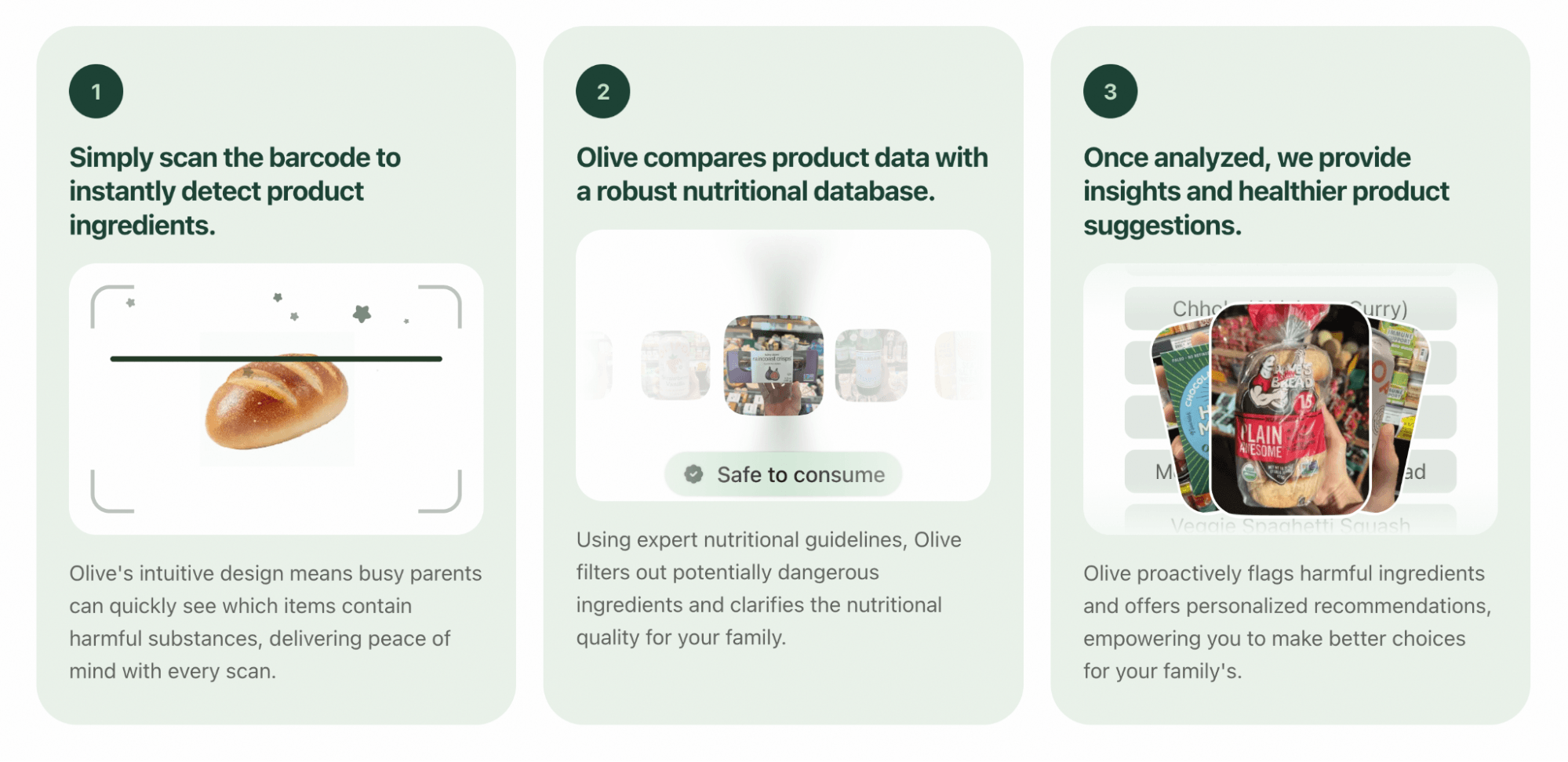
If you want reliable support throughout your gluten-free journey and overall clean lifestyle, Olive is an excellent fit. As a holistic health companion, Olive allows you to set specific dietary preferences and adapt recommendations accordingly, including avoiding gluten.
Olive flags gluten-containing ingredients and other harmful substances in food, including less obvious gluten-containing ingredients. You can also set personalized dietary filters and customize alerts for gluten and other ingredients you want to avoid.
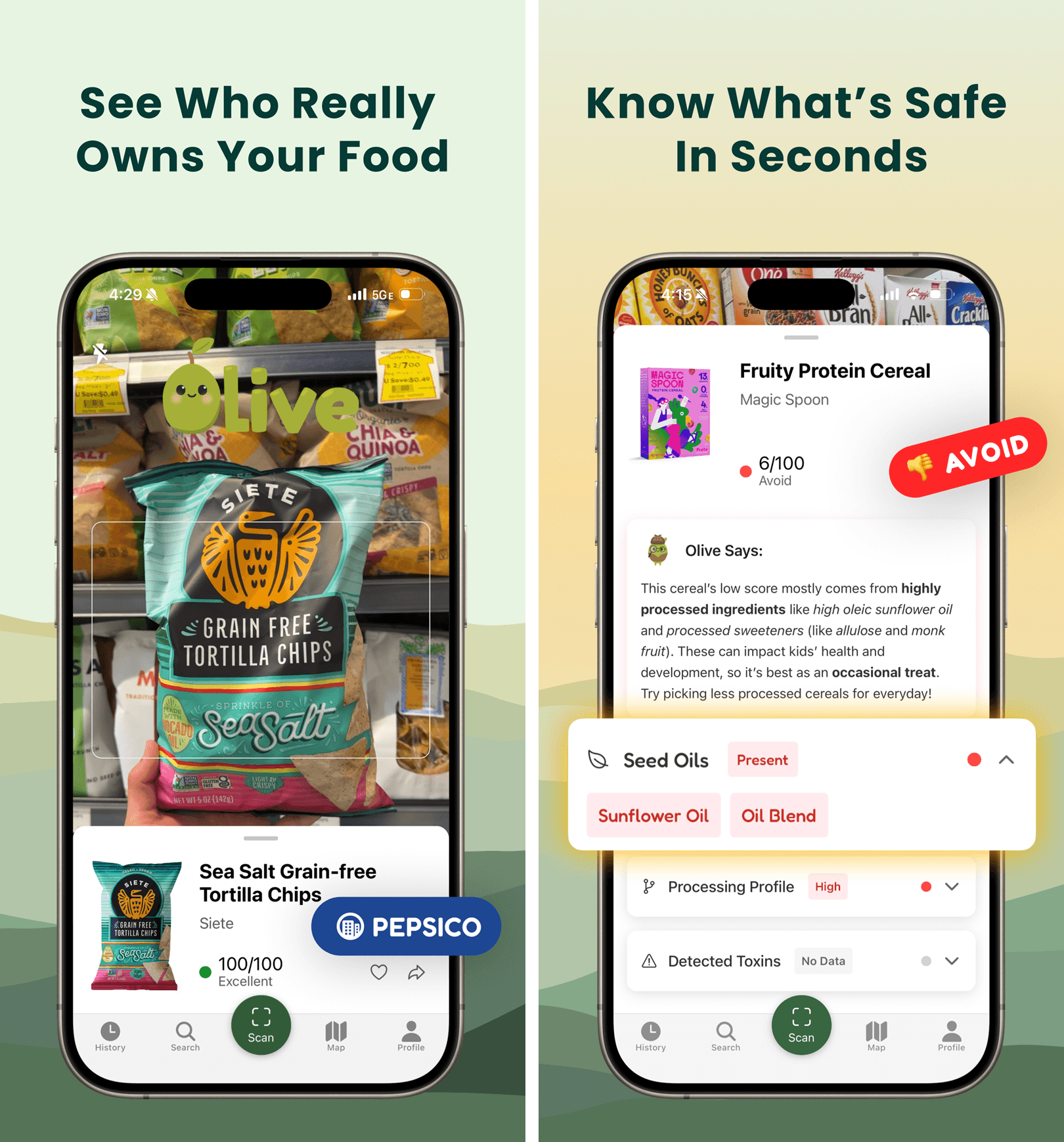
Olive has translated its multidimensional support into a user-friendly app with an intuitive interface. You can use the search bar to scan a barcode to access a detailed ingredient analysis and the rationale behind each flag. Ingredients are presented through a color-coded system, with green indicating no risk, yellow indicating moderate risk, and red indicating high risk.
Based on component sub-scores, allergen flags, and processing level, each product receives a score from 0 (worst) to 100 (best). You don’t have to exclude entire food groups. Olive discovers cleaner swaps within the same category and automatically recommends them when products score poorly.
Try Olive’s gluten-free scanner today.
You can also try the app for free on iOS and Android.
2. The Gluten Free Scanner
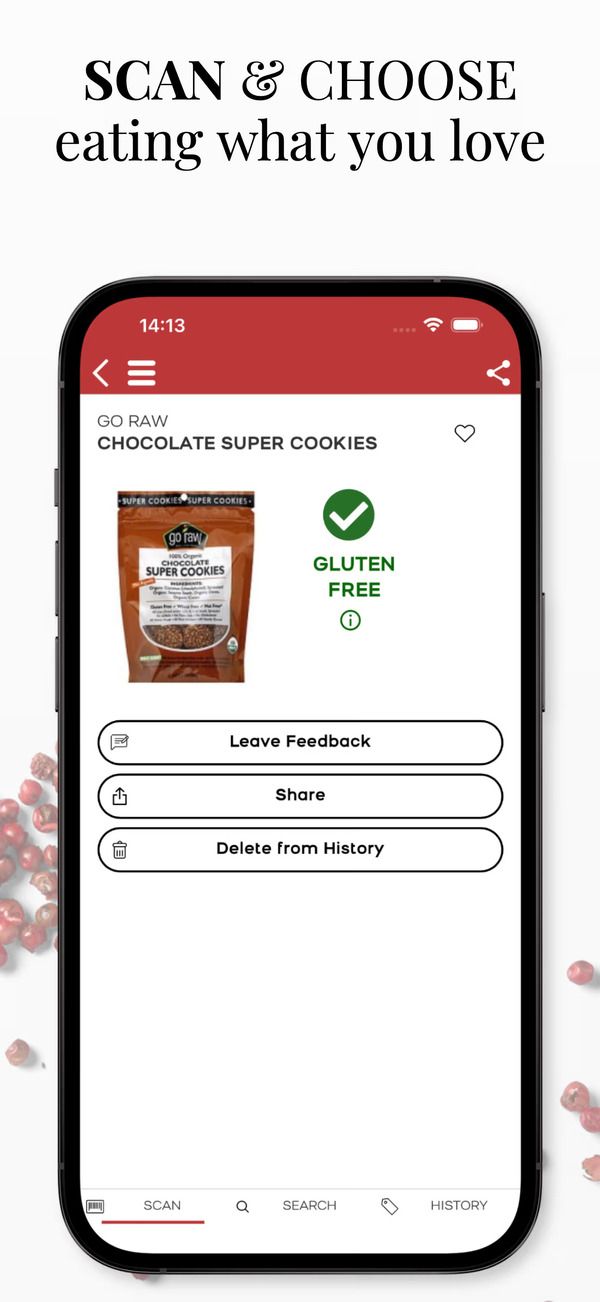
The Gluten Free Scanner is a platform designed to accommodate people with gluten intolerance or celiac disease. Available as an iOS mobile app, it offers in-app product searches by brand, name, or category, as well as barcode scanning.
The company presents the app as independent, claiming that brand deals, paid advertisements, or affiliate links do not shape its gluten-free recommendations. Its U.S.-based directory contains over a million food and beverage products and covers approximately 150,000 restaurants across the country.
The key features offered by the app include:
- Manual product searches through a gluten-aware catalog
- A searchable list of safe and unsafe ingredients you can rely on when shopping, cooking, or dining out
- Dining and travel cards to help guide your food choices in restaurants
- The Discover Gluten Free feature for easy discovery of new gluten-free products
The platform claims that a team of registered dietitians, nutritionists, and researchers oversees the accuracy of its database. However, the website doesn't disclose the team members’ credentials, exact methodology, or scientific sources. Additionally, the analysis appears to be based solely on the presence of gluten, which may be too limited for users seeking to assess broader food safety.
3. Spoonful
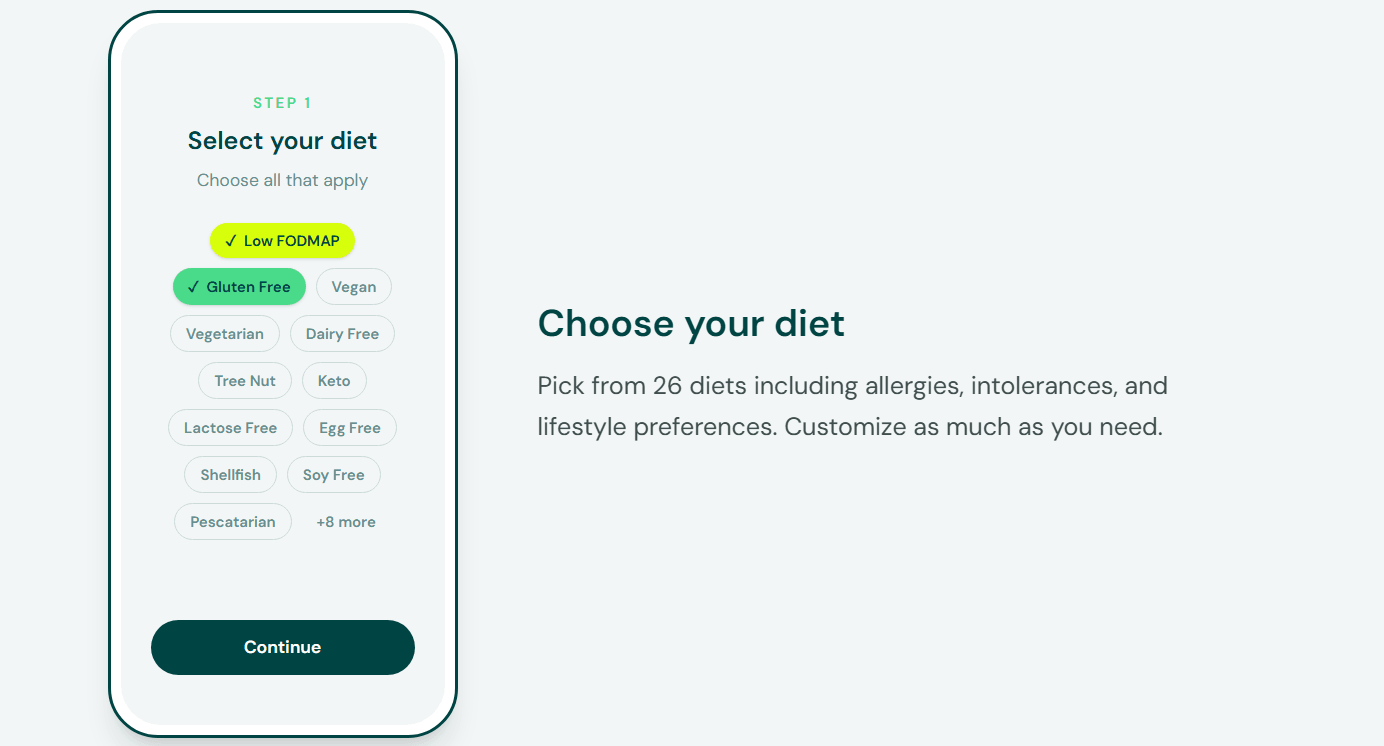
Spoonful is an online directory and mobile app designed to help users find food products that match their dietary preferences. In addition to gluten detection, it accommodates numerous other dietary restrictions, including low-FODMAP, vegan, dairy-free, vegetarian, and wheat-free.
Through Spoonful’s free web platform, you can search for food products by name, category, or brand. You can also filter results by a specific diet and select your location for more relevant results, with options including the U.S., U.K, Canada, Australia, or New Zealand.
In the app, you can scan the barcode or snap a photo of the product to receive an instant analysis. Results are color-coded: green indicates the product fits your selected diet, yellow signals potential concerns, and red shows incompatible ingredients. For incompatible products, the app automatically suggests more suitable substitutes based not only on dietary compatibility but also on taste and popularity.
Spoonful’s database is community-powered and incorporates real-world user reviews and ratings, while it states that its gluten-free database is reviewed by dietitians living with celiac disease. The company claims to base its product analysis not only on the ingredients visible on the label, but also on potentially concealed components, promising to help users avoid cross-contact risks.
While this community-driven approach provides access to genuine experiences from real users, it may also raise concerns about the consistency and reliability of user-submitted product information.
4. Fig
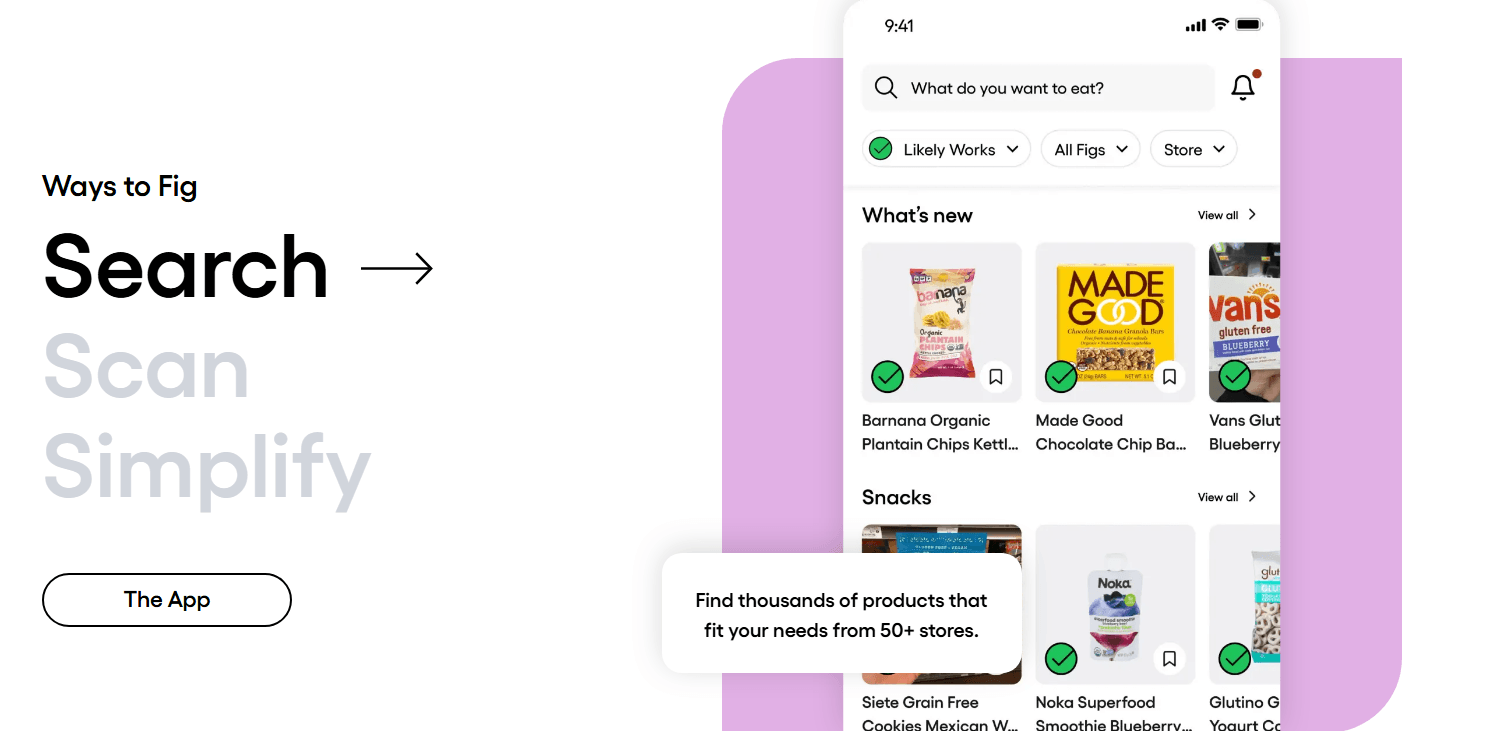
Fig was developed by people who’ve experienced food sensitivities firsthand, and it aims to accommodate diverse dietary preferences and restrictions, no matter how unique they are. The app’s strongest feature is its ability to narrow sensitivities, allergies, and avoidances down to a single ingredient, enabling a high level of customization.
The first step in adapting grocery recommendations to your dietary needs is creating your personal Fig profile. This profile acts as your personal food fingerprint, allowing you to specify key information such as:
- The diets you follow
- The allergies you have
- The ingredients you avoid
Each preference can also be assigned a particular severity level, which is key in shaping your results. Based on your profile, Fig displays suitable products and lets you scan barcodes from a database of over 300,000 items. If a particular ingredient is flagged, you can tap it to learn how it conflicts with your stated preferences.
In addition to gluten intolerance or sensitivity, your Fig can be adapted to numerous diets, including dairy-free, fructose-free, paleo, pescatarian, and candida overgrowth. Because the system operates on an ingredient-by-ingredient basis, Fig supports a broad range of food allergies and component-specific avoidances.
Fig is a strong option if avoiding gluten and personalized dietary compatibility are your main priorities, particularly if you manage multiple restrictions at once. It may, however, be too limited for users seeking a broader food-quality analysis or guidance in other areas of product safety within the household.
Explore our guides to top-rated ingredient checkers tailored to specific needs:
How To Choose a Gluten Checker for Your Needs
Each reviewed gluten ingredient checker caters to specific user needs, and the final choice ultimately depends on your priorities.
The Gluten Free Scanner is specifically designed around gluten sensitivity and celiac disease, which may draw users with these concerns toward its narrow approach. However, the platform doesn’t clearly disclose its methodology or scientific sources, making it difficult to assess how it determines individual results.
Spoonful and Fig expand their support to other dietary restrictions and needs, but Spoonful remains partly community-driven, which may raise credibility concerns for some users. Fig primarily focuses on adapting recommendations to each user’s personalized Fig profile rather than providing a broader analysis of the food they eat.
Olive fills the gaps left by conventional gluten checkers by addressing food safety through a broader lens, offering whole-household guidance rather than ingredient-focused analysis alone.
Feel Confident in Your Pantry With Olive
Olive helps you go beyond label claims and identify undisclosed components. It doesn’t rely on crowdsourced databases but combines expert input with independent product testing focused on contaminants that conventional label scanners often overlook.
Additionally, Olive gives you access to expert support throughout your journey, helping you achieve lasting behavioral change instead of instant, short-lived fixes.
The table below outlines Olive’s core offerings:
Olive Feature | Details |
|---|---|
Gluten-free scanning | Flags gluten-containing ingredients and simplifies gluten-free shopping based on your dietary preferences |
Food scanning | Scans individual barcodes or entire shelves and provides scores based on risk levels and the volume of harmful or avoided ingredients |
Cosmetics and personal-care scanning | Assesses scanned products, explains potential ingredient risks, and offers same-category, cleaner swaps |
Bottled water scanning | Reveals hidden contaminants such as heavy metals based on proprietary, independent laboratory testing across approximately 400 ingredients |
Household products scanning | Detects toxic components, offers straightforward risk explanations, and reveals cleaner substitutes |
AI-guided kitchen reset | Uses AI to analyze your kitchen, highlight potential risks, and offer alternative solutions |
FDA alerts | Displays active FDA recalls from the previous 30 days |
Personalized peptide protocols for weight loss and more | Offers doctor-supervised, lab-tested peptides via registered pharmacies, with ongoing expert guidance throughout the process |
Personal health coaching | Provides individual plans developed by an expert based on your specific needs, goals, and health journey |
Olive profile | Lets you keep track of your symptoms, progress, and Olive score, view past scans, and interact with other users |
Olive’s scores and recommendations are grounded in scientific research and not brand deals or sponsorships. Take this quick Olive quiz to start your journey toward a cleaner, sustainable lifestyle.
I love this app! It makes it so easy to find the healthiest options for me and my family. I especially loves the shelf scan option because if you are looking to buy a certain item, for example popcorn, you can scan the whole aisle very quickly and see which options score the highest! It makes grocery trips a lot faster for me than reading ingredients :)

Good choices made easy
- Scan food, personal care and home products
- Independent scores backed by real lab testing
- Cleaner swaps for you, and everyone you shop for
FAQs
Can gluten ingredient checkers detect other harmful components in food?
Some can. While certain ingredient checkers focus solely on gluten, other platforms analyze food through a broader lens. This allows them to recognize numerous potentially harmful ingredients instead of flagging only those related to specific sensitivities.
Note that an ingredient checker doesn’t have to focus exclusively on gluten to identify gluten-containing ingredients with great accuracy.
Can a gluten-free scanner detect cross-contact risks?
Whether a scanner can detect cross-contact risks depends on the platform. If you have celiac disease, a wheat allergy, or a severe gluten sensitivity, ensure that you’re choosing a reliable tool that considers potential cross-contact and precautionary statements.
Even then, due diligence remains necessary. Double-check the label, discuss your needs with restaurant staff, or contact the manufacturer directly when the information is unclear.
Should you still read the label after scanning a product?
Yes. Product scanning doesn’t replace personal vigilance or advice from a qualified health professional. If your allergy or gluten sensitivity is severe, double-check products and meals. A gluten-free scanner is a helpful starting point, but it shouldn’t be your only source of information.
Featured image source: ZikG via Shutterstock
Scan Any Grocery Barcode
Scores Brands Can't Buy
Backed by Lab Testing
Cleaner Swaps in the Aisle
Recommended for you
 Alexander Klein
Pore-Clogging Ingredients Checker: Strongest Options & Key Considerations
Learn how pore-clogging ingredient checkers function and how the leading platforms compare across scanning and search capability, methodology, and reliability.
 Alexander Klein
Happy Baby Pouches: Safe and Nutritious? | Parent's Guide
Discover everything you need to know about Happy Baby Pouches: A Parent's Guide to ensuring safe and nutritious choices amidst heavy metals concerns.
100% Independent.
Always.
We never monetize through brand deals, affiliate links, or ads — so you can trust our recommendations are always aligned with our users.
Frequently Asked Questions
What is the Olive app and how does it work?
Olive is a holistic health companion built to help you live cleaner and feel better. Scan a barcode and Olive shows you exactly what is in your food, your personal care products, and the things you bring into your home, then points you to a clean swap that actually makes a difference.
Inside the app you also get:
- Health coaching
- FDA recall alerts
- Prop 65-aligned baby food product lookups
- Proprietary lab testing data on your favorite products
- Video-assisted kitchen detox walkthroughs
- Maps of healthy restaurants and farmers’ markets near you
- Symptom tracking and logging
- Peptide and supplement dosage tracking
How does the Olive food and cosmetic ingredient scanner work?
You scan a product. Olive scores it from 0 to 100 (higher is cleaner), explains in plain language why it scored that way, flags the harmful stuff like seed oils, additives, hidden sugars, contaminants, and endocrine disruptors, and points you to a cleaner swap.
From there, Olive helps you actually change: a 28-day kitchen detox to start, habit building, coaching, and doctor-supervised peptide protocols.
What starts with one scan can end in more energy, a clear head, and a shopping cart you finally trust.
Which products can I scan: food, cosmetics, or bottled water?
All three. Scan food and drinks for the 0 to 100 score, with a breakdown of toxins, additives, processing, seed oils, and sugar.
Scan skincare, makeup, sunscreen, shampoo, and other personal care products and Olive rates every ingredient green, yellow, or red with a plain-language reason for the rating.
Scan bottled water and Olive checks it for contaminants such as fluoride, heavy metals, and microplastics.
How does Olive ensure the accuracy of its scan results?
We do our own independent lab testing for heavy metals (lead, cadmium, mercury, and arsenic) across roughly 400 products so far. That is more testing than most companies do, including Consumer Reports.
Our cosmetic ingredient rating system was built with the head of a chemical toxin working group, so every ingredient carries a documented reason behind its rating.
And Olive is independent. No ads, no affiliates, and we do not take money to change scores. Your subscription is what funds the testing, so Olive answers to you. All of it runs on a database of 10M+ products.
Can Olive be customized to my dietary needs?
Yes. Set your goals, your diet, and your allergies, and every score and swap adjusts to you. Keto, paleo, heart-healthy, Mediterranean, halal, kosher, gluten-free, and dairy-free are all covered.
If you react to gluten, dairy, nuts, soy, or anything else, Olive flags it before it reaches your cart.
Is Olive available for both Android and iOS?
Yes. Olive is live on both. Download Olive on the Apple App Store or get it on Google Play.
Is my data secure when I use Olive?
Yes. Your privacy comes first. Olive protects your personal information with strong security protocols, and your scans, your pantry, and your health details stay yours. You can read the details in our privacy policy.
How do I get started with Olive?
Start with the free quiz. It takes about five minutes, asks about your goals, your symptoms, and what is already in your kitchen, then hands you a personalized plan. Try Olive free.
Start with one scan.
Scan your food, personal care and home products
Independent scores backed by real lab testing
Cleaner swaps for you, and everyone you shop for