

Healthy MomsFood
Tina’s, Red’s, or Amy’s? Who’s Got the Best Burritos?
Shopping for commercial brands of burritos is an example of why it is important to seek organic ingredients even in processed foods.
Sign up for OliveShopping for commercial brands of burritos is an example of why it is important to seek organic ingredients even in processed foods.
Sign up for Olive David SteinmanMarch 11, 2026
Processed foods will never replace homemade dishes when it comes to healthy eating— that’s a given. But if you do occasionally cross over to the dark side, you can make your shopping much healthier by opting for organically sourced ingredients. Take the case of burritos, whose culinary history dates back to Northern Mexico. Burritos rank as the eighth most popular food in America with a 79 percent favorability rating, according to a 2025 YouGov.com survey.
The proof that going organic is a smart choice is in the tortillas themselves. Virtually every conventionally sourced flour tortilla the Food and Drug Administration tested in one series of analyses contained toxic organophosphate (OP) pesticides, including malathion, methoxychlor, and chlorpyrifos, according to data I reviewed for my new book Raising Healthy Kids: Protecting Your Children from Hidden Chemical Toxins. As I note in my book, OPs are toxic to the developing nervous system — even with normal-range exposures occurring during pregnancy and early childhood, increasing the risk for attention deficit/hyperactivity disorder and other behavioral issues. The OPs contribute to dementia and memory loss when exposure occurs during adulthood. They are definitely bad health news.
On the other hand, given that achieving 100 percent purity in this chemical world is difficult, if not impossible, organically sourced flour used for tortillas will be virtually free of OPs and other pesticides.
Another difference between organic and conventionally sourced ingredients is in how the product’s seed oils are likely to have been processed. Most processed foods contain seed oils such as canola, sunflower, and safflower oil, which have come under scrutiny in recent years because of extensive processing that removes much of their nutritional value, notes a 2022 article in the Scientific World Journal. Organically grown seed oils are processed differently. Whereas conventionally processed seed oils are extracted with solvents such as hexane and can be heated to high temperatures, organically sourced ones rely on mechanical methods such as expeller presses, thus retaining more of their nutritional value and eliminating a source of potentially toxic chemical residues.
But when it comes to the two leading brands of organic burritos, there is one major difference between them that consumers might not notice without careful label reading. Between the two, Red’s lists organically sourced cheeses. Amy’s doesn’t list their cheeses as organic.
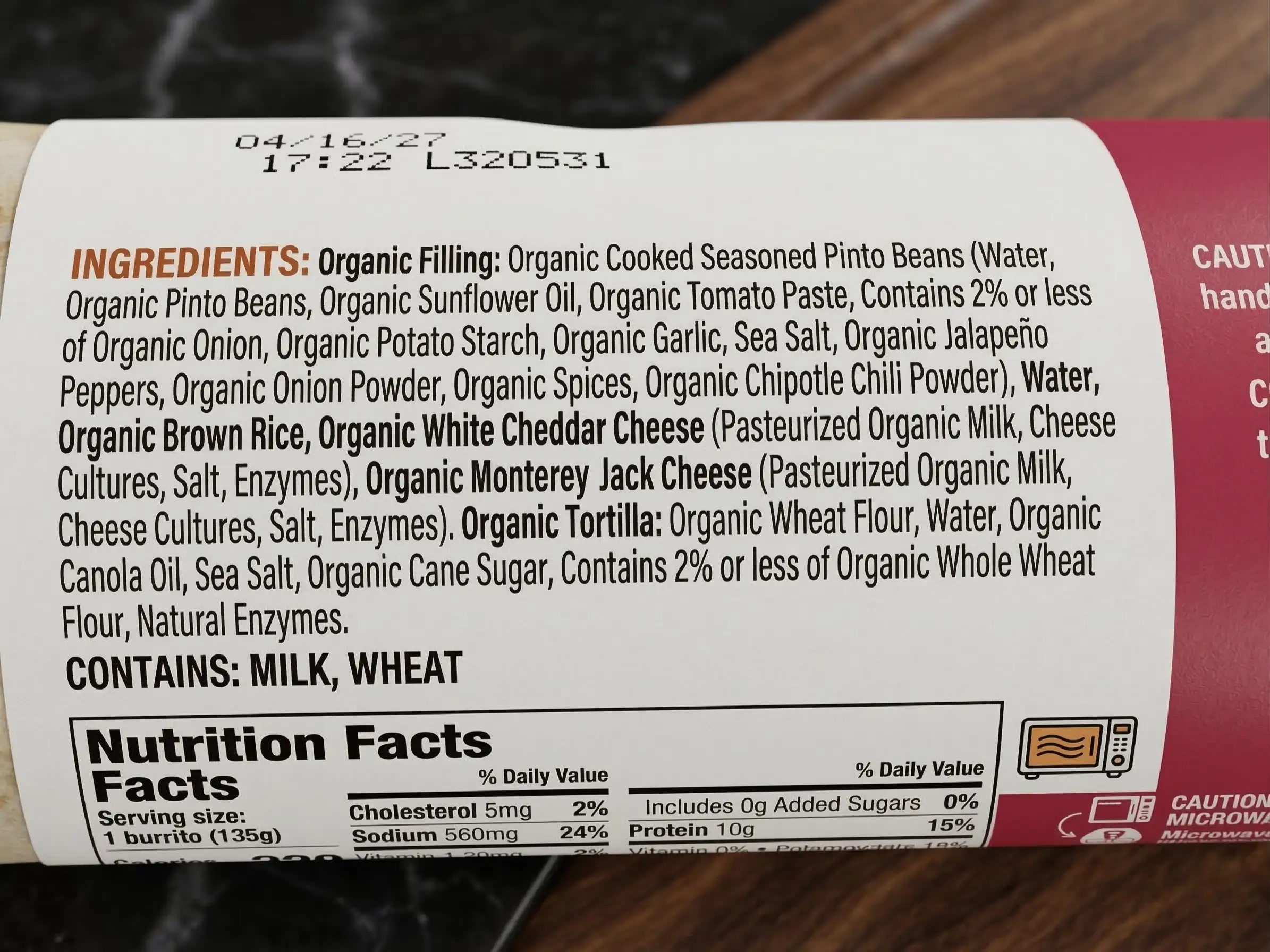
This is an important distinction. Antibiotics used as growth promoters in livestock and animal husbandry can be detected in animal-derived food, including cheese. Epidemiological studies have indicated that exposure to antibiotic residues in food may be associated with childhood obesity, notes an article in mSystems. Even limited early-life exposure can cause long-lasting metabolic disturbances by altering the gut microbiota and its metabolites. This can lead to metabolic conditions such as obesity and blood sugar issues.
I spoke to Amy’s via email. Their team says, “Organic milk and cream are relatively easy to source in the quantity and quality that we require. Because of this, we now use only organic versions of these milk ingredients in our products. Sourcing cheeses that meet our requirements has been more difficult.” They do note that “the milk must come from cows that have not been treated with rBST” and is “made without any animal rennet or rennet derived from genetic engineering. Our Cheese Enchiladas now contain some organic cheese.”
So, be sure to choose processed foods that contain the most organic ingredients when shopping. Taste aside, I give a slight nod to Red’s for using only organically sourced cheeses.
If this resonated, share it with someone who needs to hear it. Until next time — stay informed, stay proactive.
—
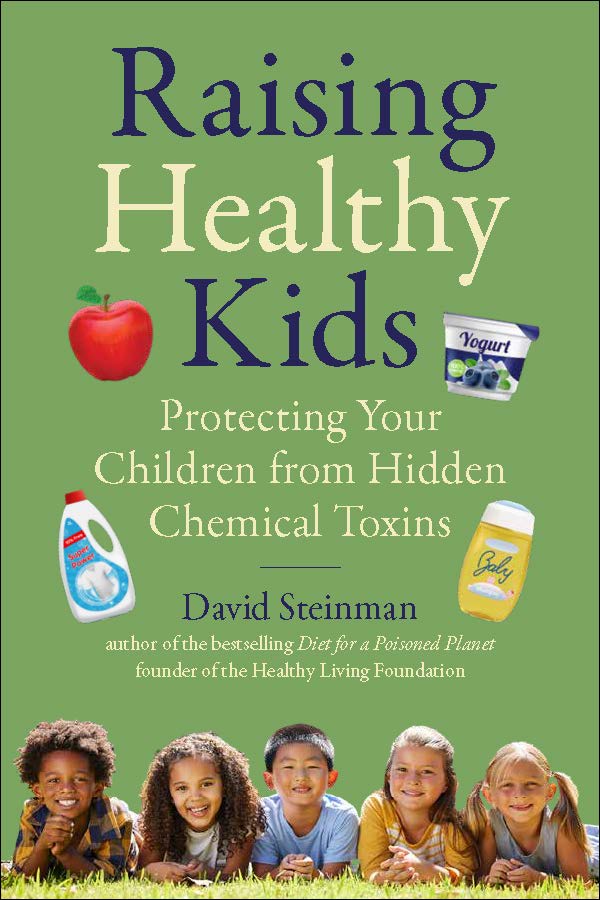
David’s new book, Raising Healthy Kids: Protecting Your Children from Hidden Chemical Toxins, is available at Amazon.com.
References
Alenezi MS, Tartor YH, El-Sherbini M, Pet E, Ahmadi M, Abdelkhalek A. Antibiotic Residues in Milk and Milk-Based Products Served in Kuwait Hospitals: Multi-Hazard Risk Assessment. Antibiotics (Basel). 2024 Nov 11;13(11):1073. doi: 10.3390/antibiotics13111073. PMID: 39596766; PMCID: PMC11591502. — 30 —
Bouchard MF, Bellinger DC, Wright RO, Weisskopf MG. Attention-deficit/hyperactivity disorder and urinary metabolites of organophosphate pesticides. Pediatrics. 2010 Jun;125(6):e1270–7. doi: 10.1542/peds.2009–3058. Epub 2010 May 17. PMID: 20478945; PMCID: PMC3706632.
Chen RA, Wu WK, Panyod S, Liu PY, Chuang HL, Chen YH, Lyu Q, Hsu HC, Lin TL, Shen TD, Yang YT, Zou HB, Huang HS, Lin YE, Chen CC, Ho CT, Lai HC, Wu MS, Hsu CC, Sheen LY. Dietary Exposure to Antibiotic Residues Facilitates Metabolic Disorder by Altering the Gut Microbiota and Bile Acid Composition. mSystems. 2022 Jun 28;7(3):e0017222. doi: 10.1128/msystems.00172–22. Epub 2022 Jun 7. PMID: 35670534; PMCID: PMC9239188.
Chen Y, Yang Z, Nian B, Yu C, Maimaiti D, Chai M, Yang X, Zang X, Xu D. Mechanisms of Neurotoxicity of Organophosphate Pesticides and Their Relation to Neurological Disorders. Neuropsychiatr Dis Treat. 2024 Nov 21;20:2237–2254. doi: 10.2147/NDT.S479757. PMID: 39588175; PMCID: PMC11587806.
Gharby S. Refining Vegetable Oils: Chemical and Physical Refining. ScientificWorldJournal. 2022 Jan 11;2022:6627013. doi: 10.1155/2022/6627013. PMID: 35069038; PMCID: PMC8767382.
Yougov.com https://yougov.com/en-us/ratings/dishes?sortBy=fame
Scan Any Grocery Barcode
Scores Brands Can't Buy
Backed by Lab Testing
Cleaner Swaps in the Aisle
 Alexander Klein
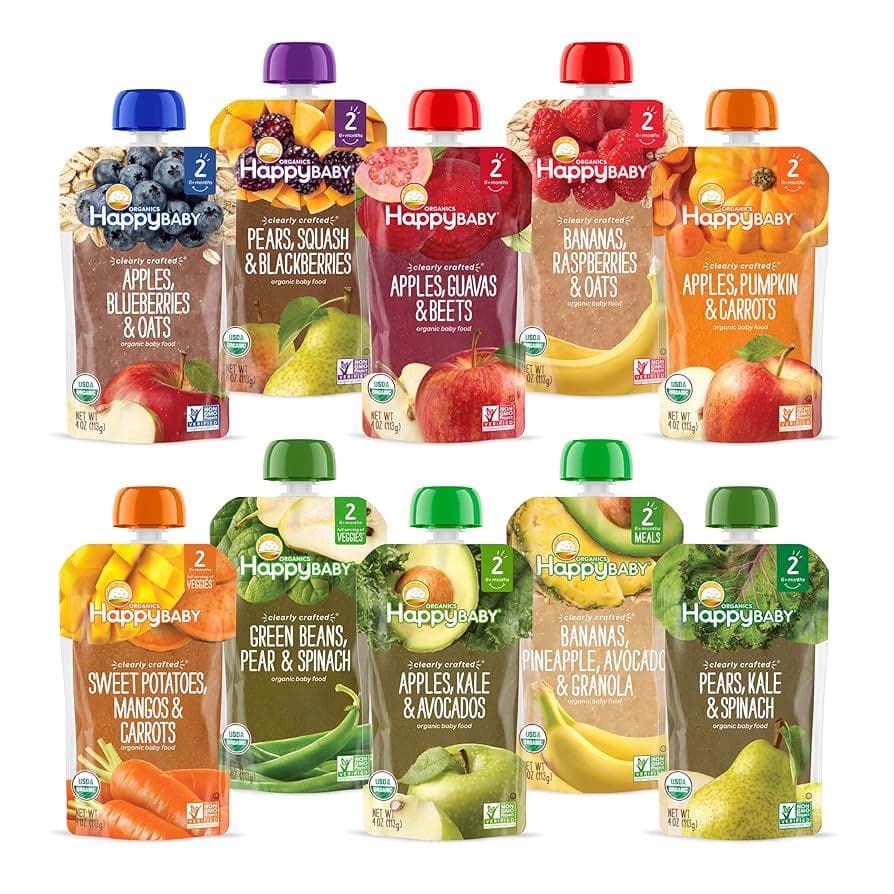
Discover everything you need to know about Happy Baby Pouches: A Parent's Guide to ensuring safe and nutritious choices amidst heavy metals concerns.
Sep 25, 2025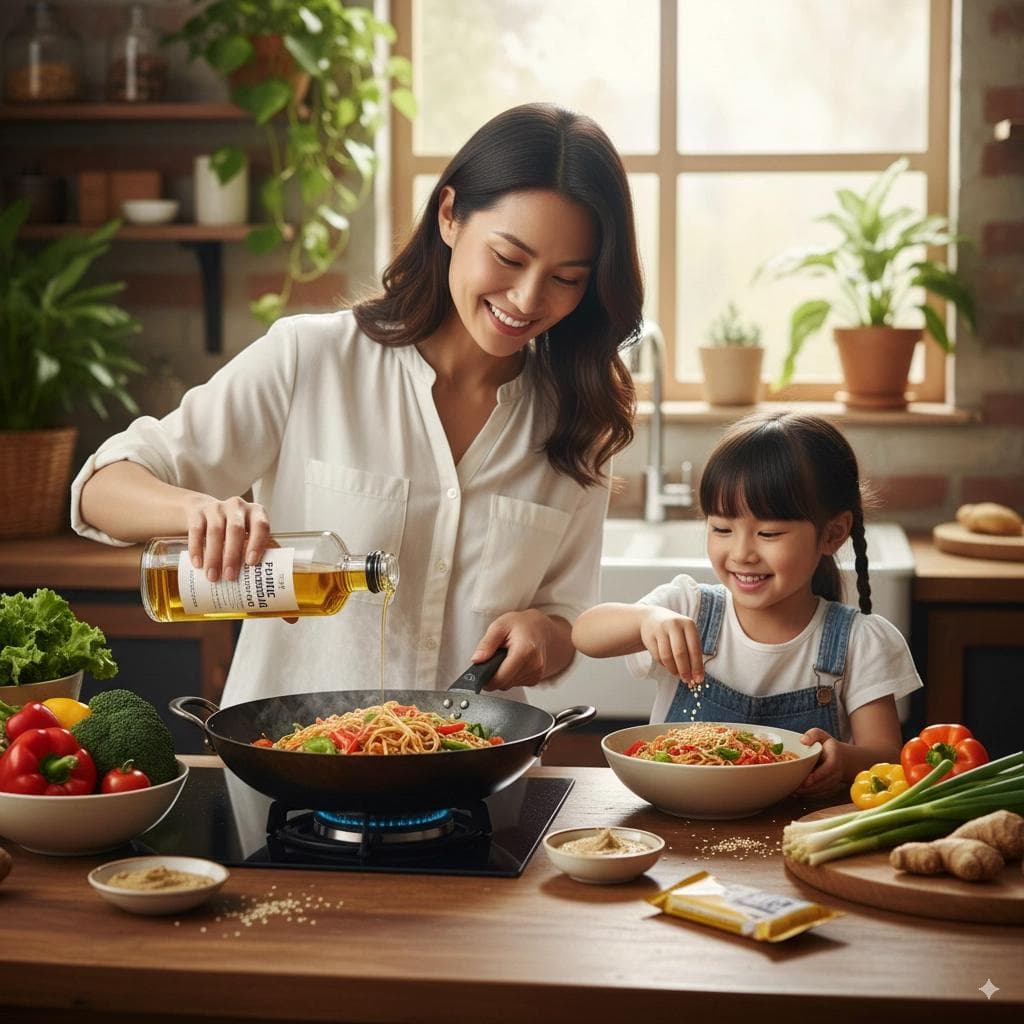 Alexander Klein
Is sesame oil a seed oil? Yes — but not all seed oils are harmful. Learn why sesame oil is different from the “Hateful Eight” and discover the best sesame oil substitutes like oliv...
Sep 25, 2025Always.
We never monetize through brand deals, affiliate links, or ads — so you can trust our recommendations are always aligned with our users.

Olive is a holistic health companion built to help you live cleaner and feel better. Scan a barcode and Olive shows you exactly what is in your food, your personal care products, and the things you bring into your home, then points you to a clean swap that actually makes a difference.
Inside the app you also get:
You scan a product. Olive scores it from 0 to 100 (higher is cleaner), explains in plain language why it scored that way, flags the harmful stuff like seed oils, additives, hidden sugars, contaminants, and endocrine disruptors, and points you to a cleaner swap.
From there, Olive helps you actually change: a 28-day kitchen detox to start, habit building, coaching, and doctor-supervised peptide protocols.
What starts with one scan can end in more energy, a clear head, and a shopping cart you finally trust.
All three. Scan food and drinks for the 0 to 100 score, with a breakdown of toxins, additives, processing, seed oils, and sugar.
Scan skincare, makeup, sunscreen, shampoo, and other personal care products and Olive rates every ingredient green, yellow, or red with a plain-language reason for the rating.
Scan bottled water and Olive checks it for contaminants such as fluoride, heavy metals, and microplastics.
We do our own independent lab testing for heavy metals (lead, cadmium, mercury, and arsenic) across roughly 400 products so far. That is more testing than most companies do, including Consumer Reports.
Our cosmetic ingredient rating system was built with the head of a chemical toxin working group, so every ingredient carries a documented reason behind its rating.
And Olive is independent. No ads, no affiliates, and we do not take money to change scores. Your subscription is what funds the testing, so Olive answers to you. All of it runs on a database of 10M+ products.
Yes. Set your goals, your diet, and your allergies, and every score and swap adjusts to you. Keto, paleo, heart-healthy, Mediterranean, halal, kosher, gluten-free, and dairy-free are all covered.
If you react to gluten, dairy, nuts, soy, or anything else, Olive flags it before it reaches your cart.
Yes. Olive is live on both. Download Olive on the Apple App Store or get it on Google Play.
Yes. Your privacy comes first. Olive protects your personal information with strong security protocols, and your scans, your pantry, and your health details stay yours. You can read the details in our privacy policy.
Start with the free quiz. It takes about five minutes, asks about your goals, your symptoms, and what is already in your kitchen, then hands you a personalized plan. Try Olive free.
Scan your food, personal care and home products
Independent scores backed by real lab testing
Cleaner swaps for you, and everyone you shop for