Home/Blogs/We Bought Eggs From Every Store… What We Discovered About 'Pasture-Free,' 'Free-Range,' and 'Cage-Free' Will SHOCK You!
FoodHealth & Wellness
We Bought Eggs From Every Store… What We Discovered About 'Pasture-Free,' 'Free-Range,' and 'Cage-Free' Will SHOCK You!
Not all eggs are created equal. We decoded the confusing labels on egg cartons—from cage-free to pasture-raised—to reveal which truly delivers the healthiest, most nutrient-dense eggs for you and your family.
Eggs can supercharge one’s health. They are perfect foods: low in calories, high in protein and nutrients, virtually sodium-free. The best eggs are also super valuable to a healthy environment, a healthy hen, and, ultimately, healthy children and adults.
Some 87 percent of Americans consume eggs at least once per week, according to dietary data. Around 19 percent of adults eat eggs or omelets on any given day, for an annual average of 280 to 300 per person.
Yet so distant are we from the farms where hens are raised that the source of this dietary staple can easily be put out of mind. But that is to our health detriment because, actually, there’s a lot behind the art of buying healthy eggs.
Buying eggs these days means choosing among “caged,” “organic,” “cage-free,” “free-range,” and “pasture-raised,” and now there’s an even newer category called “regenerative organic certified.”
What do each of these mean? Which is the healthiest?
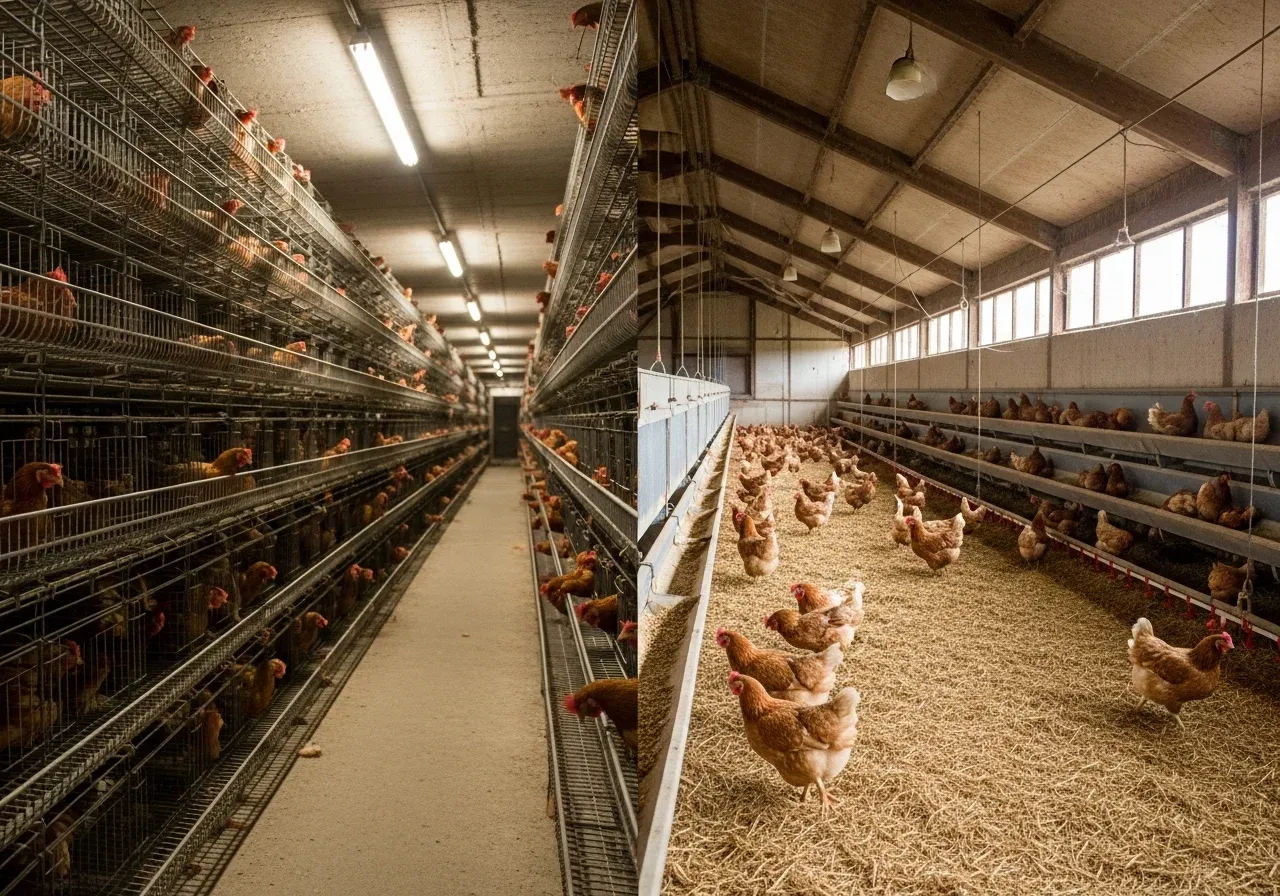
If the egg carton makes no mention of at least being cage-free, then your eggs are most likely from factory-farmed hens kept in small cages where they can barely move. About 55 to 60 percent of all eggs come from caged hens, according to data from United Egg Producers. Eggs from such farms are comparably lower in some nutrients, such as anti-inflammatory omega-3 fatty acids.
Cage-Free: Slightly Better, But Still Crowded
“Cage-free” sounds better. These days, around 40 percent of farms are now cage-free, driven by state legislation and corporate pledges to raise birds a bit more humanely, notes Sentient Media. But all it means is that the chickens are allowed to live in a barn and have one square foot of space per chicken. That is still very crowded. Antibiotics are frequently used to keep the hens healthy.
But what about free-range? All that means is that the birds have two square feet of outdoor range per animal, which complies with Certified Humane® standards. Organizations like People for the Ethical Treatment of Animals report that barn densities are much higher, with as few as 1.2 square feet of indoor floor space per bird.
Pasture-Raised: The Gold Standard
Pasture-raised eggs come from hens that spend most of their lives outdoors on open, vegetated land. While not a federally regulated term, it is widely considered the highest standard of animal welfare in the egg industry when verified by third-party certifications like Certified Humane®. Hens are typically provided with at least 108 square feet of outdoor space per bird. Unlike “free-range” hens, which may only have access to a small outdoor patch or concrete slab, pasture-raised hens spend their days roaming and foraging in fields. The environment allows for natural instincts such as dust bathing, scratching for insects, and pecking at grass. Many farms rotate flocks across different field sections to maintain soil health and provide fresh vegetation.
Regenerative Organic Certified: The Newest Category
Most recently, a new term that has emerged and is represented by the first nationally distributed brand is “regenerative organic certified,” focusing on the relationship between soil health and animal welfare.
Which Eggs Are Most Nutritious?
As for which produces the most nutritious eggs, pasture-raised seems to be the superior choice. Almost all eggs in supermarkets come from hens fed corn and soybean meal, which significantly increases the omega-6 linoleic acid content in the yolk. But our health demands a higher intake of omega-3 fatty acids, which support blood flow and provide anti-inflammatory effects in the circulatory system. In one study, published in Food in 2022, eggs from pasture-raised hens “had twice as much carotenoid content, three times as much omega-3 fatty acid content, and a 5–10 times lower omega-6:omega-3 fatty acid ratio compared to the cage-free eggs.”
To avoid industrial seed oils, look for labels specifically stating “Soy-Free” and “Corn-Free.” Some smaller, independent farms or farmers’ market producers may offer truly corn- and soy-free eggs.
We never monetize through brand deals, affiliate links, or ads — so you can trust our recommendations are always aligned with our users.
Frequently Asked Questions
Olive is a holistic health companion built to help you live cleaner and feel better. Scan a barcode and Olive shows you exactly what is in your food, your personal care products, and the things you bring into your home, then points you to a clean swap that actually makes a difference.
Inside the app you also get:
Health coaching
FDA recall alerts
Prop 65-aligned baby food product lookups
Proprietary lab testing data on your favorite products
Video-assisted kitchen detox walkthroughs
Maps of healthy restaurants and farmers’ markets near you
Symptom tracking and logging
Peptide and supplement dosage tracking
You scan a product. Olive scores it from 0 to 100 (higher is cleaner), explains in plain language why it scored that way, flags the harmful stuff like seed oils, additives, hidden sugars, contaminants, and endocrine disruptors, and points you to a cleaner swap.
From there, Olive helps you actually change: a 28-day kitchen detox to start, habit building, coaching, and doctor-supervised peptide protocols.
What starts with one scan can end in more energy, a clear head, and a shopping cart you finally trust.
All three. Scan food and drinks for the 0 to 100 score, with a breakdown of toxins, additives, processing, seed oils, and sugar.
Scan skincare, makeup, sunscreen, shampoo, and other personal care products and Olive rates every ingredient green, yellow, or red with a plain-language reason for the rating.
Scan bottled water and Olive checks it for contaminants such as fluoride, heavy metals, and microplastics.
We do our own independent lab testing for heavy metals (lead, cadmium, mercury, and arsenic) across roughly 400 products so far. That is more testing than most companies do, including Consumer Reports.
Our cosmetic ingredient rating system was built with the head of a chemical toxin working group, so every ingredient carries a documented reason behind its rating.
And Olive is independent. No ads, no affiliates, and we do not take money to change scores. Your subscription is what funds the testing, so Olive answers to you. All of it runs on a database of 10M+ products.
Yes. Set your goals, your diet, and your allergies, and every score and swap adjusts to you. Keto, paleo, heart-healthy, Mediterranean, halal, kosher, gluten-free, and dairy-free are all covered.
If you react to gluten, dairy, nuts, soy, or anything else, Olive flags it before it reaches your cart.
Yes. Your privacy comes first. Olive protects your personal information with strong security protocols, and your scans, your pantry, and your health details stay yours. You can read the details in our privacy policy.
Start with the free quiz. It takes about five minutes, asks about your goals, your symptoms, and what is already in your kitchen, then hands you a personalized plan. Try Olive free.