Are "Safe" Baby Shampoos & Lotions Secretly Packed With Cancer-Causing Chemicals?
Phenoxyethanol, a common preservative in baby shampoos and lotions, hides a toxic surprise linked to breast cancer, infertility, and children's brain damage—yet it's never disclosed on labels.
Sign up for Olive Written by David SteinmanPublished on June 18, 2026
Phenoxyethanol, a broad-spectrum preservative and solvent, is commonly used in personal care, cosmetic, and cleaning products.
Also known as ethylene glycol monophenyl ether, phenoxyethanol is classified as both a glycol ether (linked with reproductive harm) and ethoxylated alcohol (associated with cancer risk).
Phenoxyethanol is synthesized via ethoxylation, which involves reacting phenol with ethylene oxide (EO), a petrochemical so toxic and with such a profound history of cancer among nurses and others exposed to it that it is a known human breast carcinogen. Studies show that when phenoxyethanol is used as an ingredient in products, it is likely to be contaminated with a metabolite of EO that studies show also causes cancer.
This chemical is called 1,4-dioxane. Known simply as dioxane, this metabolite is a powerful carcinogen too. As the Food and Drug Administration notes, “The compound 1,4-dioxane is a trace contaminant in some cosmetic products. It is not used as an ingredient in cosmetics, but may be present in extremely small amounts in some cosmetics. 1,4-dioxane forms as a byproduct during the manufacturing process of certain cosmetic ingredients.” The FDA goes on to say that these ingredients include certain detergents, foaming agents, emulsifiers, and solvents identifiable by the prefix, word, or syllables “PEG,” “Polyethylene,” “Polyethylene glycol,” “Polyoxyethylene,” “-eth-,” or “-oxynol-.” The technical name for phenoxyethanol is ethylene glycol monophenyl ether. In other words, it is also an ethoxylated alcohol and therefore potentially contaminated with dioxane.
Our children are directly and intimately exposed to this chemical at birth, often from the moment they are bathed in bubble bath at the hospital through their arrival home, with products like bubble baths, shampoos, and liquid soaps.
There is no specific percentage of products that contain dioxane, as 1,4-dioxane is not an intentionally added ingredient in cosmetics. Instead, because it is a contaminant, 1,4-dioxane is never disclosed on product labels. The National Institutes of Health (NIH) reports, based on an extensive product analysis, that up to 22 percent of personal-care and cosmetic products may contain 1,4-dioxane due to the presence of ethoxylated ingredients. Regulatory standards, such as those overseen by the New York State Department of Environmental Conservation, restrict 1,4-dioxane in cosmetic products to a maximum limit of 10 parts per million (ppm). Dioxane is also a water pollutant. It is very prevalent now in groundwater supplies, yet expensive to remove from public water sources or private wells.
Know what's really in your personal care and home products.
Sign up for OliveReproductive Harm and Cognitive Impairment

But concerns over phenoxyethanol’s presence in personal care, cosmetics, and cleaning products extend beyond cancer to suggestive evidence of human reproductive harm. A study in Environmental Health Perspectives provides evidence of associations between prenatal exposure to phenoxyethanol and cognitive impairment in children. Researchers in France measured five glycol ether metabolites in urine samples from 204 pregnant women, collected between 2002 and 2006 as part of the broader PELAGIE mother–child cohort. At age six, their children were given a series of neurocognitive tests to assess verbal comprehension, working memory, and visuospatial ability. All the women had detectable levels of the metabolites phenoxyacetic acid (PhAA) and 2-butoxyacetic acid (BAA) in their urine (BAA is a by-product of two restricted glycol ethers used in hair dyes, spray paints, and cleaners). After adjusting for potential confounders, including the mother’s intelligence and the amount of cognitive and emotional stimulation the child received at home, the researchers found that higher verbal comprehension scores among the children were associated with lower levels of PhAA in their mothers’ urine during pregnancy. PhAA is the primary metabolite of phenoxyethanol. This study suggests that phenoxyethanol exposure during pregnancy lowers children’s cognitive abilities, much like other glycol ethers.
In a 2013 study, 93 percent of pregnant women had PhAA in their urine. Researchers examined the relation between women’s exposure to glycol ethers and time to pregnancy. “Phenoxyacetic acid was the only metabolite with a statistically significant association with longer time to pregnancy…. This association remained stable after multiple sensitivity analyses.”
The study concludes, “Phenoxyacetic acid, which was present in most of the urine samples tested in our study, was associated with increased time to pregnancy. This metabolite and its main parent compound, 2-phenoxyethanol, are plausible causes of decreased fecundability, but they may also be surrogates for potential coexposures to compounds frequently present in cosmetics.”
The authors note that this high detection frequency and the relatively short half-life of these metabolites in the body (6–80 hours) suggest that exposures are not only common but also repeated.
Regulatory Action and Natural Alternatives
The European Union has already restricted the use of several glycol ethers due to concerns about potential reproductive toxicity and other health risks. The Journal of Midwifery & Women’s Health reports that an expert assessment by the Agence Nationale de Sécurité du Médicament (national agency for drug and health safety, ANSM) issued guidelines in 2018 that limit the use of phenoxyethanol in cosmetic products intended for small children.
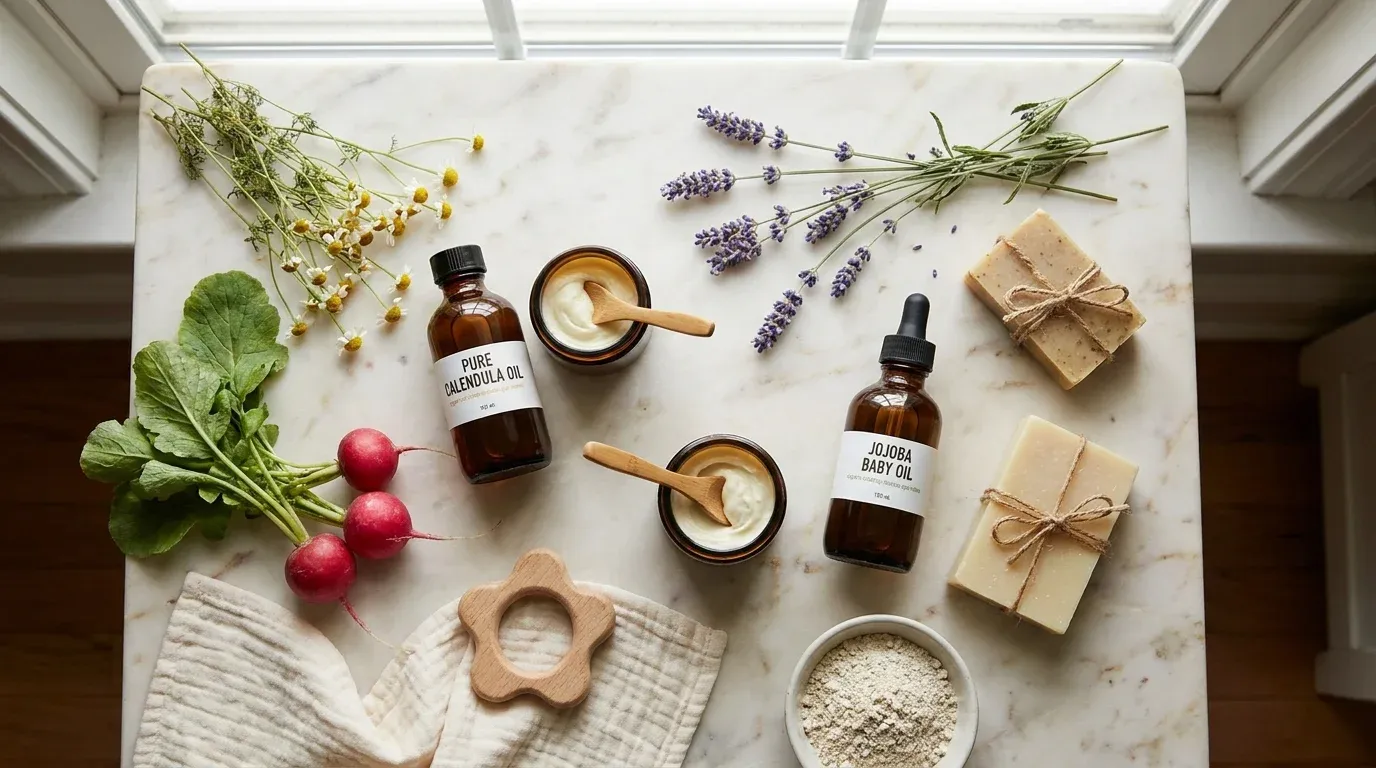
Several non-toxic and natural alternatives can replace phenoxyethanol as a preservative in skincare and cosmetics. A 2020 report in Molecules notes multiple alternatives for use in products. Any of these is preferred to phenoxyethanol, which should be avoided in your personal care, cosmetic, and household cleaning products.
- Sodium Benzoate & Potassium Sorbate: Plant-derived salt preservatives that safely prevent mold and yeast growth.
- Leuconostoc/Radish Root Ferment Filtrate: A probiotic-based ferment that acts as a natural, non-toxic antimicrobial agent.
- Benzyl Alcohol: A naturally occurring organic alcohol (often from fruits) that fights bacteria.
- Fermentation-based Peptide Blends: Complexes derived from natural fermentations (such as Epsilon Polylysine) that offer broad-spectrum protection.
- Anhydrous Formulas: If you want to avoid preservatives entirely, switch to water-free formulas (like pure oils and body butters), which naturally resist bacteria.
Scan Skincare & Cleaners
Scores Brands Can't Buy
Backed by Lab Testing
Cleaner Swaps for Your Skin
Recommended for you
 Alexander Klein
Happy Baby Pouches: Safe and Nutritious? | Parent's Guide
Discover everything you need to know about Happy Baby Pouches: A Parent's Guide to ensuring safe and nutritious choices amidst heavy metals concerns.
 Alexander Klein
Is Sesame Oil a Seed Oil? Health Benefits & the Best Substitutes
Is sesame oil a seed oil? Yes — but not all seed oils are harmful. Learn why sesame oil is different from the “Hateful Eight” and discover the best sesame oil substitutes like oliv...
100% Independent.
Always.
We never monetize through brand deals, affiliate links, or ads — so you can trust our recommendations are always aligned with our users.
Frequently Asked Questions
What is the Olive app and how does it work?
Olive is a holistic health companion built to help you live cleaner and feel better. Scan a barcode and Olive shows you exactly what is in your food, your personal care products, and the things you bring into your home, then points you to a clean swap that actually makes a difference.
Inside the app you also get:
- Health coaching
- FDA recall alerts
- Prop 65-aligned baby food product lookups
- Proprietary lab testing data on your favorite products
- Video-assisted kitchen detox walkthroughs
- Maps of healthy restaurants and farmers’ markets near you
- Symptom tracking and logging
- Peptide and supplement dosage tracking
How does the Olive food and cosmetic ingredient scanner work?
You scan a product. Olive scores it from 0 to 100 (higher is cleaner), explains in plain language why it scored that way, flags the harmful stuff like seed oils, additives, hidden sugars, contaminants, and endocrine disruptors, and points you to a cleaner swap.
From there, Olive helps you actually change: a 28-day kitchen detox to start, habit building, coaching, and doctor-supervised peptide protocols.
What starts with one scan can end in more energy, a clear head, and a shopping cart you finally trust.
Which products can I scan: food, cosmetics, or bottled water?
All three. Scan food and drinks for the 0 to 100 score, with a breakdown of toxins, additives, processing, seed oils, and sugar.
Scan skincare, makeup, sunscreen, shampoo, and other personal care products and Olive rates every ingredient green, yellow, or red with a plain-language reason for the rating.
Scan bottled water and Olive checks it for contaminants such as fluoride, heavy metals, and microplastics.
How does Olive ensure the accuracy of its scan results?
We do our own independent lab testing for heavy metals (lead, cadmium, mercury, and arsenic) across roughly 400 products so far. That is more testing than most companies do, including Consumer Reports.
Our cosmetic ingredient rating system was built with the head of a chemical toxin working group, so every ingredient carries a documented reason behind its rating.
And Olive is independent. No ads, no affiliates, and we do not take money to change scores. Your subscription is what funds the testing, so Olive answers to you. All of it runs on a database of 10M+ products.
Can Olive be customized to my dietary needs?
Yes. Set your goals, your diet, and your allergies, and every score and swap adjusts to you. Keto, paleo, heart-healthy, Mediterranean, halal, kosher, gluten-free, and dairy-free are all covered.
If you react to gluten, dairy, nuts, soy, or anything else, Olive flags it before it reaches your cart.
Is Olive available for both Android and iOS?
Yes. Olive is live on both. Download Olive on the Apple App Store or get it on Google Play.
Is my data secure when I use Olive?
Yes. Your privacy comes first. Olive protects your personal information with strong security protocols, and your scans, your pantry, and your health details stay yours. You can read the details in our privacy policy.
How do I get started with Olive?
Start with the free quiz. It takes about five minutes, asks about your goals, your symptoms, and what is already in your kitchen, then hands you a personalized plan. Try Olive free.
Start with one scan.
Scan your food, personal care and home products
Independent scores backed by real lab testing
Cleaner swaps for you, and everyone you shop for