Why is Walmart's Organic Milk So Cheap?
Walmart's Great Value Organic milk costs nearly half what competitors charge, raising questions about industrial organic practices. Here's the story behind the bargain price and what it means for consumers.
Sign up for Olive Written by David SteinmanPublished on June 13, 2026
Here’s how Walmart undercuts everyone… while still calling their milk organic.
If you are shopping on a budget, as so many of us are lately, you have no doubt noticed that Walmart’s organic milk is usually a few dollars less expensive than competitors’. Organic Valley milk from grass-fed dairy cows costs $6.67 in California and is also sold at Walmart. Whereas Great Value Organic milk, the Walmart brand, is a mere $3.97, lower even than many conventionally sourced half gallons.
Know what's really in your cart.
Sign up for OliveThe Industrial Organic Controversy
Michael Pollan, best-selling author of The Omnivore’s Dilemma, bemoaned Walmart’s entry into organics in 2006 in a piece he wrote at the time. He said they would lead to the industrialization of the organic industry.
“The industrialization of organic agriculture, which Wal-Mart’s entry will hasten, has given us ‘organic feedlots’ — two words that I never thought would find their way into the same clause,” he blogged at the time. "To supply the burgeoning demand for cheap organic milk, agribusiness companies are setting up 5000-head dairies, often in the desert. The milking cows never touch a blade of grass, but instead spend their lives standing around a dry lot ‘loafing area’ munching organic grain — grain that takes a toll on both the animals’ health (these ruminants evolved to eat grass after all) and the nutritional value of their milk. Frequently the milk is then ultra-pasteurized (a high heat process that further diminishes its nutritional value) before being shipped across the country. This is the sort of milk we’re going to see a lot more of in our supermarkets, as long as Wal-Mart honors its commitment to keep organic milk cheap.
“We’re also going to see more organic milk coming from places like New Zealand, a trend driven by soaring demand — and also by what seems to me, in an era of energy scarcity, a rather forgiving construction of the idea of sustainability. Making organic food inexpensive means buying it from anywhere it can be produced most cheaply — lengthening rather than shortening the food chain, and deepening its dependence on fossil fuels.”
The Aurora Organic Dairy Story
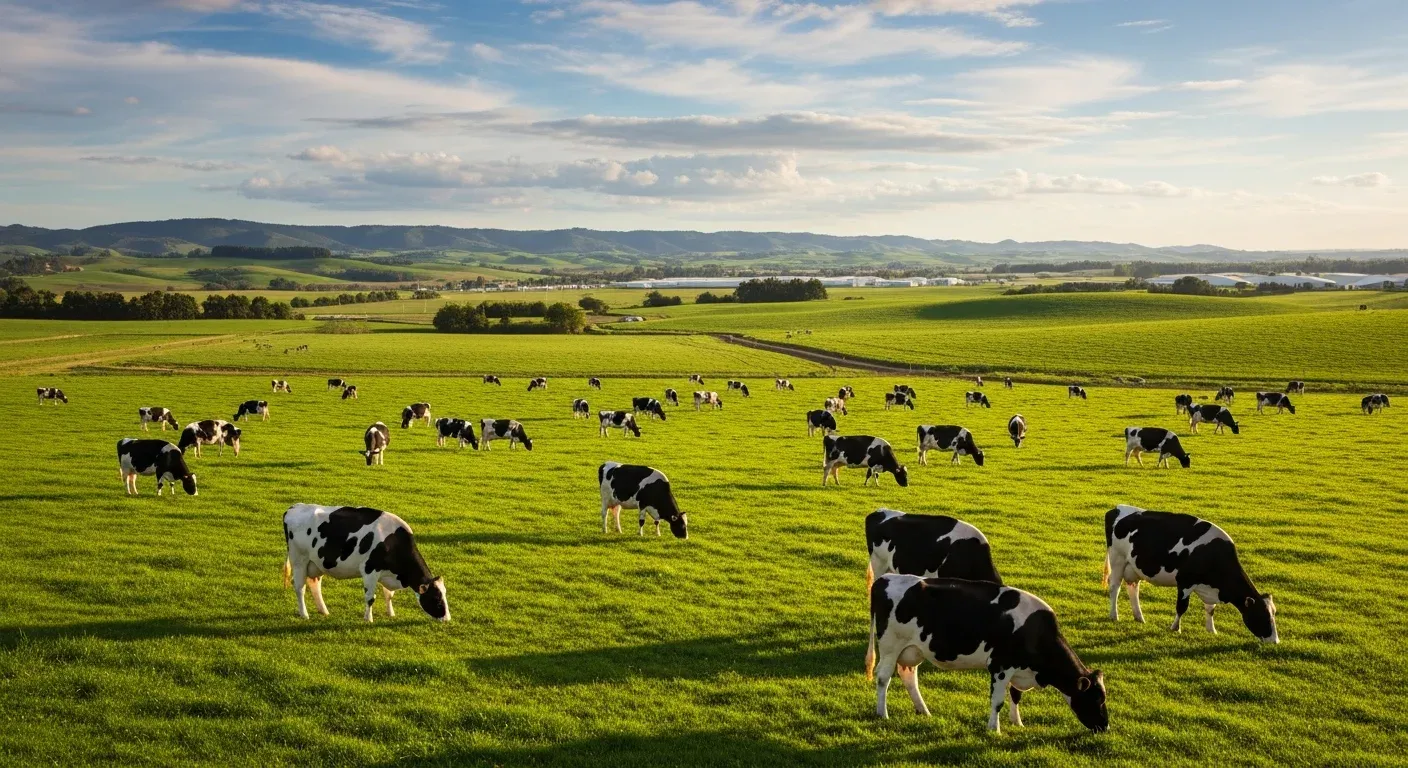
But that isn’t the entire story by any means. It is true that while Great Value Organic milk maintains official U.S. Department of Agriculture (USDA) certification, consumer advocates earlier accused Walmart’s primary suppliers of exploiting regulatory loopholes to prioritize industrial scale over traditional organic values. A significant portion of Walmart’s Great Value organic milk has historically been sourced from Aurora Organic Dairy, a massive, industrial-scale producer based in Boulder, Colorado.
Aurora Organic Dairy’s herd grazes on more than 17,000 acres of organic pasture across its company-owned dairy farms in Colorado and Texas. It also operates organic dairy processing plants in Platteville, Colorado, and Columbia, Missouri. (For the record, it does not appear that they operate any farms “often” or at all “in the desert,” as Pollan alleged.)
Scan Any Grocery Barcode
Scores Brands Can't Buy
Backed by Lab Testing
Cleaner Swaps in the Aisle
Legal Challenges and Settlement
The Cornucopia Institute and consumer groups alleged in a 2007 class-action lawsuit that the massive supplier was violating federal rules by keeping thousands of cows in industrial confinement with inadequate access to real pasture. The consolidated class-action lawsuits were resolved in 2020 when the company agreed to a $7.5 million settlement. The settlement, which contained no admission of wrongdoing, compensated consumers who purchased the milk. The settlement included store brands from Walmart, Target, and Costco, notes Cornucopia Institute and Top Class Actions.
The Eighth Circuit Court of Appeals and the district court confirmed that Aurora’s milk was properly labeled and sold as organic at all times, and that it has been certified as organic by a USDA-accredited certifying agent since 2004. As such, the only remaining action in this lawsuit, which was originally filed in 2007, concerned marketing claims made by Aurora and its customers, notes Dairyherd.com.
Notably, the USDA investigated Aurora and allowed the dairy to retain its organic certification after it modified its practices. Consumer pressure, in other words, made a big difference. And it seems for the better.
Recent Sustainability Improvements
Aurora provided an update on its organic progress over the prior three years in its 2025 Sustainability Report.
In 2023, the company’s farms implemented an organic feed additive to reduce enteric methane emissions from its dairy cows, reducing the climate impact of their dairy herds.
The dairy completed its fourth year of regenerative land management practices at its dairy farms to increase carbon sequestration and build healthier soils.
In 2024, the company installed its third solar array project at its organic dairy farm in Dublin, Texas. The system is expected to generate electricity equivalent to nearly 25 percent of the electricity consumed by the site’s batch-milking robotic parlor.

Supporting the Broader Organic Industry
Aurora is also important to the rest of the organic industry. By purchasing organic feed, bedding, and other commodities for its animals, the company supports an estimated 75,000 acres of organic farmland operated by approximately 75 independent farmers. In addition, the USDA requires that certified organic ruminants graze daily throughout their region’s growing season to meet strict National Organic Program (NOP) standards; they must graze for at least 120 days per year.
Each of its company-owned farms is dual-certified organic by USDA NOP-accredited certifiers and for animal welfare and worker conditions by Validus, an independent auditor.
The Loss Leader Strategy
But there’s another reason Walmart’s organic milk is so cheap compared to other brands. Walmart keeps its organic milk prices low to attract shoppers. In other words, milk is sold as a “loss leader,” meaning Walmart may sell it at or below cost to encourage customers to complete the rest of their grocery shopping at their stores.
The major personal health advantages of organically sourced dairy products still accrue to Walmart shoppers. That is, milk products are free of residues of antibiotics, growth hormones, and pesticides, making them superior to conventionally sourced dairy.

Scan Any Grocery Barcode
Scores Brands Can't Buy
Backed by Lab Testing
Cleaner Swaps in the Aisle
Recommended for you

 Alexander Klein
Pore-Clogging Ingredients Checker: Strongest Options & Key Considerations
Learn how pore-clogging ingredient checkers function and how the leading platforms compare across scanning and search capability, methodology, and reliability.
 Alexander Klein
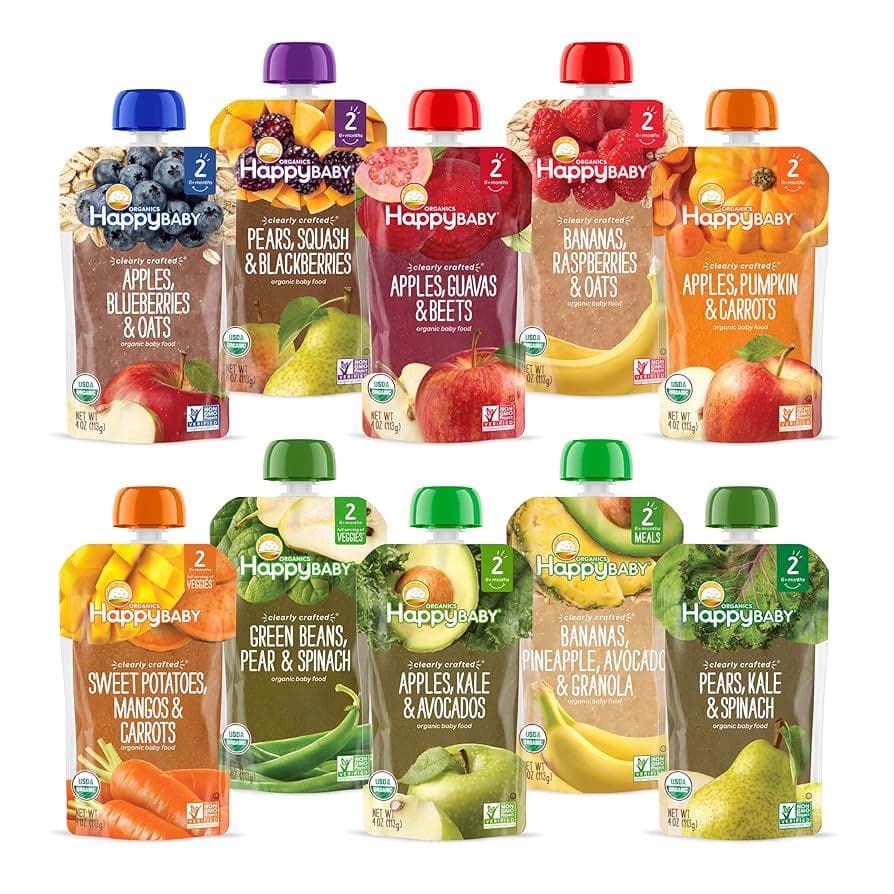
Happy Baby Pouches: Safe and Nutritious? | Parent's Guide
Discover everything you need to know about Happy Baby Pouches: A Parent's Guide to ensuring safe and nutritious choices amidst heavy metals concerns.
100% Independent.
Always.
We never monetize through brand deals, affiliate links, or ads — so you can trust our recommendations are always aligned with our users.
Frequently Asked Questions
What is the Olive app and how does it work?
Olive is a holistic health companion built to help you live cleaner and feel better. Scan a barcode and Olive shows you exactly what is in your food, your personal care products, and the things you bring into your home, then points you to a clean swap that actually makes a difference.
Inside the app you also get:
- Health coaching
- FDA recall alerts
- Prop 65-aligned baby food product lookups
- Proprietary lab testing data on your favorite products
- Video-assisted kitchen detox walkthroughs
- Maps of healthy restaurants and farmers’ markets near you
- Symptom tracking and logging
- Peptide and supplement dosage tracking
How does the Olive food and cosmetic ingredient scanner work?
You scan a product. Olive scores it from 0 to 100 (higher is cleaner), explains in plain language why it scored that way, flags the harmful stuff like seed oils, additives, hidden sugars, contaminants, and endocrine disruptors, and points you to a cleaner swap.
From there, Olive helps you actually change: a 28-day kitchen detox to start, habit building, coaching, and doctor-supervised peptide protocols.
What starts with one scan can end in more energy, a clear head, and a shopping cart you finally trust.
Which products can I scan: food, cosmetics, or bottled water?
All three. Scan food and drinks for the 0 to 100 score, with a breakdown of toxins, additives, processing, seed oils, and sugar.
Scan skincare, makeup, sunscreen, shampoo, and other personal care products and Olive rates every ingredient green, yellow, or red with a plain-language reason for the rating.
Scan bottled water and Olive checks it for contaminants such as fluoride, heavy metals, and microplastics.
How does Olive ensure the accuracy of its scan results?
We do our own independent lab testing for heavy metals (lead, cadmium, mercury, and arsenic) across roughly 400 products so far. That is more testing than most companies do, including Consumer Reports.
Our cosmetic ingredient rating system was built with the head of a chemical toxin working group, so every ingredient carries a documented reason behind its rating.
And Olive is independent. No ads, no affiliates, and we do not take money to change scores. Your subscription is what funds the testing, so Olive answers to you. All of it runs on a database of 10M+ products.
Can Olive be customized to my dietary needs?
Yes. Set your goals, your diet, and your allergies, and every score and swap adjusts to you. Keto, paleo, heart-healthy, Mediterranean, halal, kosher, gluten-free, and dairy-free are all covered.
If you react to gluten, dairy, nuts, soy, or anything else, Olive flags it before it reaches your cart.
Is Olive available for both Android and iOS?
Yes. Olive is live on both. Download Olive on the Apple App Store or get it on Google Play.
Is my data secure when I use Olive?
Yes. Your privacy comes first. Olive protects your personal information with strong security protocols, and your scans, your pantry, and your health details stay yours. You can read the details in our privacy policy.
How do I get started with Olive?
Start with the free quiz. It takes about five minutes, asks about your goals, your symptoms, and what is already in your kitchen, then hands you a personalized plan. Try Olive free.
Start with one scan.
Scan your food, personal care and home products
Independent scores backed by real lab testing
Cleaner swaps for you, and everyone you shop for