FDA Just Declared Your Sunscreen Might Be Toxic — The 12 Common Ingredients Now Under Fire (And the One New Miracle Filter That Changes Everything)
Only zinc oxide and titanium dioxide are officially "GRASE." And even these might pose risks when misused. The rest? Endocrine disruptors that stay in your blood for weeks. But a brand-new 2026 sunscreen ingredient approved by the FDA could finally make sun protection truly safe.
Sign up for Olive Written by David SteinmanPublished on July 6, 2026
FDA Just Declared Your Sunscreen Might Be Toxic — The 12 Common Ingredients Now Under Fire (And the One New Miracle Filter That Changes Everything)
In 2021, the Food and Drug Administration (FDA), which oversees sunscreens as over-the-counter (OTC) drugs, proposed its latest update to the federal regulations. The agency reviewed 16 ingredients and reported that only two, zinc oxide and titanium dioxide (nano-TiO2), are “generally recognized as safe and effective”, or GRASE, based on the available information. (A GRASE designation means the ingredient is widely recognized as safe and effective by experts.)
Citing safety data, the FDA proposed that two rarely used sunscreen ingredients, aminobenzoic acid and trolamine salicylate, are not GRASE.
The FDA proposed that 12 other ingredients are not GRASE due to insufficient data: avobenzone, cinoxate, dioxybenzone, ensulizole, homosalate, meradimate, octinoxate, octisalate, octocrylene, oxybenzone, padimate O, and sulisobenzone. Many of these ingredients are commonly used in sunscreen products and are often combined, suggesting synergistic health effects. Products that use these ingredients are known as chemical sunscreens or chemical filters.
Know what's really in your personal care and home products.
Sign up for OliveEndocrine-Disrupting Chemicals in Your Sunscreen
Oxybenzone, homosalate, and octinoxate are among the most heavily researched sunscreen ingredients and have been identified as endocrine-disrupting chemicals (EDCs), meaning they interfere with the body’s sex hormones and can increase the risk of reproductive harm, as well as adverse effects on children’s cognitive development during pregnancy and on cancer risk.
As for the other nine ingredients (avobenzone, cinoxate, dioxybenzone, ensulizole, meradimate, octisalate, octocrylene, padimate O, and sulisobenzone), the Food and Drug Administration (FDA) has determined that there is insufficient data to classify them as GRASE either. Octocrylene, avobenzone, oxybenzone, octinoxate, octisalate, homosalate, and avobenzone can be absorbed through the skin and enter the bloodstream, prompting further study of hormonal and reproductive impacts, reports an article in the 2020 International Journal of Dermatology. FDA studies have also reported that these ingredients remain on the skin and in the bloodstream for weeks after their use. Other studies have reported detecting sunscreen ingredients in breast milk, urine, and blood plasma samples. Absorption through skin application is not the only route by which sunscreen ingredients enter the body. It’s also possible for sunscreen users to inhale ingredients in sunscreen sprays and ingest some of the ingredients they apply to their lips.

Europe Weighs In on Sunscreen Safety
The European Commission has weighed in on sunscreen safety and published final opinions on three chemical ultraviolet (UV) filters: oxybenzone, homosalate, and octocrylene. For homosalate and octocrylene, the commission proposed limiting the allowed concentrations of these filters in sunscreens.
Sunscreen use is increasing. Constant exposure to sunscreen chemicals raises concerns, especially given the lack of safety data for most ingredients.
Scan Skincare & Cleaners
Scores Brands Can't Buy
Backed by Lab Testing
Cleaner Swaps for Your Skin
The Mineral Alternative — and Its Risks
To avoid synthetic chemical filters entirely, many consumers have turned to mineral-based sunscreens that rely only on zinc oxide and titanium dioxide, which the FDA classifies as GRASE. Beware, however, that the European Scientific Committee on Consumer Safety does not recommend the use of nano-TiO2 in formulations that may lead to exposure of the consumer’s lungs by inhalation (sprayable products and powders). Indeed, although human data are sparse and inconsistent, lung inflammation has been reported in animal models, the committee notes. In 2016, the EU Cosmetic Regulation authorized nano-TiO2 as a UV filter, except in products that could lead to lung exposure.
The Game-Changer: Bemotrizinol
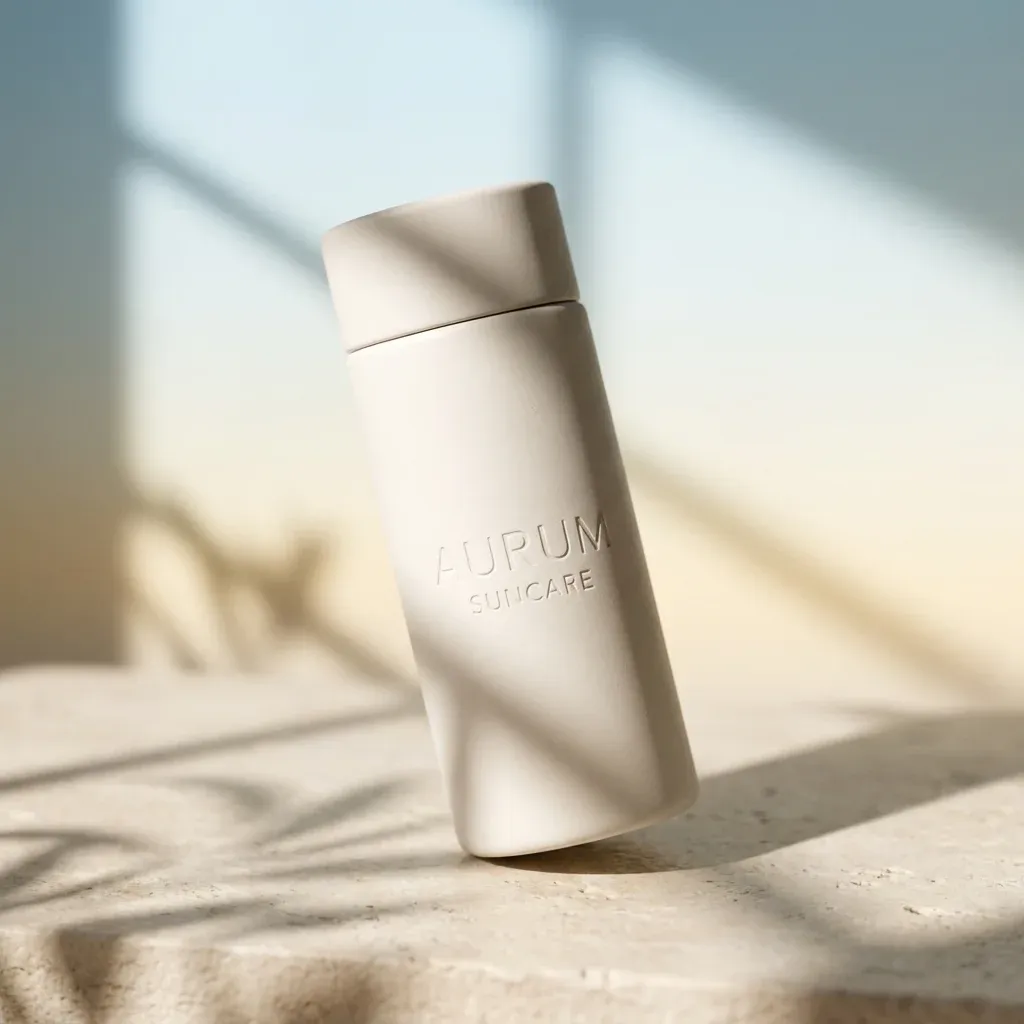
Look for a newly approved sunscreen ingredient that appears to be safer. The FDA approved bemotrizinol (BEMT), the first new active sunscreen ingredient in the U.S. in over 25 years, on June 9, 2026. Unlike traditional filters, it provides highly photostable, broad-spectrum UVA and UVB protection without degrading in sunlight, and it leaves no chalky white residue. Also known globally as Tinosorb S, it is highly efficient: less chemical is needed to achieve high SPF ratings. BEMT is not considered an EDC. Studies and reviews have found no evidence that bemotrizinol binds to estrogen or androgen receptors, meaning it does not disrupt the endocrine system. Unlike some older chemical filters, BEMT sits primarily on the skin’s surface and shows very low systemic absorption into the bloodstream. The FDA classified it as GRASE for both adults and children over six months old.
You will initially find it in specific brands (often sold internationally as PARSOL Shield) before it becomes standard in drugstore aisles.
Scan Skincare & Cleaners
Scores Brands Can't Buy
Backed by Lab Testing
Cleaner Swaps for Your Skin
Recommended for you
 Alexander Klein
Pore-Clogging Ingredients Checker: Strongest Options & Key Considerations
Learn how pore-clogging ingredient checkers function and how the leading platforms compare across scanning and search capability, methodology, and reliability.
 Alexander Klein
Happy Baby Pouches: Safe and Nutritious? | Parent's Guide
Discover everything you need to know about Happy Baby Pouches: A Parent's Guide to ensuring safe and nutritious choices amidst heavy metals concerns.
100% Independent.
Always.
We never monetize through brand deals, affiliate links, or ads — so you can trust our recommendations are always aligned with our users.
Frequently Asked Questions
What is the Olive app and how does it work?
Olive is a holistic health companion built to help you live cleaner and feel better. Scan a barcode and Olive shows you exactly what is in your food, your personal care products, and the things you bring into your home, then points you to a clean swap that actually makes a difference.
Inside the app you also get:
- Health coaching
- FDA recall alerts
- Prop 65-aligned baby food product lookups
- Proprietary lab testing data on your favorite products
- Video-assisted kitchen detox walkthroughs
- Maps of healthy restaurants and farmers’ markets near you
- Symptom tracking and logging
- Peptide and supplement dosage tracking
How does the Olive food and cosmetic ingredient scanner work?
You scan a product. Olive scores it from 0 to 100 (higher is cleaner), explains in plain language why it scored that way, flags the harmful stuff like seed oils, additives, hidden sugars, contaminants, and endocrine disruptors, and points you to a cleaner swap.
From there, Olive helps you actually change: a 28-day kitchen detox to start, habit building, coaching, and doctor-supervised peptide protocols.
What starts with one scan can end in more energy, a clear head, and a shopping cart you finally trust.
Which products can I scan: food, cosmetics, or bottled water?
All three. Scan food and drinks for the 0 to 100 score, with a breakdown of toxins, additives, processing, seed oils, and sugar.
Scan skincare, makeup, sunscreen, shampoo, and other personal care products and Olive rates every ingredient green, yellow, or red with a plain-language reason for the rating.
Scan bottled water and Olive checks it for contaminants such as fluoride, heavy metals, and microplastics.
How does Olive ensure the accuracy of its scan results?
We do our own independent lab testing for heavy metals (lead, cadmium, mercury, and arsenic) across roughly 400 products so far. That is more testing than most companies do, including Consumer Reports.
Our cosmetic ingredient rating system was built with the head of a chemical toxin working group, so every ingredient carries a documented reason behind its rating.
And Olive is independent. No ads, no affiliates, and we do not take money to change scores. Your subscription is what funds the testing, so Olive answers to you. All of it runs on a database of 10M+ products.
Can Olive be customized to my dietary needs?
Yes. Set your goals, your diet, and your allergies, and every score and swap adjusts to you. Keto, paleo, heart-healthy, Mediterranean, halal, kosher, gluten-free, and dairy-free are all covered.
If you react to gluten, dairy, nuts, soy, or anything else, Olive flags it before it reaches your cart.
Is Olive available for both Android and iOS?
Yes. Olive is live on both. Download Olive on the Apple App Store or get it on Google Play.
Is my data secure when I use Olive?
Yes. Your privacy comes first. Olive protects your personal information with strong security protocols, and your scans, your pantry, and your health details stay yours. You can read the details in our privacy policy.
How do I get started with Olive?
Start with the free quiz. It takes about five minutes, asks about your goals, your symptoms, and what is already in your kitchen, then hands you a personalized plan. Try Olive free.
Start with one scan.
Scan your food, personal care and home products
Independent scores backed by real lab testing
Cleaner swaps for you, and everyone you shop for