Home/Blogs/Your Sunscreen is Flooding Your Bloodstream with 500x the 'Safe' Limit — And It's Acting Like Toxic Breast Cancer Fuel
Health & Wellness
Your Sunscreen is Flooding Your Bloodstream with 500x the 'Safe' Limit — And It's Acting Like Toxic Breast Cancer Fuel
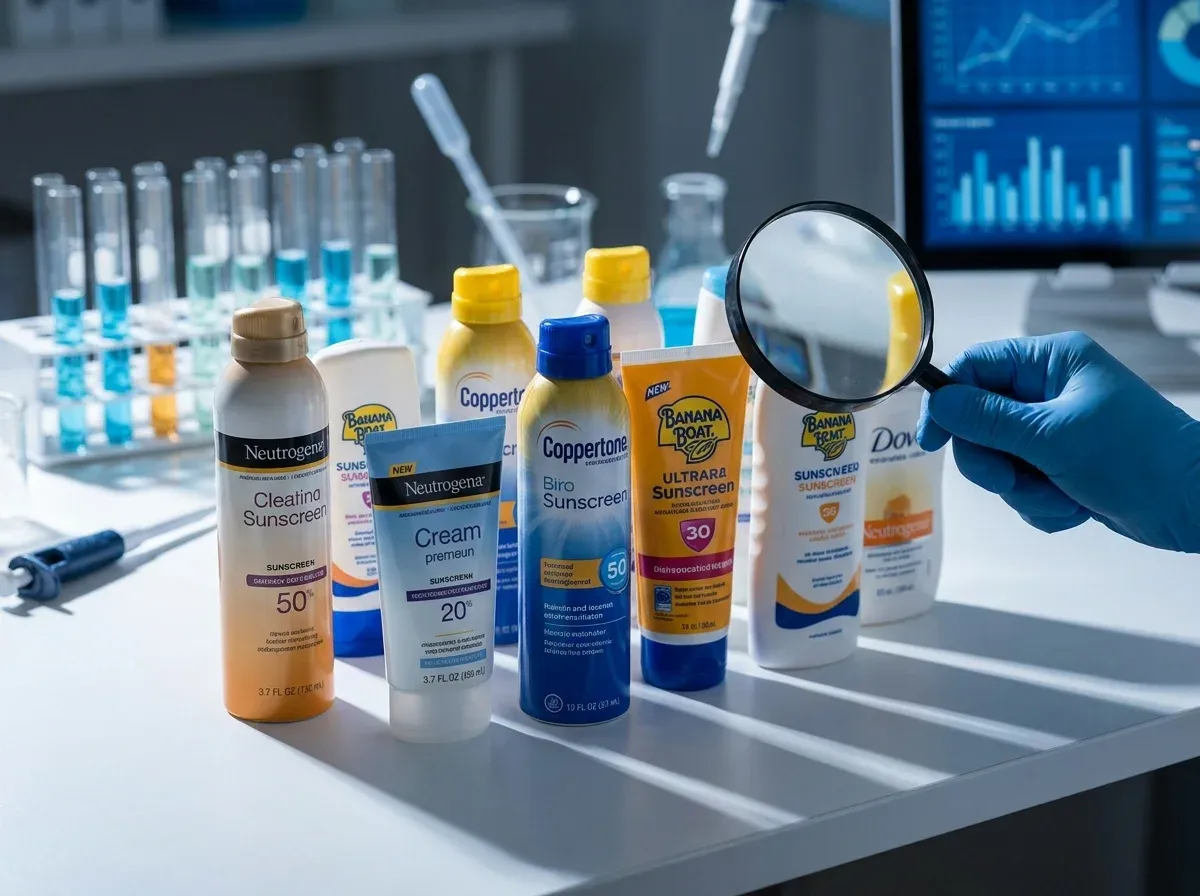
FDA bombshell study reveals popular brands like Neutrogena, Coppertone, and Banana Boat leave dangerous chemical levels lingering in your body for weeks — crossing into breast tissue and even the placenta. Think twice before you slather it on this summer.
Know what's really in your personal care and home products.
Your Sunscreen is Flooding Your Bloodstream with 500x the ‘Safe’ Limit — And It’s Acting Like Toxic Breast Cancer Fuel
Think twice this summer about your sunscreen if it contains any of these ingredients. Some could be toxic to breast tissue.
Chemical filtering ingredients used for sun protection in popular brands such as Coppertone, Neutrogena, Banana Boat, and Olay are accumulating in users at dangerously high levels, according to a Food and Drug Administration (FDA) study published in the Journal of the American Medical Association. The study measured the levels of avobenzone, oxybenzone, octocrylene, homosalate, octisalate, and octinoxate — six of the most commonly used active ingredients in sunscreen — in users’ bloodstreams.
These six ingredients act like toxic forms of estrogen in the human body. They interact with cell receptors and stimulate breast cancer-causing genes. These chemicals not only accumulate in breast tissue but also cross the placenta. Previous studies have indicated a possible association between certain chemicals and health risks, such as endocrine disruption and reproductive harm. Now we also know that these common sunscreen ingredients are absorbed into the bloodstream at concentrations far greater than the FDA’s safety thresholds, according to the study.
Know what's really in your personal care and home products.
Forty-eight healthy participants were randomly assigned to use one of four sunscreen products. The formulations included lotions and several kinds of sprays. Participants applied the sunscreens to 75 percent of their bodies once on the first day and four times on days two through four, with the final application on the final day. The researchers collected 34 blood samples from each participant over 21 days.
Concentrations of the active ingredients increased after each day of application, suggesting they had accumulated within the bloodstream. All of the ingredients remained above the safety threshold on day seven, and two of the ingredients, homosalate and oxybenzone, remained above the threshold on day 21.
OVER 500X SAFETY LIMIT
Active ingredients found in the blood at a level of 0.5 nanograms per milliliter or higher should be analyzed to determine whether they increase the risk of cancer, birth defects, or other adverse effects, says the FDA. The maximum concentration of the six chemicals ranged from 3.3 nanograms per milliliter to 258.1, depending on the chemical and whether it was applied to the skin as a lotion or spray.
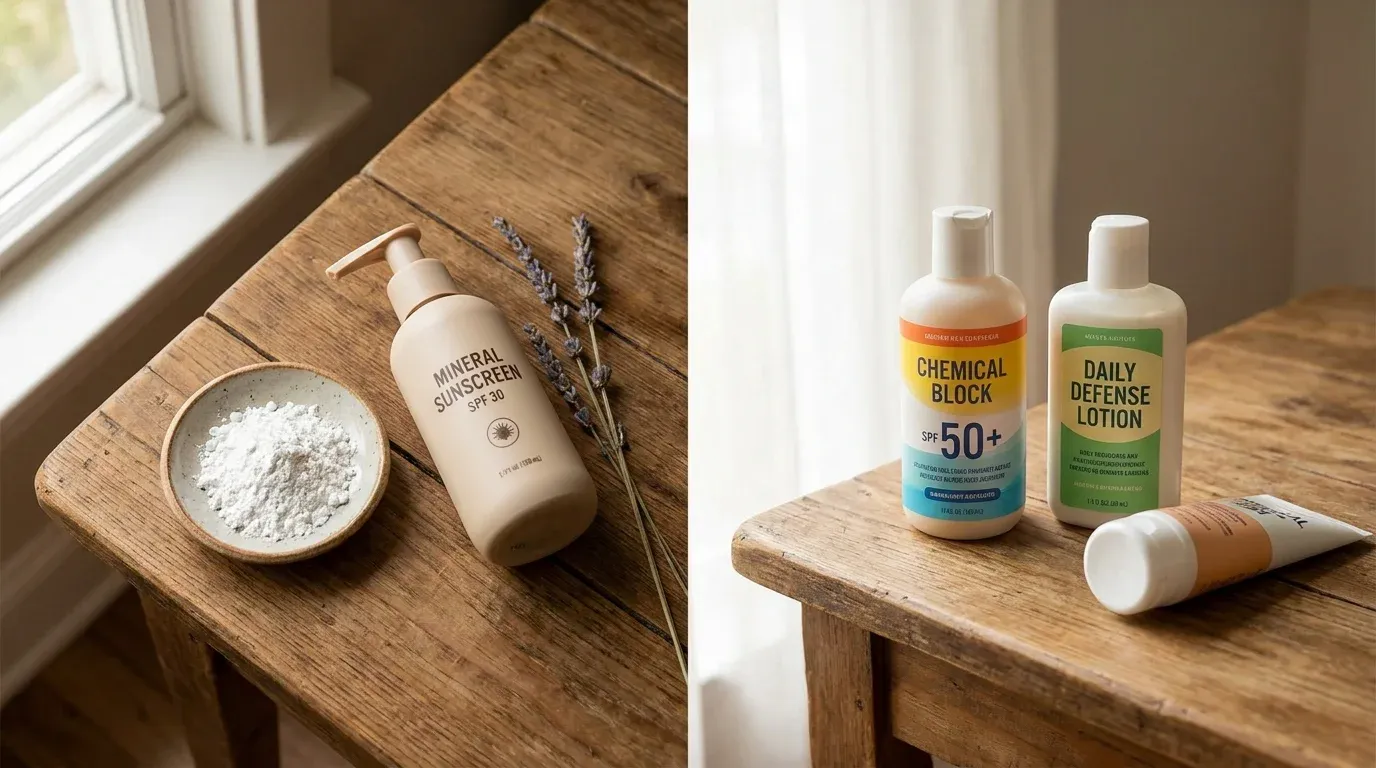
No commercial sun protector is completely safe. However, the minerals zinc oxide and titanium dioxide may be safer choices when used in lotions. The FDA officially approved Tinosorb S (chemically known as bemotrizinol or BEMT) for use in American sunscreens this year, marking the first new active sunscreen ingredient approved in the country since 1999. Look for it on product labels under its official chemical name bis-ethylhexyloxyphenol methoxyphenyl triazine (BEMT), or brand names like Tinosorb S and Parsol Shield.
We never monetize through brand deals, affiliate links, or ads — so you can trust our recommendations are always aligned with our users.
Frequently Asked Questions
Olive is a holistic health companion built to help you live cleaner and feel better. Scan a barcode and Olive shows you exactly what is in your food, your personal care products, and the things you bring into your home, then points you to a clean swap that actually makes a difference.
Inside the app you also get:
Health coaching
FDA recall alerts
Prop 65-aligned baby food product lookups
Proprietary lab testing data on your favorite products
Video-assisted kitchen detox walkthroughs
Maps of healthy restaurants and farmers’ markets near you
Symptom tracking and logging
Peptide and supplement dosage tracking
You scan a product. Olive scores it from 0 to 100 (higher is cleaner), explains in plain language why it scored that way, flags the harmful stuff like seed oils, additives, hidden sugars, contaminants, and endocrine disruptors, and points you to a cleaner swap.
From there, Olive helps you actually change: a 28-day kitchen detox to start, habit building, coaching, and doctor-supervised peptide protocols.
What starts with one scan can end in more energy, a clear head, and a shopping cart you finally trust.
All three. Scan food and drinks for the 0 to 100 score, with a breakdown of toxins, additives, processing, seed oils, and sugar.
Scan skincare, makeup, sunscreen, shampoo, and other personal care products and Olive rates every ingredient green, yellow, or red with a plain-language reason for the rating.
Scan bottled water and Olive checks it for contaminants such as fluoride, heavy metals, and microplastics.
We do our own independent lab testing for heavy metals (lead, cadmium, mercury, and arsenic) across roughly 400 products so far. That is more testing than most companies do, including Consumer Reports.
Our cosmetic ingredient rating system was built with the head of a chemical toxin working group, so every ingredient carries a documented reason behind its rating.
And Olive is independent. No ads, no affiliates, and we do not take money to change scores. Your subscription is what funds the testing, so Olive answers to you. All of it runs on a database of 10M+ products.
Yes. Set your goals, your diet, and your allergies, and every score and swap adjusts to you. Keto, paleo, heart-healthy, Mediterranean, halal, kosher, gluten-free, and dairy-free are all covered.
If you react to gluten, dairy, nuts, soy, or anything else, Olive flags it before it reaches your cart.
Yes. Your privacy comes first. Olive protects your personal information with strong security protocols, and your scans, your pantry, and your health details stay yours. You can read the details in our privacy policy.
Start with the free quiz. It takes about five minutes, asks about your goals, your symptoms, and what is already in your kitchen, then hands you a personalized plan. Try Olive free.