Home/Blogs/The Rogue Elephant in the Berry Patch: How a "Unbiased" Science Influencer Tried to Make Poisoned Strawberries Disappear
FoodHealth & Wellness
The Rogue Elephant in the Berry Patch: How a "Unbiased" Science Influencer Tried to Make Poisoned Strawberries Disappear
Driscoll's conventional berries arrive laced with twelve pesticides — including eight "forever chemicals" — at levels banned across the civilized world. One podcaster saw only a harmless foot. The rest of us see the beast charging toward our children.
The Rogue Elephant in the Berry Patch: How a “Unbiased” Science Influencer Tried to Make Poisoned Strawberries Disappear
Our reason for initially writing this article at Olive was that Dr. Jess Steier of the unbiasedscipod, an online influencer in science and health, appeared to be attacking Mamavation, a for-profit consumer watchdog, community, and digital media company founded by Leah Segedie.
Mamavation published a public-service investigative news article about pesticide issues with Driscoll’s strawberries, which went viral. Driscoll’s strawberries account for about one-third of all strawberries grown in the US, according to an article in The New Yorker.
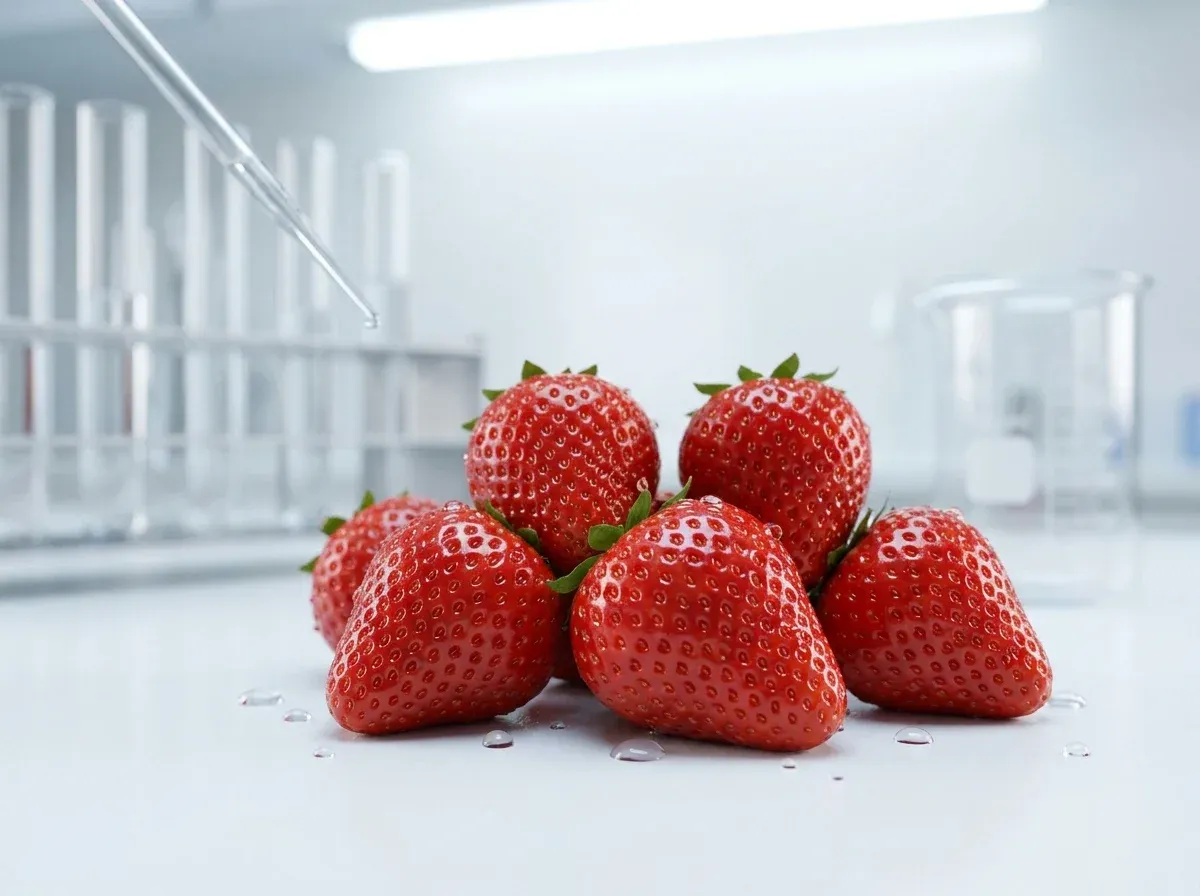
Mamavation sent two boxes of Driscoll’s strawberries from a Southern California grocery store to an Environmental Protection Agency (EPA)-certified laboratory on Monday, May 4th, 2026, requesting testing for more than 500 pesticides. One box held conventionally grown strawberries, the other organic strawberries.
“The results were a bit shocking. According to our laboratory, Driscoll’s conventional strawberries contained residues of 12 different pesticides at levels prohibited in the European Union, Taiwan, Chile, Korea & Russia. Eight of those pesticides are considered PFAS ‘forever chemicals,’ meaning they are extremely persistent and highly toxic. These pesticides are also known as ‘forever pesticides.’”
Here are the fluorinated pesticides detected and their levels:
Flonicamid (sum): 32 parts per billion (ppb)
Fludioxonil: 60 ppb
Flupyradifurone: 27 ppb
Fluxapyroxad: 26 ppb (limit also exceeds Russian standards)
Novaluron: 19 ppb (limits also exceed EU standards)
Tetraconazole: 13 ppb
TFNG (environmental metabolite of Flonicamid): 35 ppb
Here are the other non-fluorinated pesticides found on conventional strawberries:
Cyprodinil: 125 ppb
Pyrimethanil: 310 ppb
Quinoxyfen: 45 ppb (limit also exceeds Korean standards)
Tetrahydrophthalimide (THPI): 302 ppb
Dr. Craig Downs, executive director of Haereticus Environmental Laboratory, had this to say after his review: “Fluorinated pesticides are a growing source of PFAS contamination in the environment and on and in our foods. There is debate with the U.S. EPA if single fluorinated pesticides are truly polyfluoroalkyl substances (PFAS), but many of the fluorinated pesticides’ metabolites are long-lived to the point they are considered ‘Forever Chemicals.’ These fluorinated pesticides also act like PFAS because they will accumulate in our bodies over the long-term, are associated with cancer risks, reproductive diseases, developmental diseases in children, and cause immune suppression. It would be smart to try to completely avoid being exposed to them.”
Then came recommendations from Mamavation. “Mamavation advisors recommend you stick to organic strawberries if you want to lower the amount of pesticides and PFAS you consume when purchasing produce. 37% of non-organic produce samples tested by the State of California had traces of PFAS pesticides.”
Steier’s response was prompted by “a specific myth that has landed in our inboxes 1,000x this week — that eating strawberries will give us cancer… That single shopping trip became headlines around the world claiming Driscoll’s strawberries cause cancer.”
Steier — along with co-influencers Dr. Joe Zagorski (toxdocjoe) and The Food Truth Project — seems, at least from this post, to be among the worst kinds of public health policy advocates and scientists, if you can even call them that.
One tactic deceptive industry influencers use is to break up reality into small pieces. Steier suffers from a sort of public health policy myopia. It is as if we are on the plains of Africa, and a rogue elephant is charging. Steier is the kind of guide and protector who would focus on the first vertical foot of a single pillar of one leg of the rogue elephant charging them, failing to see the whole creature, thus downplaying the threat; it is merely a foot. Not to worry, they say. That is all they want to see, and they ask their followers to see only that foot. Some are smart enough to scatter, but others are left to be trampled, failing to see that when their caretaker and protector told them it was only a foot, they were being misled in the extreme.
Also, Mamavation never asserts that strawberries themselves cause cancer. Or that cancer is their sole concern. They expressed concern over reproductive toxicity to the embryo and subsequent developmental disorders. It is the chemicals. Mamavation likes strawberries, we’re sure. Chemicals? Not so much.
The group noted that organic strawberries were free of detectable pesticide residues and advised buying them. In fact, organic strawberries are likely to have much lower pesticide levels, according to an Olive review of hundreds of California berry samples. Studies also show lower urinary pesticide levels among organic consumers, as noted in peer-reviewed reports.
Another common tactic is to invent facts, shift the goalposts, and make assertions with little, if any, basis in reality; finally, in a fit of gaslighting, they try to pass off their pseudoscience as unbiased.
If this were a legal case, we would understand Steier’s rationale. “We see these types all the time in our more than 200 legal cases in California alone,” notes Olive contributor David Steinman, chief officer of the nonprofit Chemical Toxin Working Group and author of the new book, Raising Healthy Kids: Protecting Your Children from Hidden Chemical Toxins. “This is someone paid to take a legal view, often one in opposition to public health and supporting corporate interests over human rights — and the law as intentionally written.”
To be sure, Steier claims to be “unbiased” and noted the post had no direct financial sponsor. But one wants an expert to be up to date, to know the literature, to not bring heirlooms to a party of modern science and public health policy — and finally to have a bit more than a nearsighted vision of what it means to “cause cancer” in a modern world that is filled with carcinogens.
“‘PFAS pesticides’ is not a real scientific category,” Steier states for the first, but certainly not only Pinocchio of the post. “It’s a term the blog made up… The blog took any pesticide containing a fluorine atom, relabeled it a ‘forever pesticide,’ and slapped the entire PFAS health scare onto it. They even claim these pesticides build up in your body, but offer no evidence for it, which is the whole reason real PFAS are a concern.”
So let’s ask, does Steier assert that the dangers of PFAS are a “health scare”? Really? Because PFAS are no hoax. Their health threat is real and proven, as reported on Medium.
“PFAS pesticides” is not made up. The PFAS family includes substances with one or more fluorine atoms. Misinformed and awakening from years of drowsiness, the sleepy doctor appears to be working with heirlooms from years past. If Steier had been keeping up with science, the self-proclaimed unbiased pundit of science would have read this article based on work done by the International Organization for Economic Co-operation and Development (OECD), “A New OECD Definition for Per- and Polyfluoroalkyl Substances,” in the 2021 issue of Environmental Science & Technology. The report presents a revised, broadly inclusive PFAS definition: “PFASs are defined as fluorinated substances that contain at least one fully fluorinated methyl or methylene carbon atom (without any H/Cl/Br/I atom attached to it), i.e., with a few noted exceptions, any chemical with at least a perfluorinated methyl group (−CF3) or a perfluorinated methylene group (−CF2−) is a PFAS.” The “noted exceptions” refer to a carbon atom with a H/Cl/Br/I atom attached to it. Instead, Steier chooses provinciality and the highly politicized and laggardly EPA definition of PFAS requiring two fluorinated carbon atoms, which would be fine — if its definition weren’t as outdated as the agency’s continual proclamation that glyphosate doesn’t cause non-Hodgkin’s lymphoma, a type of environmental cancer most other international organizations and studies acknowledge is associated with this herbicide.
It gets worse. In an unwitting attempt to mislead, Steier disputes that these chemicals accumulate in the human body. In fact, in the October 2024 issue of Environmental Science & Technology, EPA scientists convey that “we are concerned that the total accumulation of all PFAS degradates, both known and unknown, will be a risk issue.”
Another heirloom-era play the doctor uses is worth one more Pinocchio. Steier writes, “Third, and most important: even if every number in that report is accurate, the residues are FAR below any level of concern. You would have to eat 123 pounds of strawberries every single day, for the rest of your life, to reach the EPA’s chronic safety threshold for indoxacarb, one of the pesticides they flagged. And that threshold already includes a 100-fold safety buffer. A normal serving of strawberries puts you at a tiny fraction of a fraction of that number.”
A classic case of shifting the goalposts? Didn’t Steier start off by saying the issue was whether Driscoll’s strawberries cause cancer? But indoxacarb has no evidence of carcinogenicity, according to a published report. The facts are wrong at the core.
The Bigger Picture: Multiple Pesticides on Strawberries
Here at Olive, we regularly review California’s annual pesticide monitoring reports. The state’s reports are among the most revealing in the nation, if not the world. They indicate that many other pesticides, in addition to those Mamavation detected, can be found on strawberries.
Mamavation’s lab failed to detect prevalent residues of captan, boscalid, imidacloprid, pyraclostrobin, pyremethanil, trifloxystrobin, fenpropathrin, iprodione, metalaxyl, bifenazate, hexythiazox, and many others. That is due to the limited sample size, of course.
Yet, some, like captan, are clear-cut carcinogens. Others, such as pyraclostrobin, are endocrine disruptors in experimental studies at amounts measured in parts per billion, suggesting a similar impact on the human embryo, according to published, peer-reviewed research.
The AI-Generated Distortion
Maybe Steier attacked the wrong person. Mamavation’s initial report became distorted as it passed from one social media platform to another and was ultimately produced by AI. One apparently AI-generated Threads video (archived) from Donna Lynn Roberts had a voiceover claiming that “America’s number one strawberry brand is directly tied to cancer” and that Driscoll’s strawberries are sprayed with “up to 371 chemical pesticides” before reaching consumers:
"It has now been confirmed that America’s number one strawberry brand is directly tied to cancer. Driscoll’s, which controls 1/3 of all U.S. strawberries, gets sprayed with up to 371 chemical pesticides before it ever reaches your family’s table.
They are coating your children’s strawberries in mosquito spray and marketing them as organic. Nearly every US strawberry begins as a lab-engineered clone blanketed in captan, the exact same chemical found in paint preservatives, submerged directly into fungicide baths, allowing three separate carcinogens to seep deep into the flesh. And that is only the beginning. Those berries then get bleached in chlorine and sealed inside plastic so thoroughly that no amount of rinsing can remove the residue."
Olive reviewed the state of California’s testing of organic produce for pesticides. The produce is purchased from the marketplace, and organics show mostly non-detectable residues with very few exceptions; not perfect, but an indication of vastly reduced toxic exposures. “They are coating your children’s strawberries in mosquito spray and marketing them as organic” rings quite suspect.
But Steier should know that this was not Mamavation. No one should blame Mamavation. Or discount the cancer and other clear-cut risks farm workers, applicators, and communities face from the myriad other health risks where strawberries are grown — or to our nation’s future.
The Real Health Concerns
It takes healthy children with full cognitive abilities to be able to problem solve, learn, read, contemplate, and run a democracy, and society becomes dysfunctional when children are born with autism, risk for infertility, attention-deficit hyperactivity disorder, learning difficulties, and are at risk for environmental and reproductive cancers. All of these conditions are associated with pesticide exposures, especially to endocrine disruptors at much lower levels than cancer, and they can occur with a single toxic exposure to the embryo. Steier’s reductive approach mimics a horse with blinders. It would hurt our children. Our future.
Fortunately, folks get it. tr1sha wrote back to Steier, “The post about Driscolls said the area around the farmland had increased rates of childhood cancer (that I read), not that the strawberries themselves cause. For that alone, I’m still boycotting them.”
therealbaruch says, “I still prefer organic practices. Why pollute the earth?”
The idea is to reduce overall pesticide exposures, not just from strawberries, but also from other high-residue fruits, including apples, oranges, and other soft-skinned berries. And in other categories as well. Isolating exposure to strawberries is the ultimate misleading framing.
The Salinas Story: When Consumer Choices Changed a Community
Steinman illuminates the difference between a public health policy with blinders and one with eyes wide open: your shopping choices really do make a difference, not only for your health, but for so many others as well.
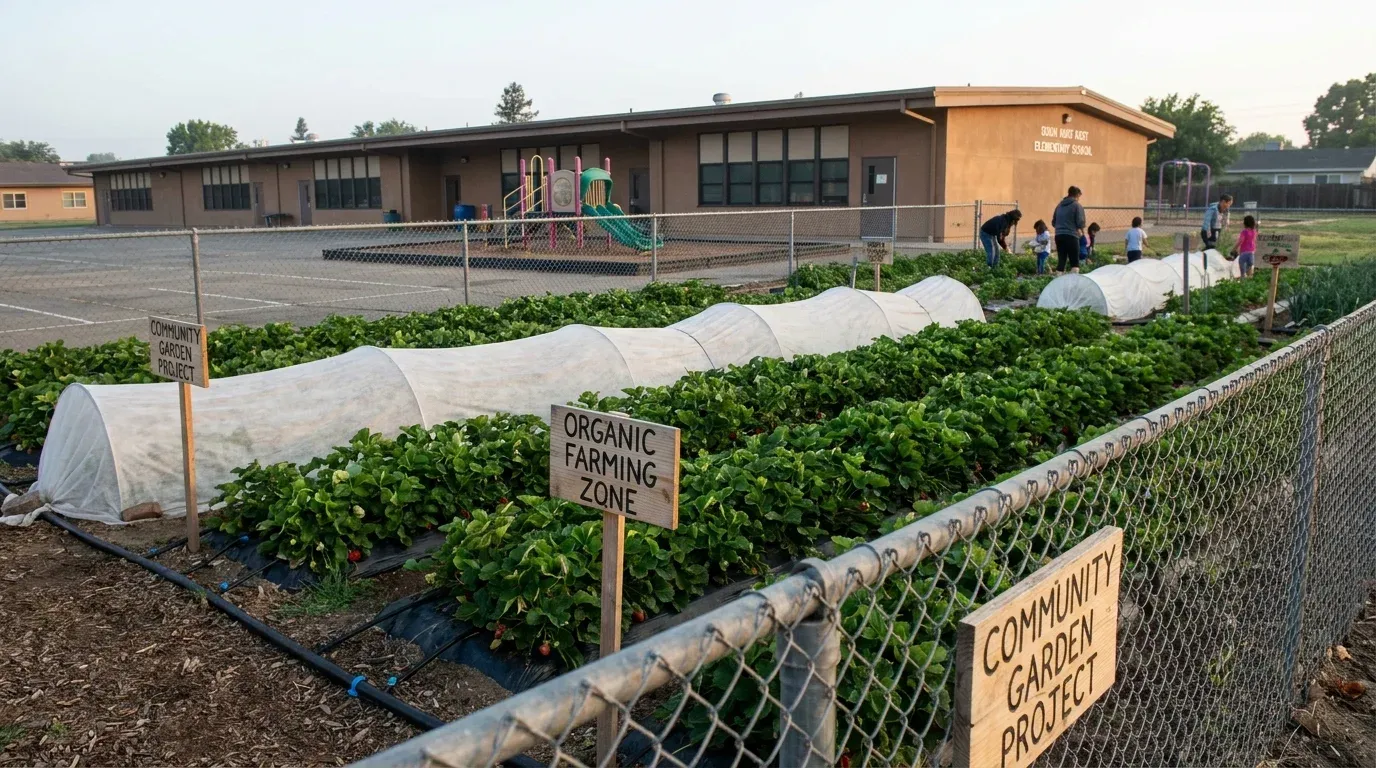
Salinas, the home of the author John Steinbeck, is an agricultural town literally carved from the rolling, fertile farm fields of the northern valley, bathed in coastal breezes that slip in through the mountains to the west, and fed by generous underground aquifers and rivers. The schools here are often situated near strawberry and lettuce fields. As he related in his book, the fields throughout the 2010s were heavily sprayed with a multitude of pesticides, including chlorpyrifos, diazinon, and, more recently, the PFAS compounds mentioned by Mamavation. Because of this pervasive community exposure, University of California researchers have conducted multiple studies of the youths starting from pregnancy through at least late childhood, documenting IQ losses and clinical brain damage as shown by neuroimaging. It was especially bad for students at schools like Lagunita and McKinnon, with some of the highest exposures — and then something happened: a tipping point was reached, one completely contrary to what Steier advocates in the post.
Steinman returned during the pandemic to visit with Oscar Ramos, a Salinas teacher, and discuss the learning disabilities he was seeing among students.
Something had changed when he visited the Lagunita and McKinnon schools. This time, organic strawberries surrounded Lagunita School, and organic lettuce fields bordered McKinnon.
“It wasn’t just you,” Steinman recalls Ramos telling him. “It was everyone who was buying those organic strawberries. Everyone doing the right thing for our American family; together, shoppers made a measurable difference in our lives here in Salinas, and I am grateful.”
This would not have happened if everyone had listened to Steier. It isn’t the strawberries. We all know that. It’s the chemicals.
We never monetize through brand deals, affiliate links, or ads — so you can trust our recommendations are always aligned with our users.
Frequently Asked Questions
Olive is a holistic health companion built to help you live cleaner and feel better. Scan a barcode and Olive shows you exactly what is in your food, your personal care products, and the things you bring into your home, then points you to a clean swap that actually makes a difference.
Inside the app you also get:
Health coaching
FDA recall alerts
Prop 65-aligned baby food product lookups
Proprietary lab testing data on your favorite products
Video-assisted kitchen detox walkthroughs
Maps of healthy restaurants and farmers’ markets near you
Symptom tracking and logging
Peptide and supplement dosage tracking
You scan a product. Olive scores it from 0 to 100 (higher is cleaner), explains in plain language why it scored that way, flags the harmful stuff like seed oils, additives, hidden sugars, contaminants, and endocrine disruptors, and points you to a cleaner swap.
From there, Olive helps you actually change: a 28-day kitchen detox to start, habit building, coaching, and doctor-supervised peptide protocols.
What starts with one scan can end in more energy, a clear head, and a shopping cart you finally trust.
All three. Scan food and drinks for the 0 to 100 score, with a breakdown of toxins, additives, processing, seed oils, and sugar.
Scan skincare, makeup, sunscreen, shampoo, and other personal care products and Olive rates every ingredient green, yellow, or red with a plain-language reason for the rating.
Scan bottled water and Olive checks it for contaminants such as fluoride, heavy metals, and microplastics.
We do our own independent lab testing for heavy metals (lead, cadmium, mercury, and arsenic) across roughly 400 products so far. That is more testing than most companies do, including Consumer Reports.
Our cosmetic ingredient rating system was built with the head of a chemical toxin working group, so every ingredient carries a documented reason behind its rating.
And Olive is independent. No ads, no affiliates, and we do not take money to change scores. Your subscription is what funds the testing, so Olive answers to you. All of it runs on a database of 10M+ products.
Yes. Set your goals, your diet, and your allergies, and every score and swap adjusts to you. Keto, paleo, heart-healthy, Mediterranean, halal, kosher, gluten-free, and dairy-free are all covered.
If you react to gluten, dairy, nuts, soy, or anything else, Olive flags it before it reaches your cart.
Yes. Your privacy comes first. Olive protects your personal information with strong security protocols, and your scans, your pantry, and your health details stay yours. You can read the details in our privacy policy.
Start with the free quiz. It takes about five minutes, asks about your goals, your symptoms, and what is already in your kitchen, then hands you a personalized plan. Try Olive free.