Home/Blogs/5 Healthy Kitchen Swaps to Eliminate Microplastics, Forever Chemicals, and Toxins
Health & WellnessFood
5 Healthy Kitchen Swaps to Eliminate Microplastics, Forever Chemicals, and Toxins
Your kitchen could be quietly exposing you to harmful microplastics, forever chemicals, and toxins through everyday items like spatulas, sponges, and storage containers. Here are five simple swaps that will dramatically reduce your exposure to these dangerous substances.
Know what's really in your personal care and home products.
These days, everything matters! A healthy kitchen goes way beyond organic foods.
Here are five kitchen swaps that are easy to do and will yield significant health benefits by reducing your exposure to toxic micro- and nanoplastics, forever chemicals, and other contaminants that scientists have detected in packaging materials and kitchen utensils.
Know what's really in your personal care and home products.
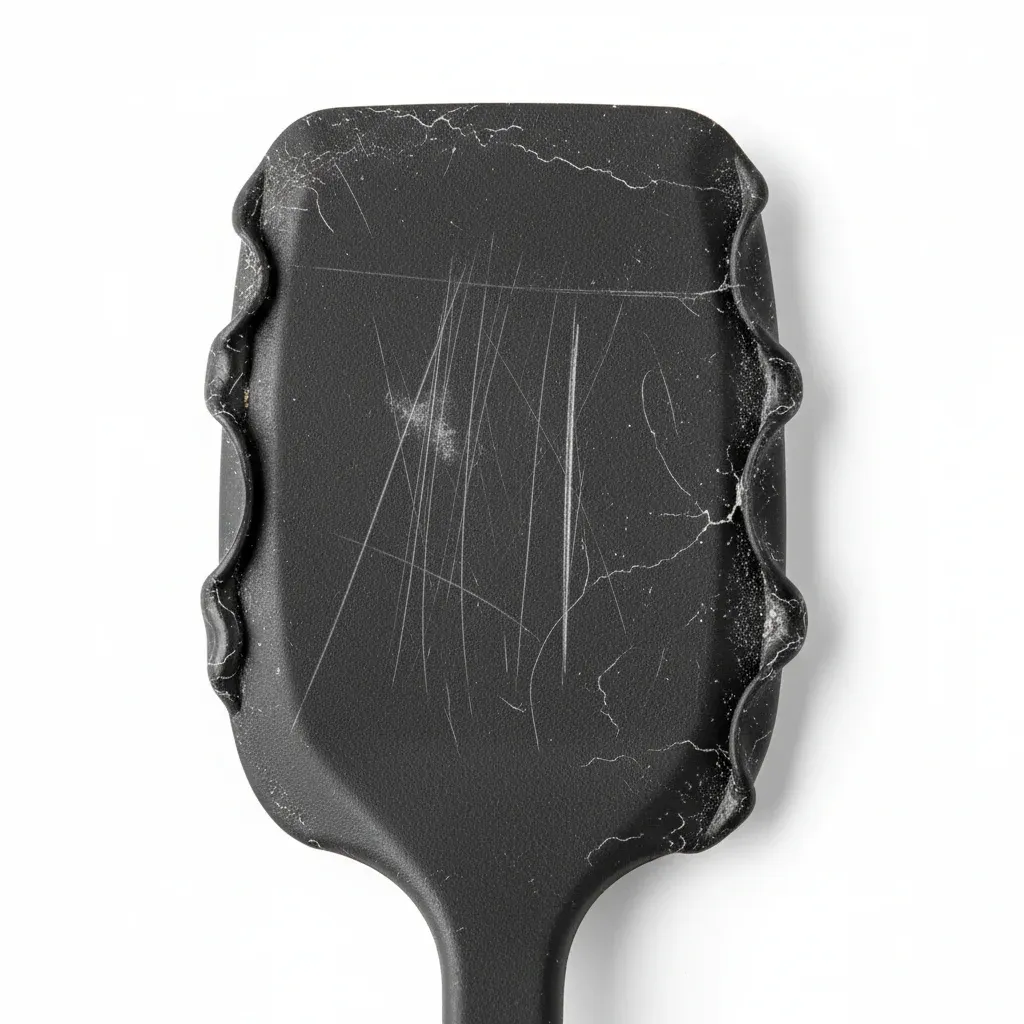
Get rid of black plastic spatulas, especially if they are worn, chipped, or have melted edges. Black spatulas are manufactured from recycled electronics that contain toxic brominated flame retardants (such as DecaBDE) that can leach into food when heated. These residues are linked to cancer, thyroid disease, attention deficit/hyperactivity disorder, and hormonal disruptions.
Health experts advise switching to stainless steel, wooden, or bamboo alternatives. If you need a flexible turner, silicone is a safer alternative to black plastic.
Swap #2: Natural Fiber Sponges Instead of Plastic Ones
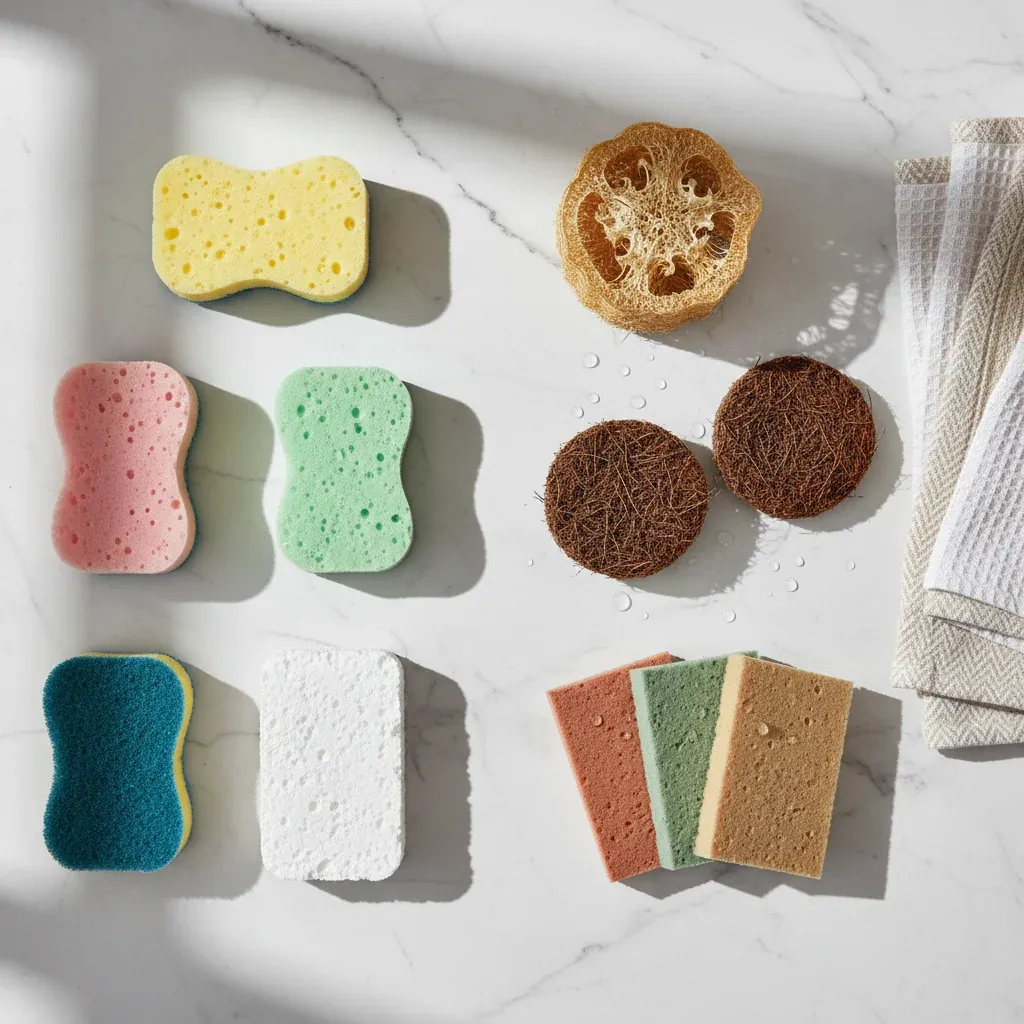
Cleaning sponges are typically made from polyurethane and release thousands of micro- and nanoplastics into your environment. And those Mr. Clean Magic Eraser sponges are among the worst, loaded with toxic melamine.
In 2019, the International Agency for Research on Cancer (IARC) classified melamine as a substance that is “possibly carcinogenic to humans.” In 2020, the European Chemicals Agency’s Committee for Risk Assessment classified melamine as a substance that has specific toxic effects on the kidneys after prolonged or repeated exposure. In 2008, real-life acute melamine exposures from intentionally adulterated infant formula resulted in the diagnosis of kidney stones in 294,000 infants, approximately 50,000 infant hospitalizations, and at least 6 deaths from kidney failure.
Eco-sponges are primarily made from renewable, plant-based materials such as wood pulp cellulose, loofah gourds, coconut husk fiber (coir), cotton, and agave. These biodegradable alternatives are designed to be compostable and free from synthetic plastics, reducing microplastic pollution during dishwashing.
Swap #3: Nix Plastic Cutting Boards for Wood or Bamboo
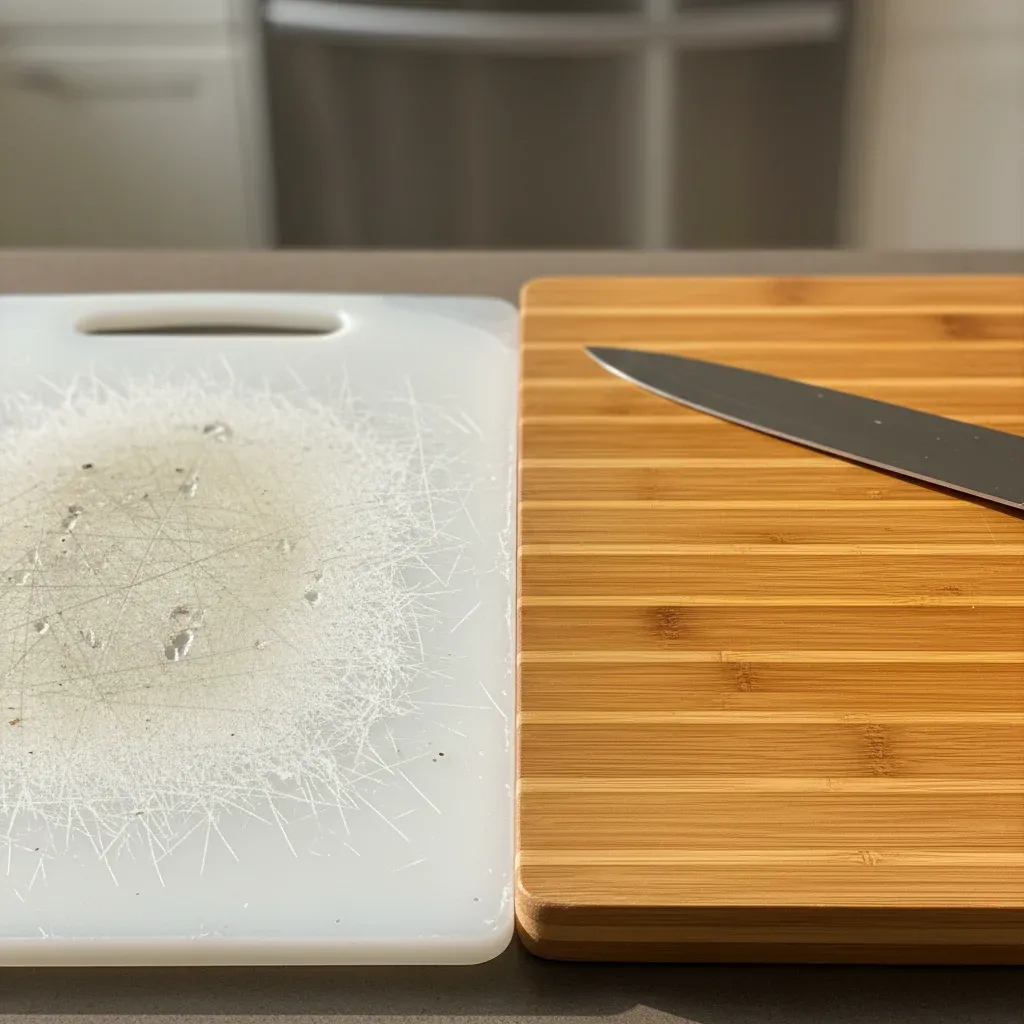
Plastic cutting boards develop grooves from knife scratches that harbor bacteria and release microplastics directly into food. Researchers writing in Environmental Science & Technologystate, “Plastic cutting boards are a potentially significant source of microplastics in human food.”
Wood such as maple, walnut, teak, or bamboo is free of microplastics. Studies indicate that wood, such as maple or cherry, can trap and eliminate bacteria by drawing them into the grains, causing them to die, whereas plastic traps bacteria on its surface.
Swap #4: Get Rid of Teflon Pans for Cast Iron and Other Non-Release Materials
Cast iron pans are generally considered safer than Teflon-coated pans because they do not contain or release synthetic toxic forever chemicals linked to cancer and infertility. Teflon, the coating long used on nonstick pans, can degrade and flake over time, but cast iron is durable, indestructible, and develops a natural non-stick surface through seasoning (polymerized oil), avoiding synthetic coatings. Teflon pans, when overheated, can produce toxic fumes. Cast iron is stable at high temperatures, making it better for searing and high-heat cooking.
Swap #5: Plastic for Glass Food Storage Containers
Plastic containers are made from polypropylene, polyethylene, and expanded polystyrene. These release microplastics when used for food storage.
Glass food storage containers are safer than plastic because they are non-porous, inert, and toxin-free, meaning they won’t leach harmful chemicals like bisphenols or phthalates into food, especially when heated. Glass is safe for the microwave, oven, and dishwasher. Microwaving food in plastic containers, on the other hand, causes the highest particle release. Older, scratched, or frequently washed plastic containers break down, accelerating microplastic shedding. Using glass, stainless steel, or ceramic containers for heating and storing food can significantly reduce exposure.
We never monetize through brand deals, affiliate links, or ads — so you can trust our recommendations are always aligned with our users.
Frequently Asked Questions
Olive is a holistic health companion built to help you live cleaner and feel better. Scan a barcode and Olive shows you exactly what is in your food, your personal care products, and the things you bring into your home, then points you to a clean swap that actually makes a difference.
Inside the app you also get:
Health coaching
FDA recall alerts
Prop 65-aligned baby food product lookups
Proprietary lab testing data on your favorite products
Video-assisted kitchen detox walkthroughs
Maps of healthy restaurants and farmers’ markets near you
Symptom tracking and logging
Peptide and supplement dosage tracking
You scan a product. Olive scores it from 0 to 100 (higher is cleaner), explains in plain language why it scored that way, flags the harmful stuff like seed oils, additives, hidden sugars, contaminants, and endocrine disruptors, and points you to a cleaner swap.
From there, Olive helps you actually change: a 28-day kitchen detox to start, habit building, coaching, and doctor-supervised peptide protocols.
What starts with one scan can end in more energy, a clear head, and a shopping cart you finally trust.
All three. Scan food and drinks for the 0 to 100 score, with a breakdown of toxins, additives, processing, seed oils, and sugar.
Scan skincare, makeup, sunscreen, shampoo, and other personal care products and Olive rates every ingredient green, yellow, or red with a plain-language reason for the rating.
Scan bottled water and Olive checks it for contaminants such as fluoride, heavy metals, and microplastics.
We do our own independent lab testing for heavy metals (lead, cadmium, mercury, and arsenic) across roughly 400 products so far. That is more testing than most companies do, including Consumer Reports.
Our cosmetic ingredient rating system was built with the head of a chemical toxin working group, so every ingredient carries a documented reason behind its rating.
And Olive is independent. No ads, no affiliates, and we do not take money to change scores. Your subscription is what funds the testing, so Olive answers to you. All of it runs on a database of 10M+ products.
Yes. Set your goals, your diet, and your allergies, and every score and swap adjusts to you. Keto, paleo, heart-healthy, Mediterranean, halal, kosher, gluten-free, and dairy-free are all covered.
If you react to gluten, dairy, nuts, soy, or anything else, Olive flags it before it reaches your cart.
Yes. Your privacy comes first. Olive protects your personal information with strong security protocols, and your scans, your pantry, and your health details stay yours. You can read the details in our privacy policy.
Start with the free quiz. It takes about five minutes, asks about your goals, your symptoms, and what is already in your kitchen, then hands you a personalized plan. Try Olive free.