95% of Your Makeup Packaging Ends Up in Landfills — The Toxic Truth 1 in 3 Americans Are Finally Waking Up To
The beauty industry produces 120 billion units of plastic packaging annually, with 95% going unrecycled and 70% ending up in landfills. Here's what you need to know about the toxic impact of cosmetic waste and which brands are leading the plastic-free revolution.
Sign up for Olive Written by David SteinmanPublished on June 4, 2026
As consumer concern about plastic pollution grows, a third of adults in the United States say they have reduced their use of plastic products over the past five years, according to an NPR/PBS NewsHour/Marist poll. (Interestingly, around 20 percent have increased their use! Almost half have retained their usual and customary use of such materials.)
In an age dominated by petrochemicals, reducing one’s exposure to plastic and its petrochemical offspring is definitely a healthwise choice, but might also seem like a daunting task. Many people feel as if they are drowning in a sea of plastic. They become hopeless. Others, who are uneducated, are unaware of the health and societal impacts of plastic.
The Beauty Industry’s Plastic Problem
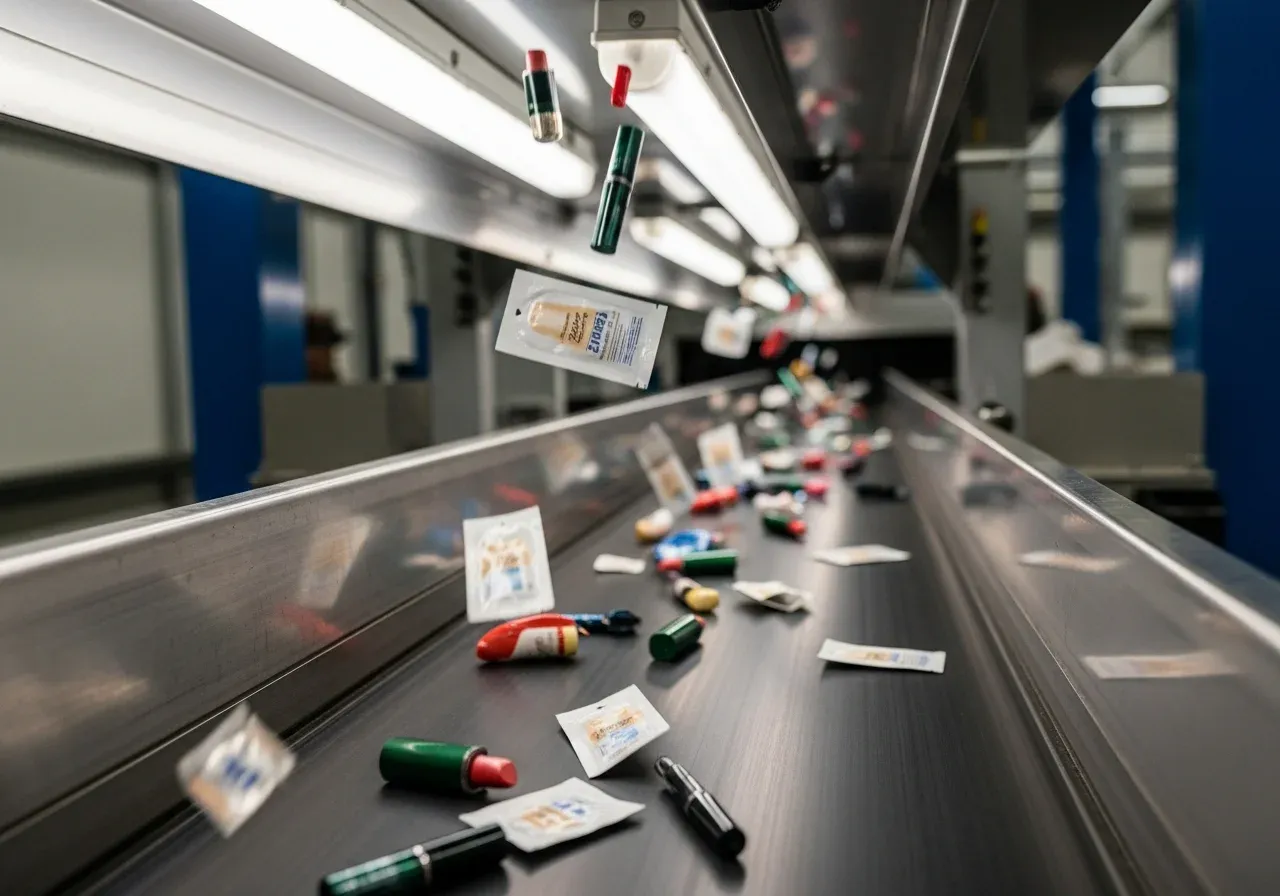
One of the most challenging areas for consumers interested in reducing exposure to plastic particles and nonrecycled plastic waste is navigating the packaging and ingredients of their personal care and cosmetic products. The global personal care and cosmetics industry produces more than a staggering 120 billion units of plastic packaging annually. Many cosmetic containers use a combination of glass, metal springs, and various types of plastic, making them nearly impossible for standard municipal sorting facilities to process. Items like lipstick tubes, mascara wands, and sample packets are often too small to be captured by the sorting machinery in recycling plants.
Because of the complex, mixed-material design of pumps, caps, and tubes, up to 95 percent of this beauty packaging waste goes unrecycled, and an estimated 70 percent ends up directly in landfills, according to the websites 4ocean.com and Woola. In the United States alone, approximately 7.9 billion units of rigid plastic packaging are manufactured every year specifically for beauty and personal care products, notes Attitude.
Beyond Packaging: Hidden Toxins in Your Products
The waste extends beyond containers and packaging. Products like cotton swabs with plastic stems, sheet masks, and flexible sachets contribute millions of tons of single-use waste annually. In addition to physical packaging, cosmetics are a significant source of water pollution.
Petrochemicals, dispersed in products and the environment as micro- and nanoparticles, are a source of many of the ingredients used in personal care and cosmetic products. These tiny plastic particles (microplastics) are often intentionally added as exfoliants or colorants in products like scrubs and body washes, releasing tens of billions of particles into wastewater annually, reports Frontiers. Some of the most toxic chemicals, such as phthalates and bisphenols, are never disclosed on packaging labels; yet these are also among the most dangerous.
The containers themselves shed additional micro- and nanoparticles into formulations. These chronic exposures to plastic materials are cumulative and chronic. They interfere with the hormones of the endocrine system and can place children and adults at elevated risk for cancer, infertility, cognitive loss, obesity, diabetes, and changes in gender behavior.
Scan Skincare & Cleaners
Scores Brands Can't Buy
Backed by Lab Testing
Cleaner Swaps for Your Skin
Brands Leading the Plastic-Free Beauty Revolution
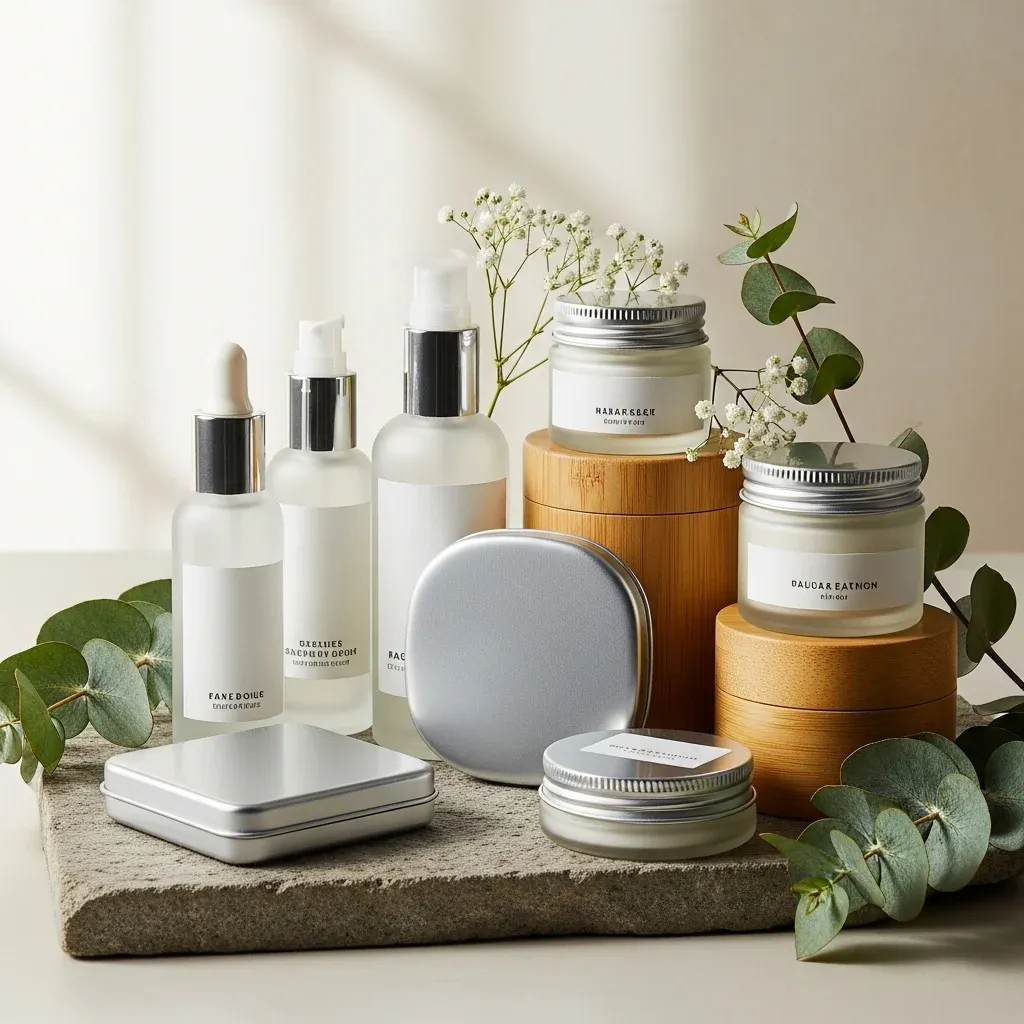
Fortunately, in recent years, more and more beauty brands have offered cosmetics and skincare in glass, metal, or cardboard instead of plastic. This is a good thing. These companies strive to eliminate micro- and nanoplastics in their formulations. Here are the top companies offering products in glass or plastic-free alternatives:
- Oway is a leader in plastic-free packaging, using glass bottles and aluminum tubes for its professional hair and skincare lines.
- Kjaer Weis offers luxury, certified organic makeup and skincare in metal compacts, with many items available in glass.
- Meow Meow Tweet offers vegan skincare and deodorants packaged in glass jars or cardboard tubes.
- Fat and the Moon is known for herbal, handmade cosmetics in metal tins and glass jars.
- LOLI Beauty uses glass jars and vials for their waterless, organic skincare, often with compostable labels.
- Weleda offers natural skincare, frequently in glass, with a “Zero Plastic Inside” commitment.
- Little Seed Farm provides deodorants and skincare in glass jars.
- NOTO Botanics offers natural, gender-fluid makeup in glass bottles with a refill program.
- Osea Malibu is known for its vegan skincare in frosted-glass bottles.
- Elate Cosmetics uses bamboo packaging for its refillable makeup line. All of their packaging can be returned (for free), so they can refill it or recycle it for you.
- Bee You Organics features zero-waste mascara in glass tubes and other products in tins.
- Good Molecules and Ethique focus on glass or fully biodegradable packaging for their skincare lines.
Many of these brands are often found at eco-conscious retailers like Credo Beauty, which has a dedicated “glass packaging” section.
Make Your Shopping Choices Count
On a personal level, your shopping, lifestyle, and health choices really do matter. How you live is a statement. Make your shopping choices count. That’s why I wrote Raising Healthy Kids: Protecting Your Children from Hidden Chemical Toxins, available at Amazon.com. Subscribe to my podcast at www.youtube.com/@officialdavidsteinman and to my newsletters on Substack and on Medium.
If this resonated with you, share it with someone who needs to hear it. Until next time — stay informed, stay proactive.
Scan Skincare & Cleaners
Scores Brands Can't Buy
Backed by Lab Testing
Cleaner Swaps for Your Skin
Recommended for you
 Alexander Klein
Pore-Clogging Ingredients Checker: Strongest Options & Key Considerations
Learn how pore-clogging ingredient checkers function and how the leading platforms compare across scanning and search capability, methodology, and reliability.
 Alexander Klein
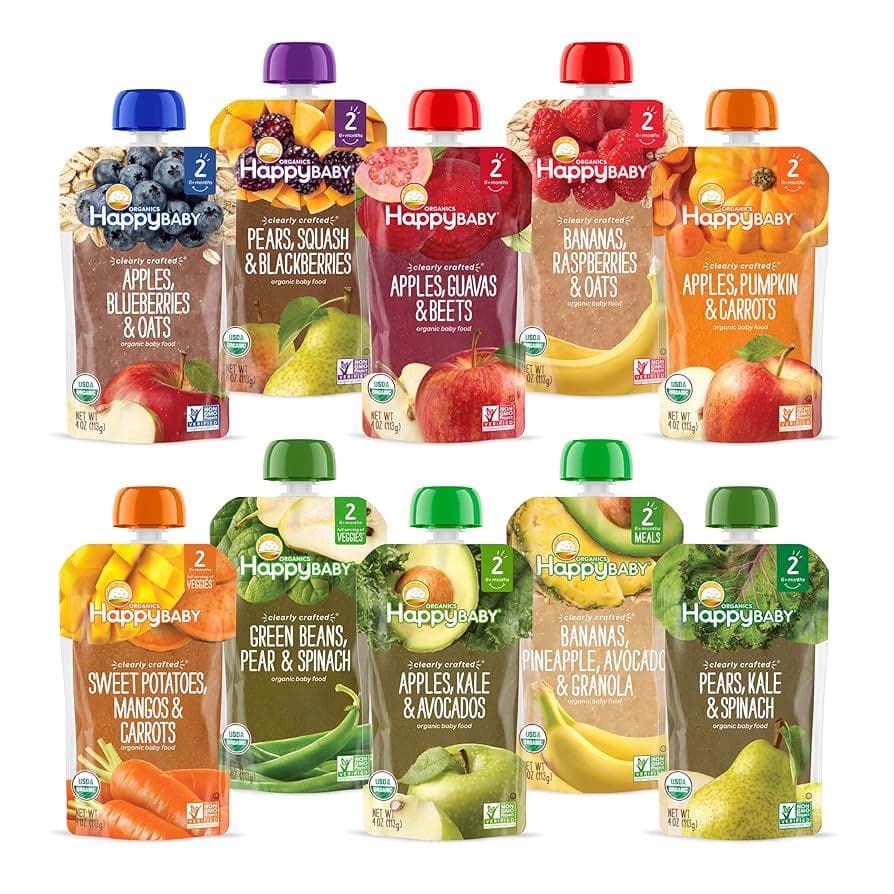
Happy Baby Pouches: Safe and Nutritious? | Parent's Guide
Discover everything you need to know about Happy Baby Pouches: A Parent's Guide to ensuring safe and nutritious choices amidst heavy metals concerns.
100% Independent.
Always.
We never monetize through brand deals, affiliate links, or ads — so you can trust our recommendations are always aligned with our users.
Frequently Asked Questions
What is the Olive app and how does it work?
Olive is a holistic health companion built to help you live cleaner and feel better. Scan a barcode and Olive shows you exactly what is in your food, your personal care products, and the things you bring into your home, then points you to a clean swap that actually makes a difference.
Inside the app you also get:
- Health coaching
- FDA recall alerts
- Prop 65-aligned baby food product lookups
- Proprietary lab testing data on your favorite products
- Video-assisted kitchen detox walkthroughs
- Maps of healthy restaurants and farmers’ markets near you
- Symptom tracking and logging
- Peptide and supplement dosage tracking
How does the Olive food and cosmetic ingredient scanner work?
You scan a product. Olive scores it from 0 to 100 (higher is cleaner), explains in plain language why it scored that way, flags the harmful stuff like seed oils, additives, hidden sugars, contaminants, and endocrine disruptors, and points you to a cleaner swap.
From there, Olive helps you actually change: a 28-day kitchen detox to start, habit building, coaching, and doctor-supervised peptide protocols.
What starts with one scan can end in more energy, a clear head, and a shopping cart you finally trust.
Which products can I scan: food, cosmetics, or bottled water?
All three. Scan food and drinks for the 0 to 100 score, with a breakdown of toxins, additives, processing, seed oils, and sugar.
Scan skincare, makeup, sunscreen, shampoo, and other personal care products and Olive rates every ingredient green, yellow, or red with a plain-language reason for the rating.
Scan bottled water and Olive checks it for contaminants such as fluoride, heavy metals, and microplastics.
How does Olive ensure the accuracy of its scan results?
We do our own independent lab testing for heavy metals (lead, cadmium, mercury, and arsenic) across roughly 400 products so far. That is more testing than most companies do, including Consumer Reports.
Our cosmetic ingredient rating system was built with the head of a chemical toxin working group, so every ingredient carries a documented reason behind its rating.
And Olive is independent. No ads, no affiliates, and we do not take money to change scores. Your subscription is what funds the testing, so Olive answers to you. All of it runs on a database of 10M+ products.
Can Olive be customized to my dietary needs?
Yes. Set your goals, your diet, and your allergies, and every score and swap adjusts to you. Keto, paleo, heart-healthy, Mediterranean, halal, kosher, gluten-free, and dairy-free are all covered.
If you react to gluten, dairy, nuts, soy, or anything else, Olive flags it before it reaches your cart.
Is Olive available for both Android and iOS?
Yes. Olive is live on both. Download Olive on the Apple App Store or get it on Google Play.
Is my data secure when I use Olive?
Yes. Your privacy comes first. Olive protects your personal information with strong security protocols, and your scans, your pantry, and your health details stay yours. You can read the details in our privacy policy.
How do I get started with Olive?
Start with the free quiz. It takes about five minutes, asks about your goals, your symptoms, and what is already in your kitchen, then hands you a personalized plan. Try Olive free.
Start with one scan.
Scan your food, personal care and home products
Independent scores backed by real lab testing
Cleaner swaps for you, and everyone you shop for